

CUBE Phenix 240 C:62 2027: When first trails turn into true racing passion
Lightweight, fast and ready for big goals: The CUBE Phenix 240 C:62 2027 brings a real race feel to the world of young mountain bikers. The ultra-light C:62® carbon frame, precise handling and uncompromisingly high-quality components give budding racers exactly the confidence they need on the trail and at the starting line. A bike that doesn't just keep up, but inspires you to outdo yourself with every ride.
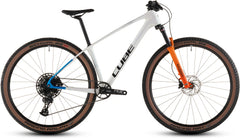
CUBE Phenix 240: High-end race bike for young talents
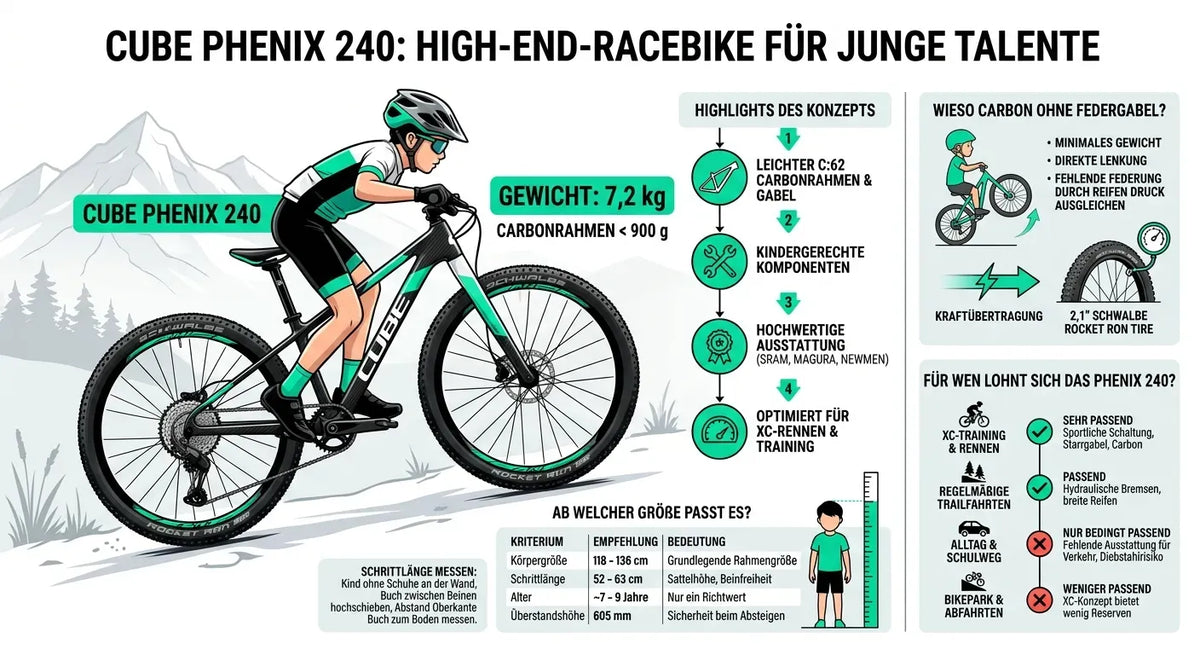
The CUBE Phenix 240 is a lightweight children's mountain bike for young riders who train regularly, tackle challenging trails, or compete in their first cross-country races. With 24-inch wheels, a C:62 carbon frame, and a full-carbon fork, the bike is technically modeled after race mountain bikes for adults. According to the manufacturer, the total weight is 7.2 kilograms. The frame alone weighs less than 900 grams.
This distinguishes the CUBE Phenix 240 significantly from a classic children's bicycle. The lightweight construction makes it easier to accelerate, climb, and maneuver the bike in a controlled manner. This is particularly relevant for children whose own body weight is low in proportion to the bicycle. A difference of several kilograms has a greater impact on them than it does on adults.
The concept is aimed primarily at active, sporty children. The elaborate race-ready equipment would not be strictly necessary for occasional rides to school or short family outings. However, if a child enjoys riding fast, working on their technique, and tackling longer distances off-road, the CUBE Phenix 240 can play to its design strengths.
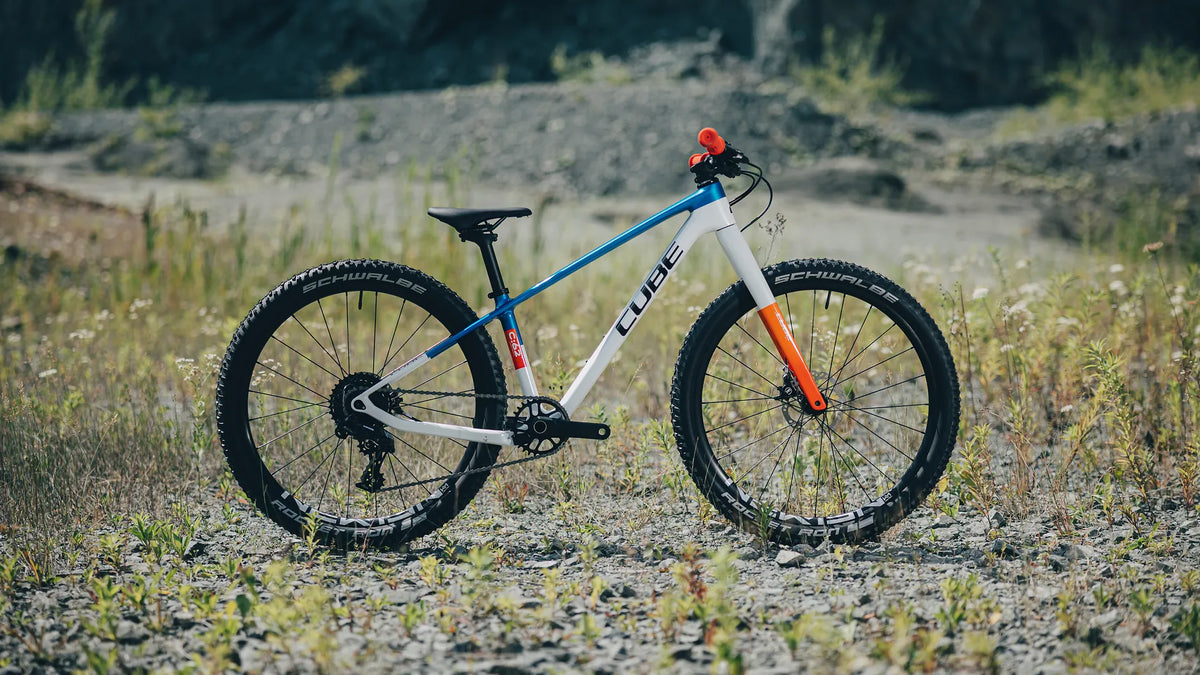
Is the CUBE Phenix 240 a carbon bike?
Yes, the CUBE Phenix 240 is a carbon mountain bike for kids with a C:62 monocoque frame and a matching full carbon fork. CUBE uses high-modulus carbon fibers and a resin system with finely dispersed nanoparticles for the frame. This combination of materials is designed to allow for high stiffness at a low weight.
The C:62 designation stands for a carbon technology developed by CUBE. It is not just the base material that is decisive. The orientation and position of the individual fiber layers also influence how stable, stiff, or compliant a section of the frame turns out to be. Highly stressed areas such as the head tube, bottom bracket, and axle mounts require a different fiber structure than less stressed tube sections.
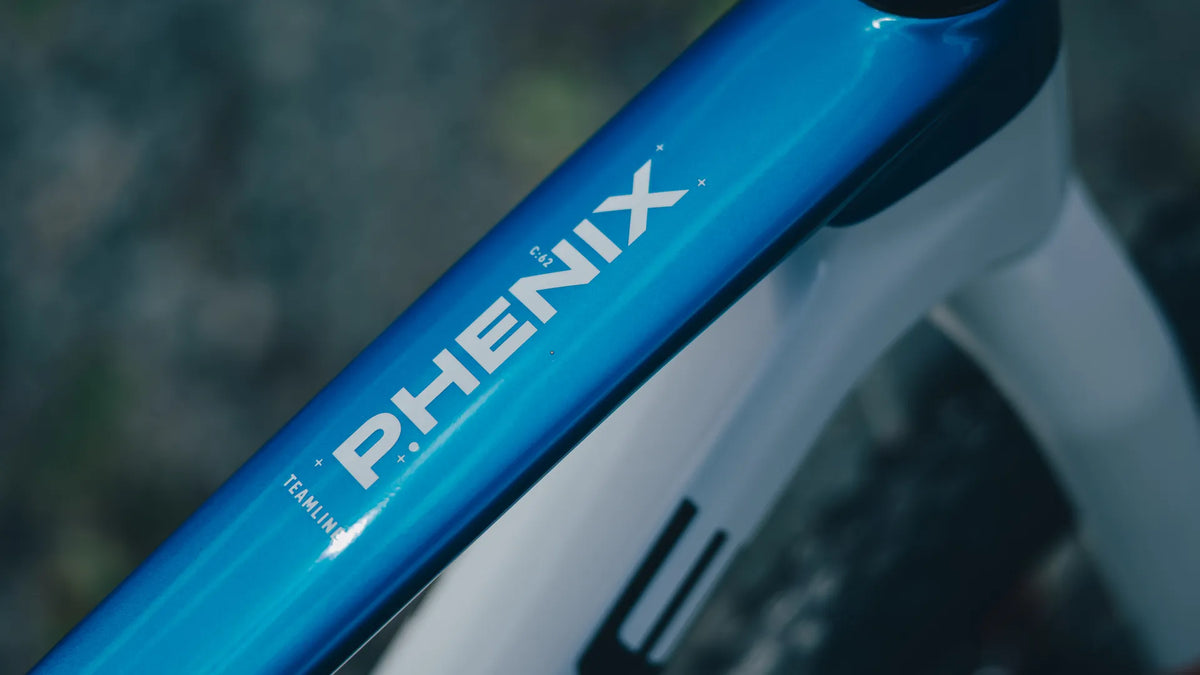
In production, CUBE uses the Advanced Twin Mold process. A mold determines the so-called layup and thus the position of the fiber layers. An inner form keeps the fibers in their intended place during the curing process. This allows the fiber density to be adapted to the stress of the respective frame zone. Excess material can be avoided without unnecessarily weakening the frame at relevant points.
For a child, the benefit is particularly evident when riding. A lighter frame requires less effort when starting off and climbing hills. The bike is easier to correct on narrow paths and easier to lift over small obstacles. The low weight is also noticeable when pushing, carrying, or loading the bike. However, the carbon frame does not automatically make the child faster. Riding technique, fitness, and a proper seating position remain decisive.
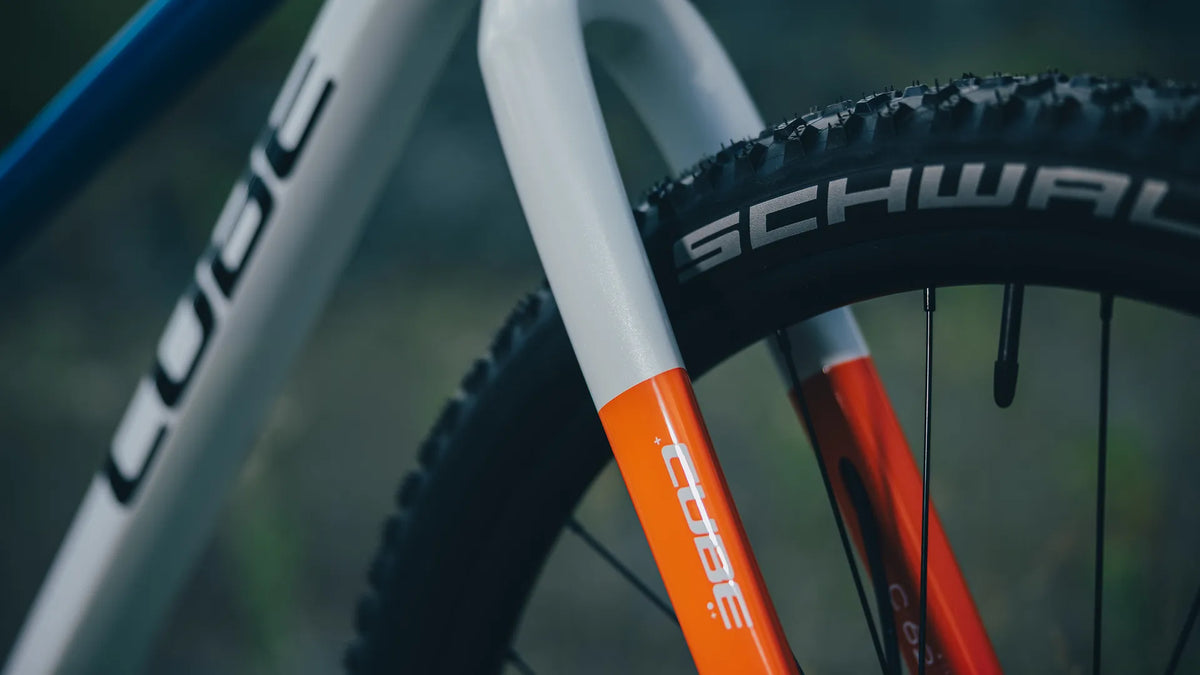
The slender chainstays are designed to absorb some of the shocks and vibrations. This does not replace suspension, but it can increase riding comfort on roots and uneven forest floors. At the same time, the tapered head tube and the 12-millimeter thru-axles on the front and rear wheels ensure precise wheel tracking.
Carbon requires conscious handling in everyday use. Normal stresses encountered while mountain biking are part of its intended use. However, hard, localized impacts, improper tightening of components, or a fall onto sharp-edged surfaces can damage the material. After a severe crash, the frame should be carefully inspected. Using a torque wrench for work on the stem, seat post, and other clamping points is advisable.
If your child primarily rides on asphalt and simple dirt paths, a lightweight aluminum frame is often sufficient. If they train regularly, fight for every kilogram on climbs, or want to participate in XC races, the C:62 frame offers a noticeable weight advantage. The higher price therefore does not just pay for aesthetics, but for a construction optimized for lightweight performance and athletic demands.
Why does the CUBE Phenix 240 not have a traditional suspension fork?
The CUBE Phenix 240 features a rigid carbon fork. This choice aligns with the bike's lightweight design philosophy. Basic suspension forks for 24-inch bikes often weigh significantly more and do not always respond sensitively to lighter children. If the spring is too stiff or internal friction is too high, the child uses only a small portion of the available travel.
A full-carbon fork operates without any moving parts. This keeps the steering direct, with the front wheel following steering inputs without suspension compression. When accelerating or riding out of the saddle, no energy is lost to unnecessary fork movement. This can be an advantage on fast XC courses, gravel paths, and moderate trails.
The reduced mass at the front makes it easier for children to lift the front wheel. This helps when riding over small ledges, roots, or ruts. Quick changes of direction are also easier to perform. While the carbon construction can dampen minor vibrations, it does not provide genuine suspension travel. Larger impacts must therefore be absorbed by the tires, arms, and legs.
Whether the concept is suitable depends on the application. For flowing cross-country trails, forest paths, and technically clean riding, the rigid fork is a logical choice. On very rocky descents, with frequent jumps, or on rough bike park trails, a high-quality suspension fork offers more reserves. The Phenix 240 is designed as a lightweight 24-inch race bike and not as a mini-enduro for tough descents.
Tire pressure has a particularly strong influence on comfort. The 2.1-inch wide Schwalbe Rocket Ron tires should not be inflated unnecessarily hard. Pressure adapted to weight, terrain, and riding style improves grip and allows the tire to absorb small bumps. Conversely, too little air increases the risk of punctures and unstable handling. The appropriate value should therefore be determined step-by-step and with due regard for the manufacturer's limits.
From what body height is the CUBE Phenix 240 suitable?
CUBE recommends the Phenix 240 for children with a height of 118 to 136 centimeters and an inside leg length of 52 to 63 centimeters. These values are more indicative than a fixed age limit. Children of the same age can differ significantly in terms of height, leg length, and arm length.
| Criterion | Recommendation | Significance for the fit |
|---|---|---|
| Body height | 118 to 136 cm | Basic reference range for frame size |
| Stride length | 52 to 63 cm | Important for saddle height, legroom, and safe dismounting |
| Age | Approximately 7 to 9 years | Guideline only, as growth and proportions vary |
| Standover height | 605 mm | Helps in assessing the clearance above the top tube |
| Seat tube | 300 mm | Allows for a child-friendly saddle position |
| Reach | 362 mm | Influences the distance between the saddle area and the handlebars |
| Stack | 508 mm | Describes the height of the front end and influences the upper body posture |
| Wheelbase | 960 mm | Provides a balance of agility and smooth straight-line stability |
The standover height of 605 millimeters is important for safety when stopping. When the child stands with both feet on the ground over the top tube, there should still be some clearance. If the top tube touches the body while standing normally, the bike is too big or at least not yet safely manageable.
The reach to the handlebars must also be correct. The child should be able to reach the grips with slightly bent arms. They should not have to pull their upper body forward significantly or shrug their shoulders. At the same time, the sitting position should not be so compact that the knees hit the arms or handlebars when steering.
The inseam can be determined at home using a book and a measuring tape. The child stands with their back against a wall, without shoes. A book is pushed upward horizontally between the legs with light pressure. Then, the distance from the top edge of the book to the floor is measured. The result should be within the recommended range of 52 to 63 centimeters.
A bicycle should not be bought significantly too large so that it lasts longer. On a mountain bike that is too big, the child may not be able to safely reach the ground, the brake levers, or the handlebars. This makes learning more difficult and can lead to a loss of control in unexpected situations. A bike that fits, on the other hand, supports an active riding position and quick reactions.
If your child is at the lower end of the size range, a test ride is particularly important. They should be able to get on, start riding, brake, and get off again independently. If they are already close to 136 centimeters and growing quickly, you should check whether there is still enough adjustment capacity or if a larger model would make more sense.
What features does the CUBE Phenix 240 offer?
The CUBE Kids Performance concept doesn't just involve downsizing the frame and fork. The crank, handlebars, grips, and saddle are also tailored to the proportions of young riders. This is important because high-quality components alone do not guarantee good control. A grip that is too thick or a crank that is too long can make operation difficult despite good technology.
- The SRAM NX 11-speed derailleur provides eleven gears. The 9-to-34-tooth cassette covers fast sections and climbs without needing an additional shifter on the handlebars.
- The ACID AR SLT crank is 130 millimeters long. Shorter crank arms are better suited to children's leg lengths and reduce the risk of the pedals touching the ground prematurely.
- The hydraulic Magura MT4 disc brakes operate with 140-millimeter brake rotors at the front and rear. Hydraulic brakes require little hand force and can be dosed in a controlled manner.
- The CUBE Kids handlebar is 590 millimeters wide and has a reduced diameter of 19 millimeters. Children's hands can grip a narrower handlebar better than standard adult handlebars.
- The ACID Kids 19.0 grips are matched to the smaller handlebar diameter. This makes it easier to achieve a secure grip and improves access to the brake levers.
- The contact points and brake levers are designed for small hands. The child should be able to reach the levers from a normal riding position without having to move their hand far from the grip.
- The Newmen Evolution X.A.25 wheels each use 24 spokes and are tubeless-ready.
- The Schwalbe Rocket Ron tires are 2.1 inches wide. Their tread is suitable for forest trails, gravel, and typical cross-country routes.
- Thru-axles measuring 12 by 100 millimeters on the fork and 12 millimeters on the rear frame guide the wheels precisely within the frame.
- The CUBE Kids saddle and the CUBE Performance seat post with a 27.2-millimeter diameter complement the seating position tailored to children.
The 1x drivetrain makes sense for a race bike of this size. The child only has to operate one shifter and does not need to coordinate between two shifting systems. This reduces operational errors and allows more focus on line choice, braking, and balance.
The range of the cassette is geared towards performance. For very long or extremely steep climbs, a lighter gear, which wide-range 12-speed drivetrains offer, may be missing. On typical youth races and fast training laps, the tighter spacing keeps gear jumps manageable. Whether the gearing is suitable depends on the route profile and performance level.
Hydraulic disc brakes are particularly helpful when children cannot maintain high finger force on longer descents. The adjustment of the lever reach remains crucial. The child should be able to reach and pull the lever with one or two fingers while the remaining fingers hold the grip. Before the first off-road ride, the brakes must be bedded in and their operation practiced on a safe surface.
The internally routed cables are better protected from dirt, abrasion, and accidental contact. This gives the frame a tidy appearance, and external cables are less likely to snag while carrying the bike. This does not make the bike maintenance-free. Shifting, brake pads, tires, and bearings still require regular checks.
Who is the CUBE Phenix 240 worth it for?
The CUBE Phenix 240 is particularly worthwhile for children who ride several times a week and have clear sporting ambitions. This could include participating in a mountain bike club, regular skills training, or starting out in cross-country racing. Here, the low weight, responsive steering, and child-specific contact points make a difference on every ride.
The bike is not fundamentally unsuitable for beginners. A lower weight also makes learning easier. However, the price and specialized equipment are harder to justify if the bike is only used occasionally on short, easy routes. In this case, a good aluminum children's bike may be more economical.
| Usage | Classification | Justification |
|---|---|---|
| XC training and junior racing | 1Very suitable | Low weight, a direct rigid fork, and sporty gearing support fast laps. |
| Regular trail rides | Suitable | Wide tires, hydraulic brakes, and precise geometry provide control on moderate trails. |
| Family tours and forest trails | Suitable, but technically demanding | The bike rides easily, but its racing components are only utilized to a limited extent on leisurely tours. |
| Commuting and everyday use | Only partially suitable | Additional mandatory or useful equipment may be required for road traffic. |
| Bike park and rough descents | Less suitable | The rigid fork and XC concept offer less reserve capacity than a trail bike with suspension. |
The higher purchase price is explained by the carbon frame, the full-carbon fork, and the components from SRAM, Magura, and Newmen. With intensive use, the price is spread over many hours of training. Well-maintained, lightweight children's mountain bikes can also be used for younger siblings or resold later. However, a specific resale value cannot be guaranteed. Condition, model year, demand, and maintenance influence the achievable price.
Before purchasing, you should check whether the child actually wants a performance-oriented bike. Professional equipment can be motivating, but it cannot replace the joy of riding. If the fit, intended use, and frequency of training are right, the Phenix 240 is a consistently well-developed piece of sports equipment. If you only look for the lowest weight without checking the seating position and ease of use, a significant part of the benefit remains unused.
Frequently Asked Questions about the CUBE Phenix 240
For which age is the CUBE Phenix 240 suitable?
The CUBE Phenix 240 is often suitable for children aged approximately seven to nine years. The age serves only as a rough guide. The decisive factors are the recommended height of 118 to 136 centimeters and an inside leg length of 52 to 63 centimeters. The child should also be able to brake and shift gears safely, and have sufficient clearance when standing over the top tube.
How do I determine the optimal seat height?
For an initial adjustment, the child sits on the saddle and places their heel on the pedal. When the pedal is at its lowest point, the leg should be almost fully extended without the hip tilting to the side. When the ball of the foot is subsequently placed on the pedal, the knee remains slightly bent. For technically demanding trails, the saddle can be set slightly lower so that the child can stand up more easily and shift their weight.
The seat post offers room for adjustment as the child grows. When adjusting, the mark for the minimum insertion depth and the permissible clamping torque must be observed. A seat post that is extended too far can damage the frame and the post.
Why is the CUBE Phenix 240 a good investment despite its higher price?
The price can be justified with regular training due to the low total weight, the child-friendly ergonomics, and the durable components. The child has to accelerate less bike mass and can control the brakes and handlebars with small hands. Carbon frames and high-quality components are designed for athletic use. Therefore, the bike is only a good investment if the child uses the equipment frequently and the size is expected to fit for a sufficiently long time.
Is the carbon frame for children robust enough?
The C:62 carbon frame is designed for its intended use as a children's mountain bike. When processed correctly, carbon is both lightweight and durable. However, the frame should be inspected after hard falls, deep scratches, or direct impacts. Components must only be installed using the specified torque.
Can the CUBE Phenix 240 be ridden comfortably without a suspension fork?
On forest paths, gravel, and moderate XC trails, the combination of a rigid carbon fork, slim chainstays, and 2.1-inch wide tires offers sufficient comfort. The child should actively absorb bumps with their arms and legs. For rough, highly technical trails, a model with a high-quality suspension fork is better suited.
Is the CUBE Phenix 240 suitable for the school commute?
Technically, the bike can be used for everyday commutes. However, it is equipped as a sporty mountain bike. For use on public roads, lighting, reflectors, and other required components must be added if they are not already installed. Due to the high-quality frame and components, a suitable lock is also recommended.
You can change your settings at any time to use all features of our website.
Edit cookie settingsWir helfen Dir gerne weiter!

Live-Chat
Telefon
Telefon
Telefonzeiten:
Mon - Fri 10:00 - 13:30 & 14:30 - 18:00
Sat 10:00 - 14:00
Telefon:
+49 2961 914 886 9
Kontaktformular
Kontaktformular
Outside our chat and phone hours, you can send us your request via the contact form.
E-Mail
Simply send us an email at verkauf@liquid-life.de and we will reply as quickly as possible. As we handle requests in the order received, there may be slight delays.
Bikeberater
Bonusprogramm