


CUBE Kids' Bikes
Cube Kids Bikes 2027: From the First Pedal Stroke to Real Adventure
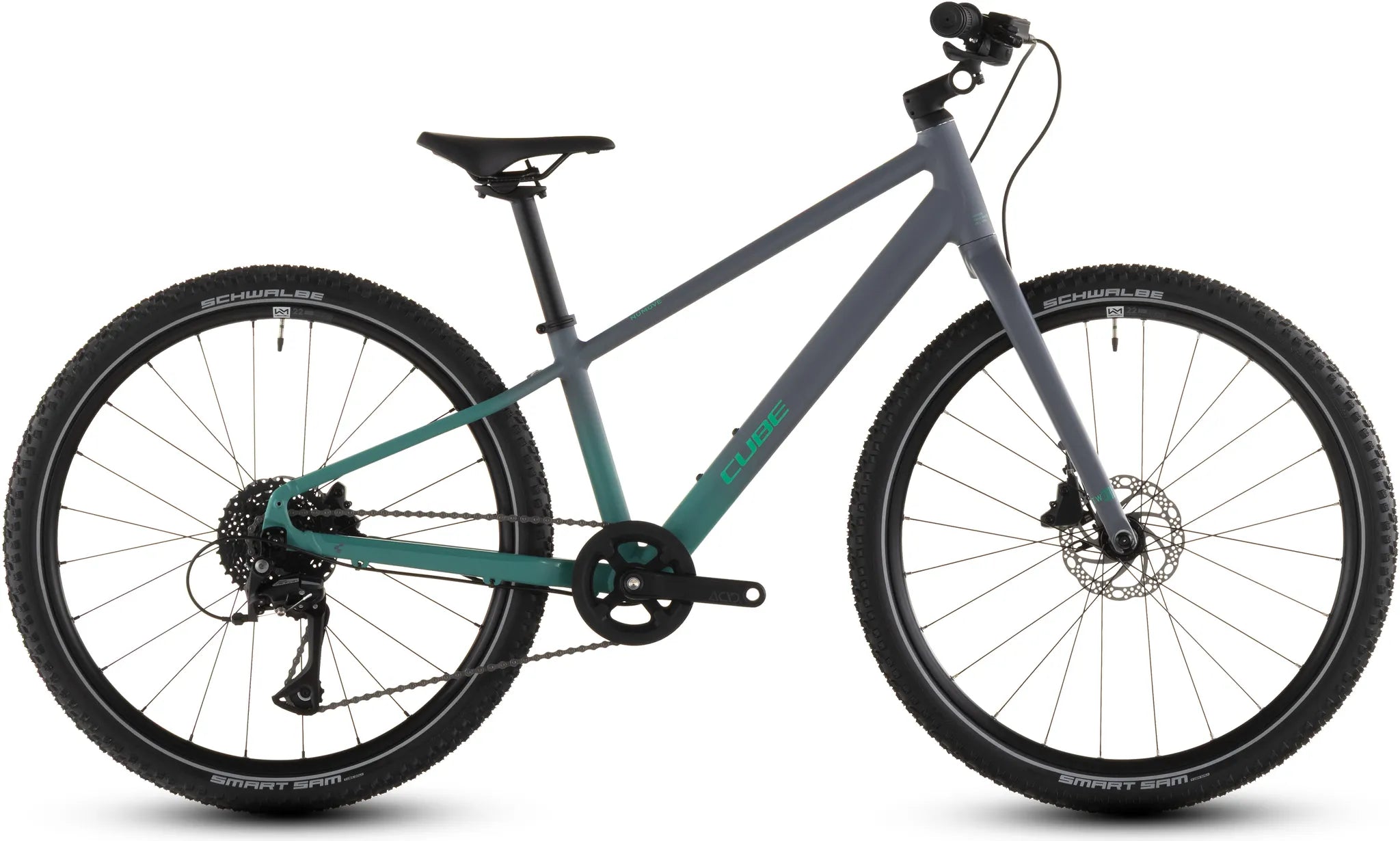
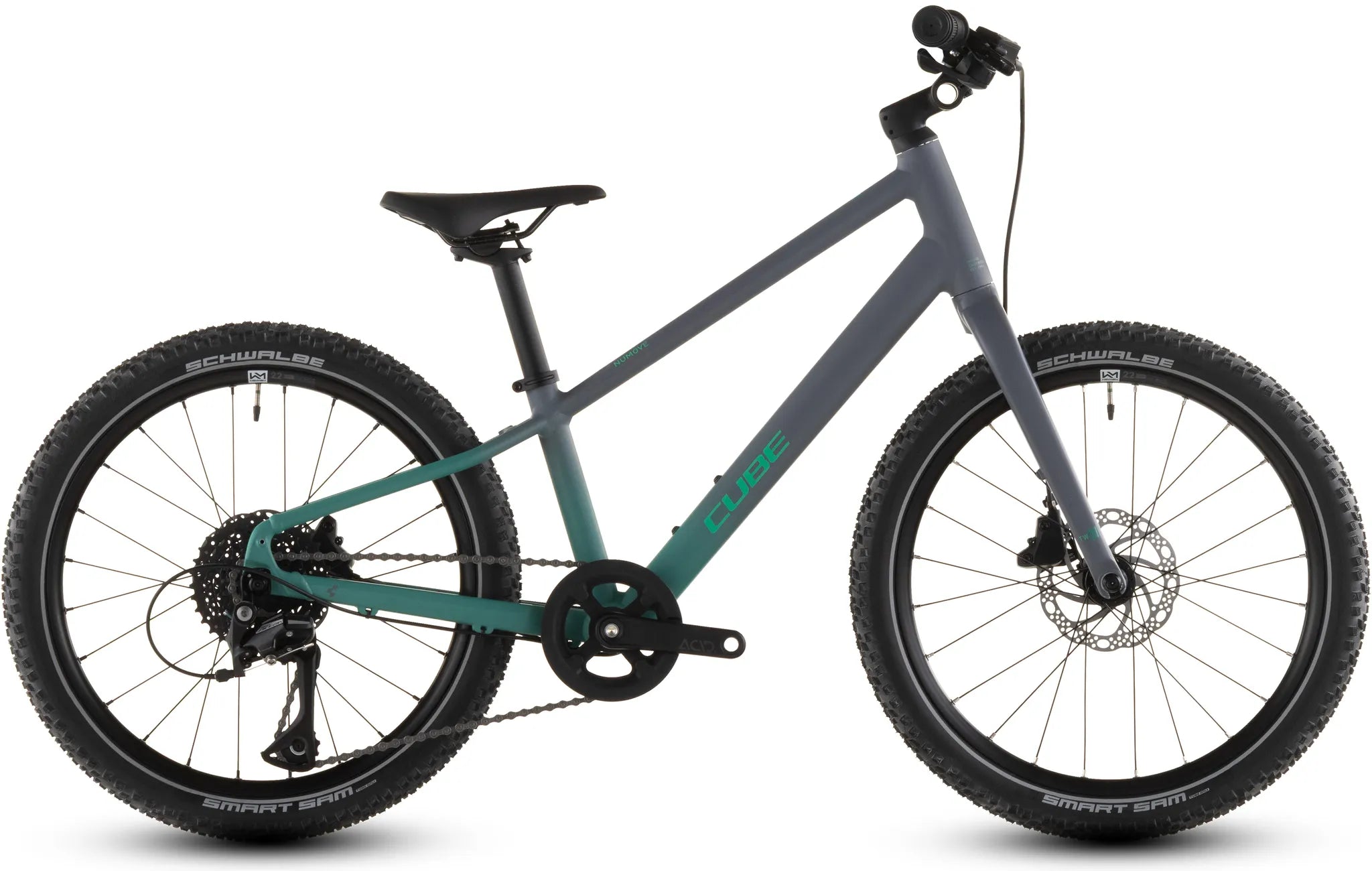
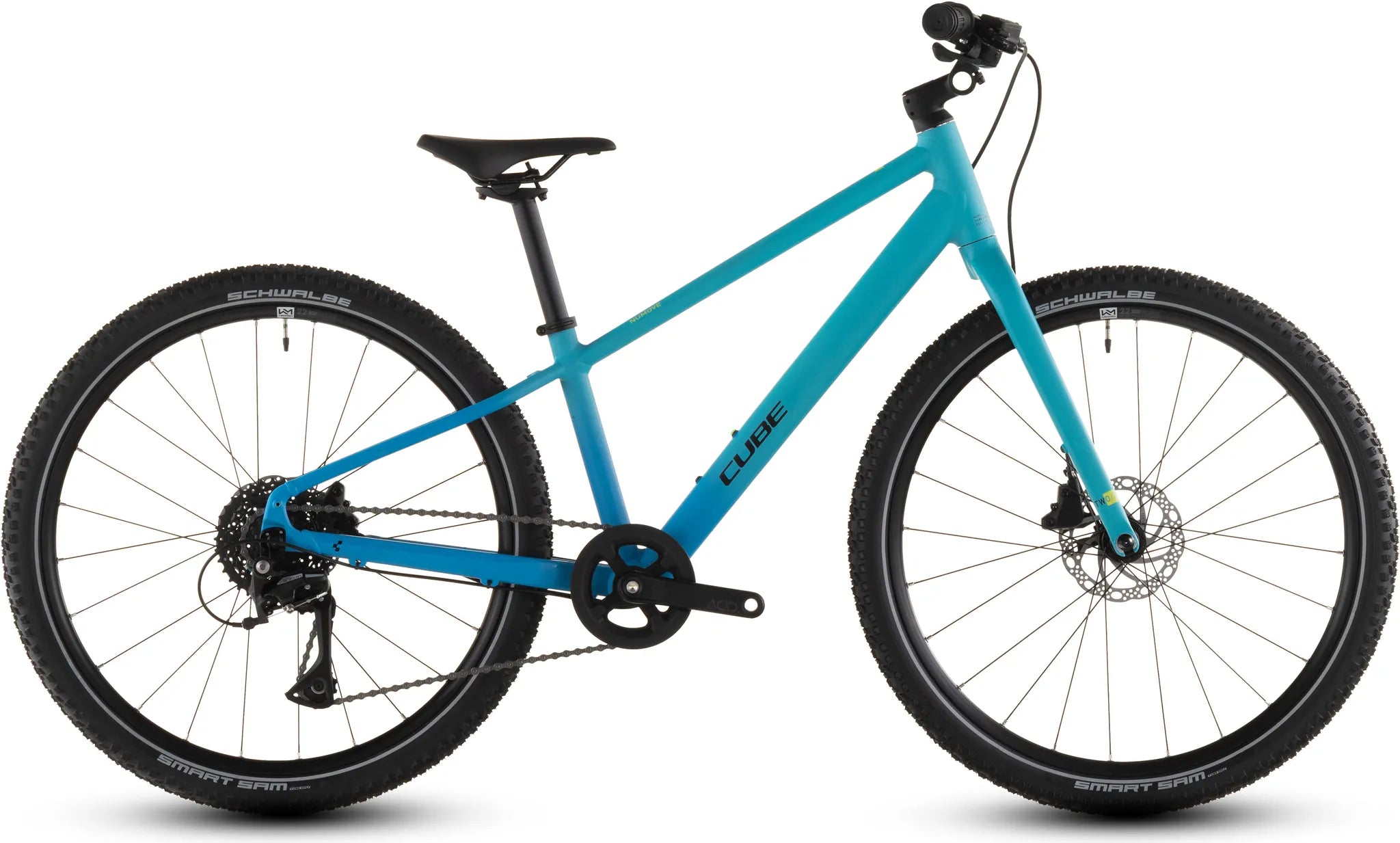
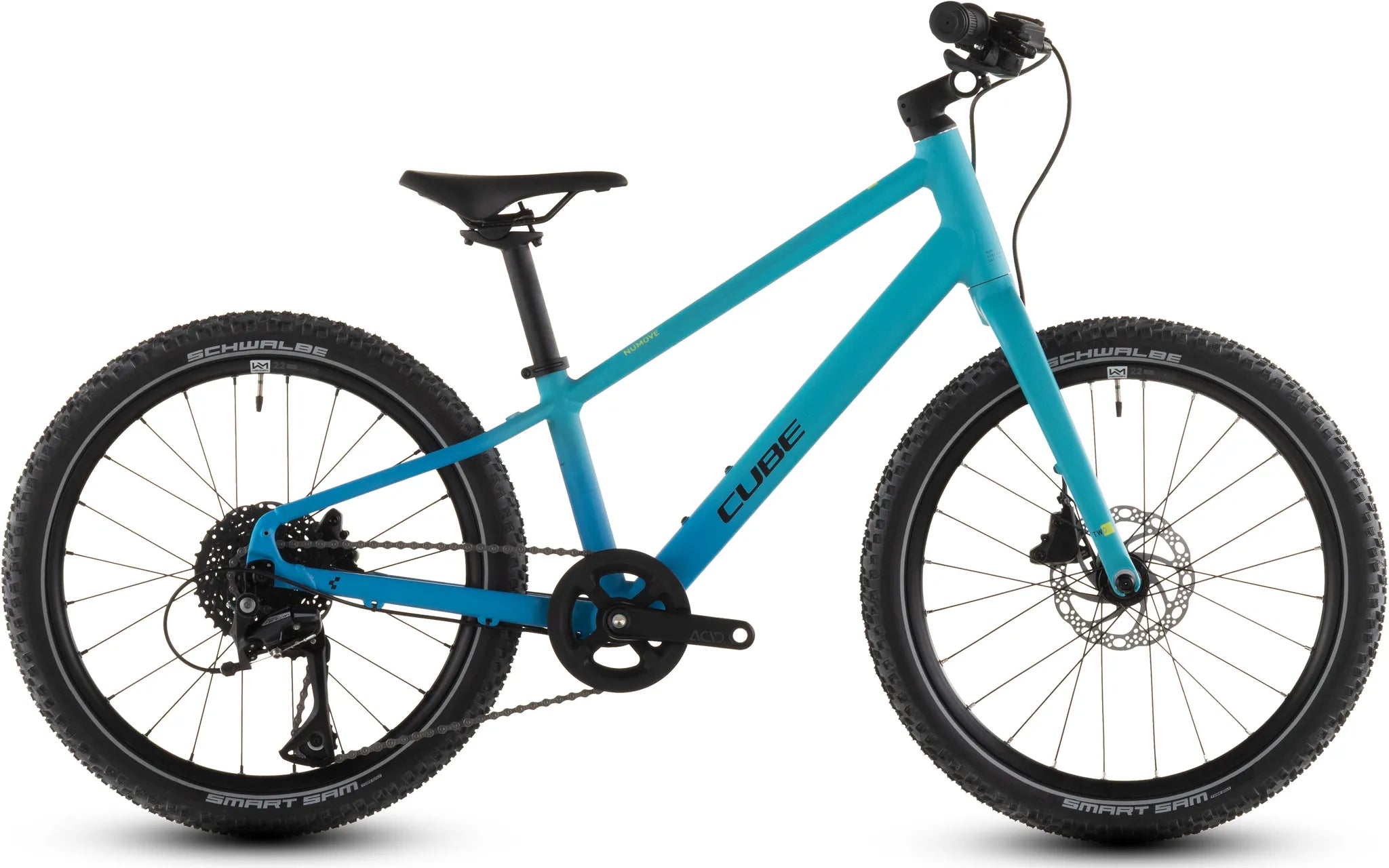
Every great passion starts small. Cube Kids Bikes 2027 accompany young riders from their first confident ride to fast-paced tours, trails, and first gravel adventures. Lightweight Numove bikes make getting started easy and fun, while Acid, Reaction, Stereo Rookie, and Nuroad Rookie open up more possibilities with every step forward. Child-friendly geometries, well-thought-out components, and the lowest possible weight ensure that the technology is not the main focus, but rather what matters most: the joy of riding and the excitement for the next adventure.
Filters




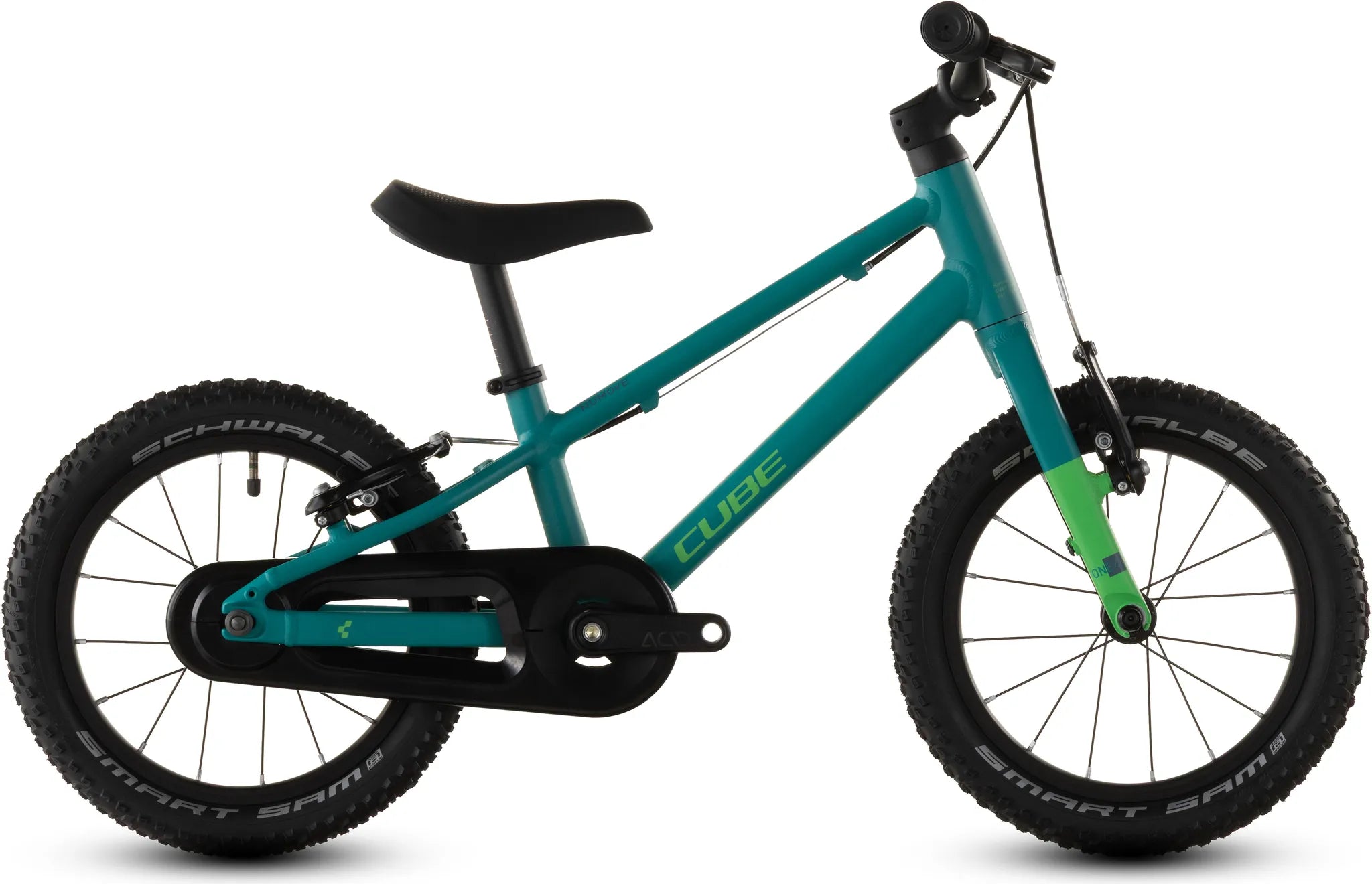
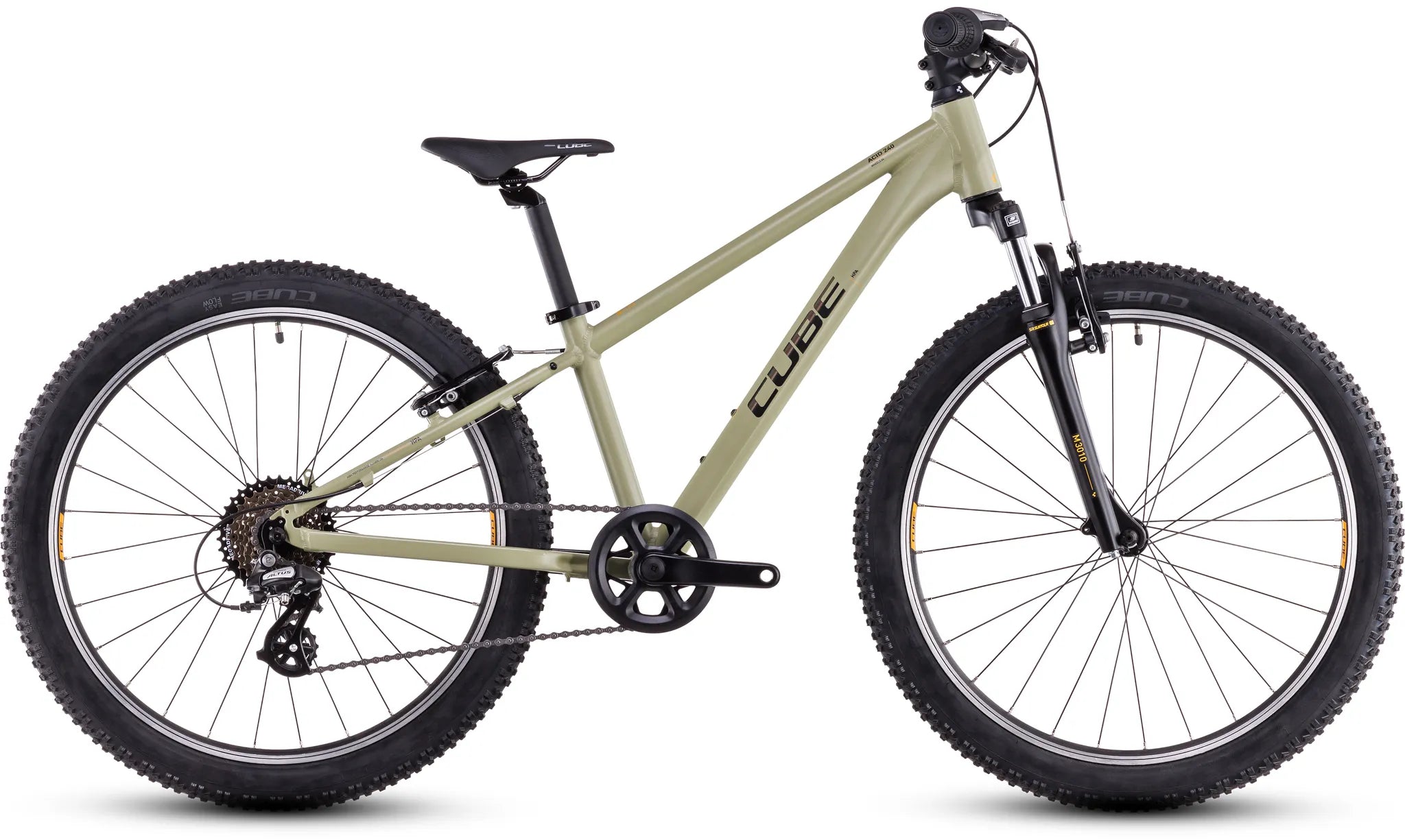
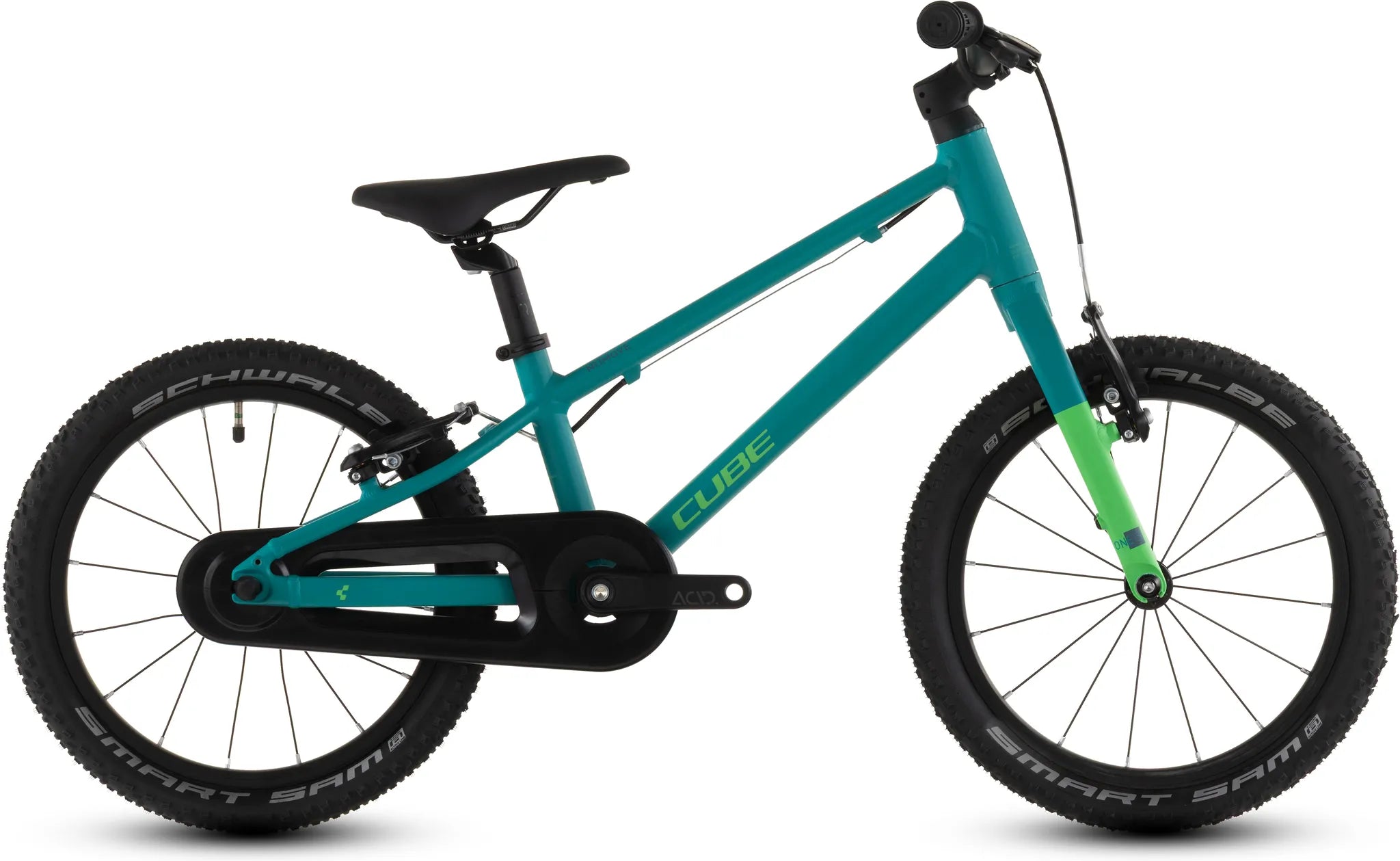
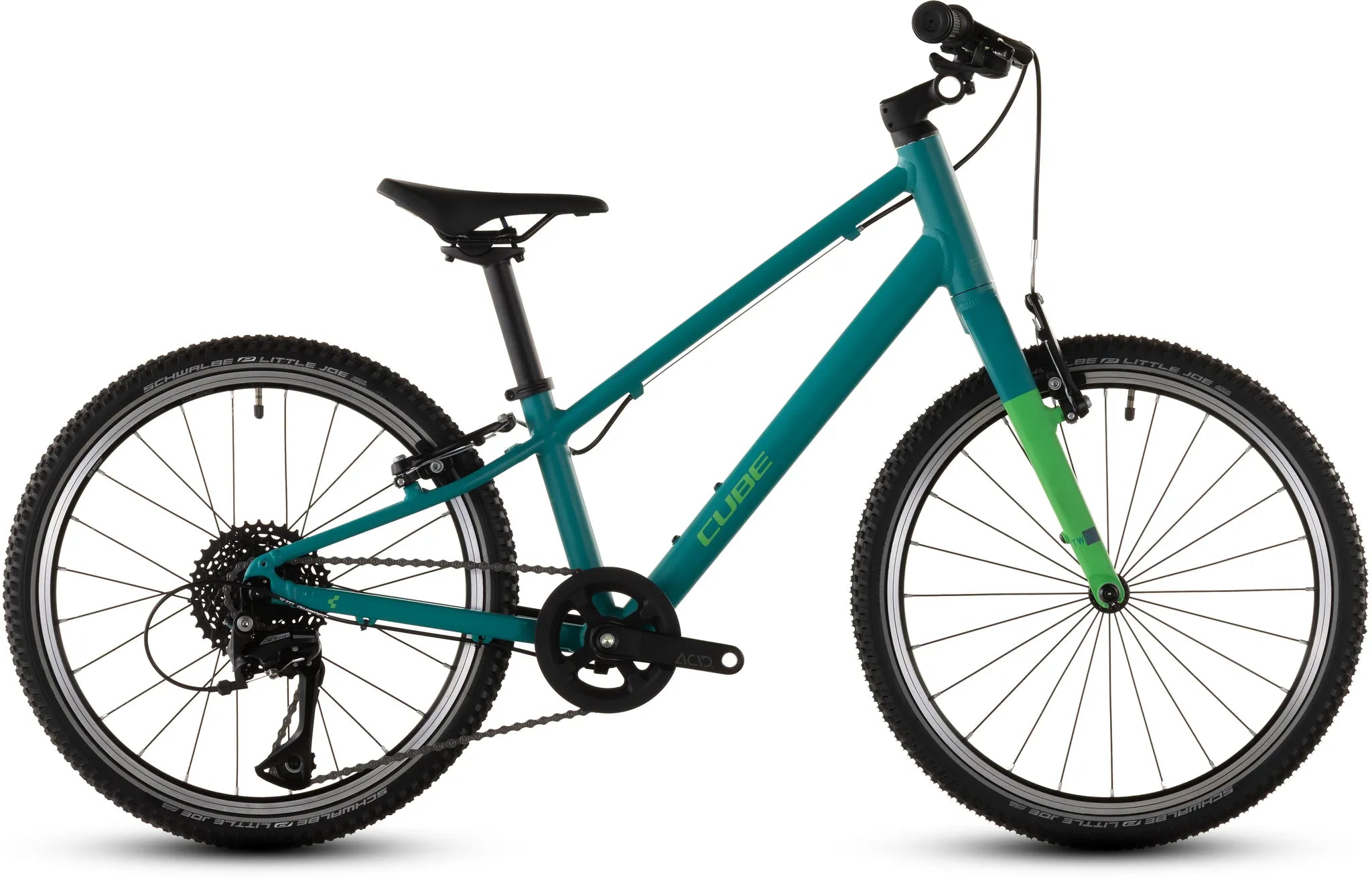





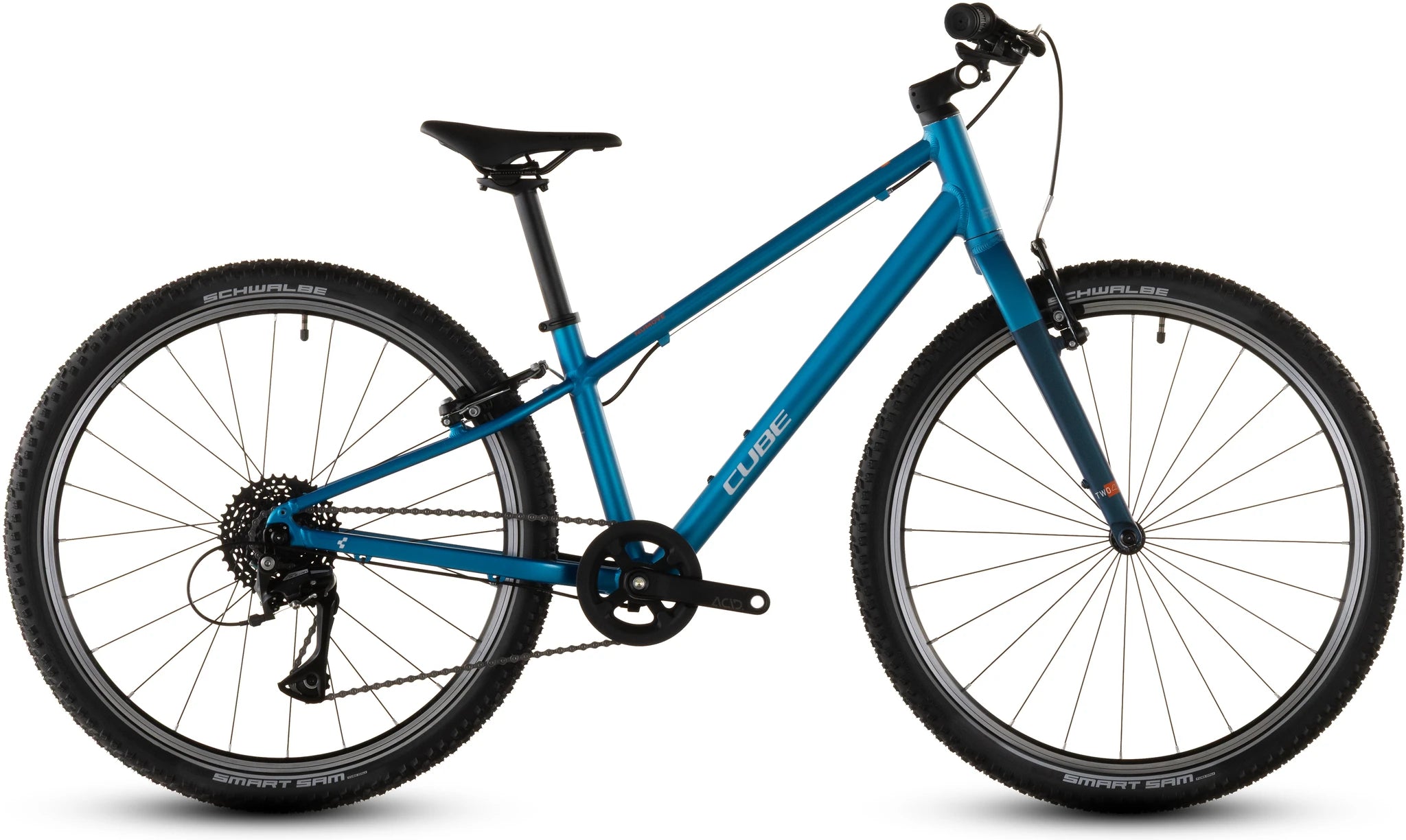
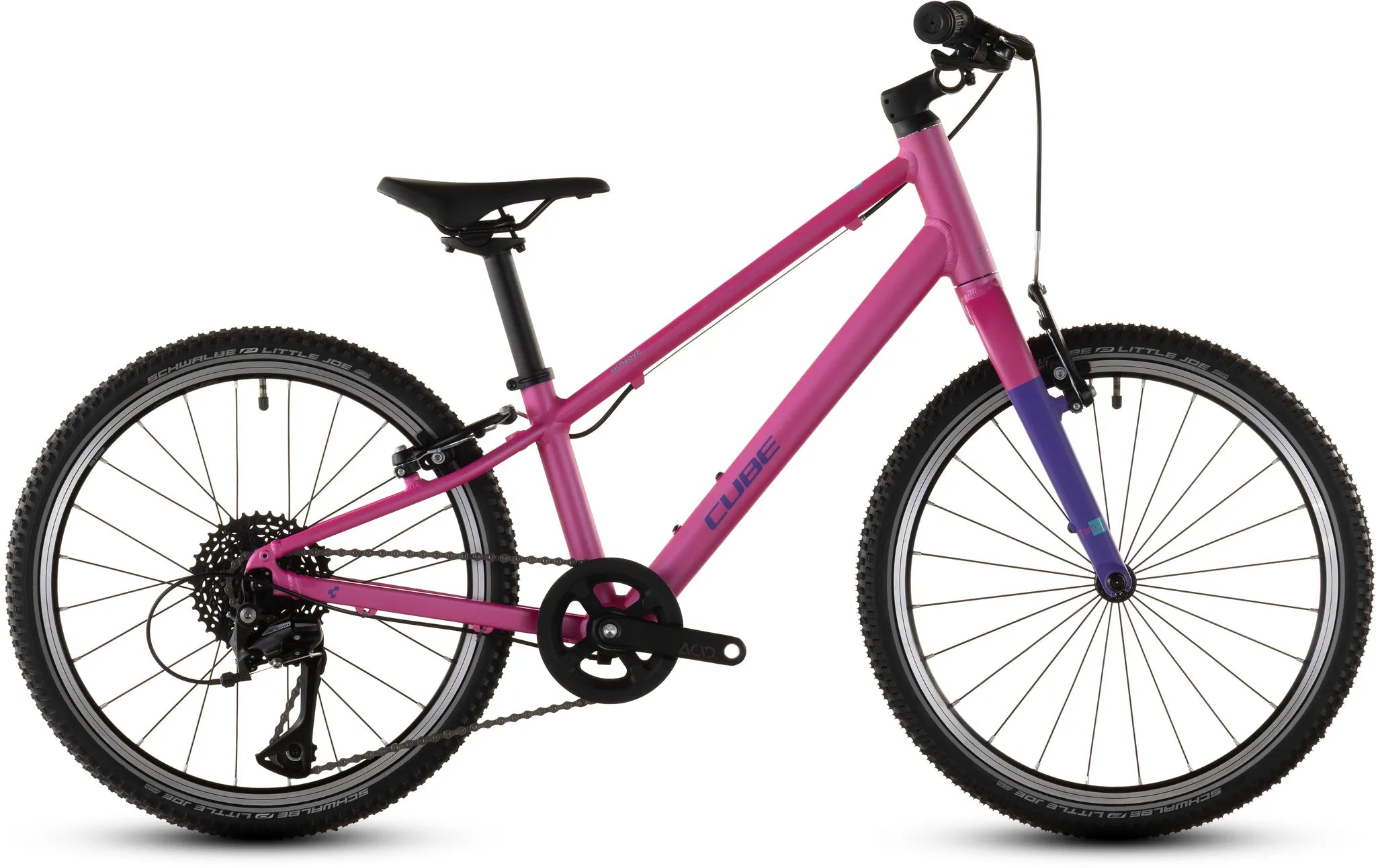
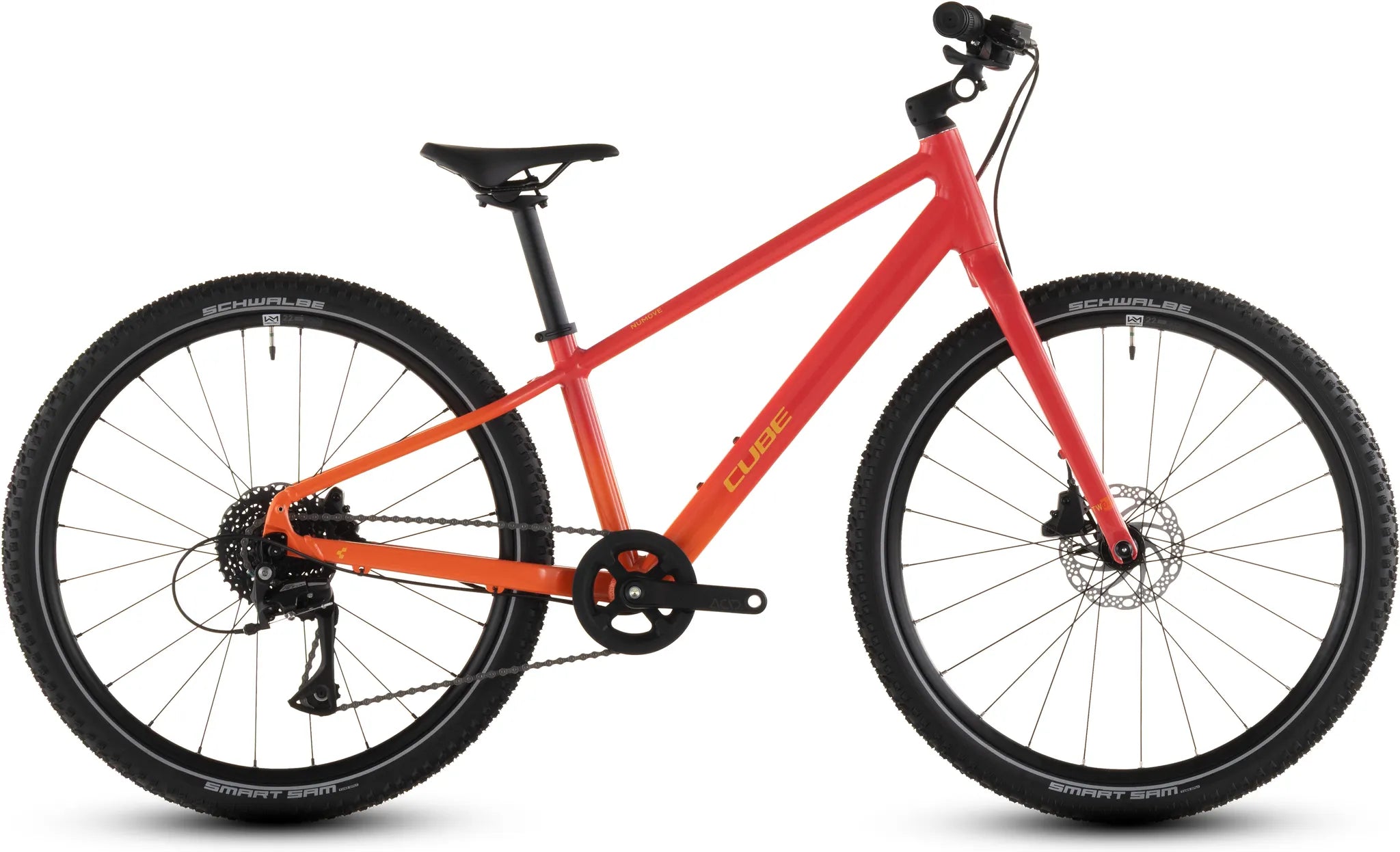
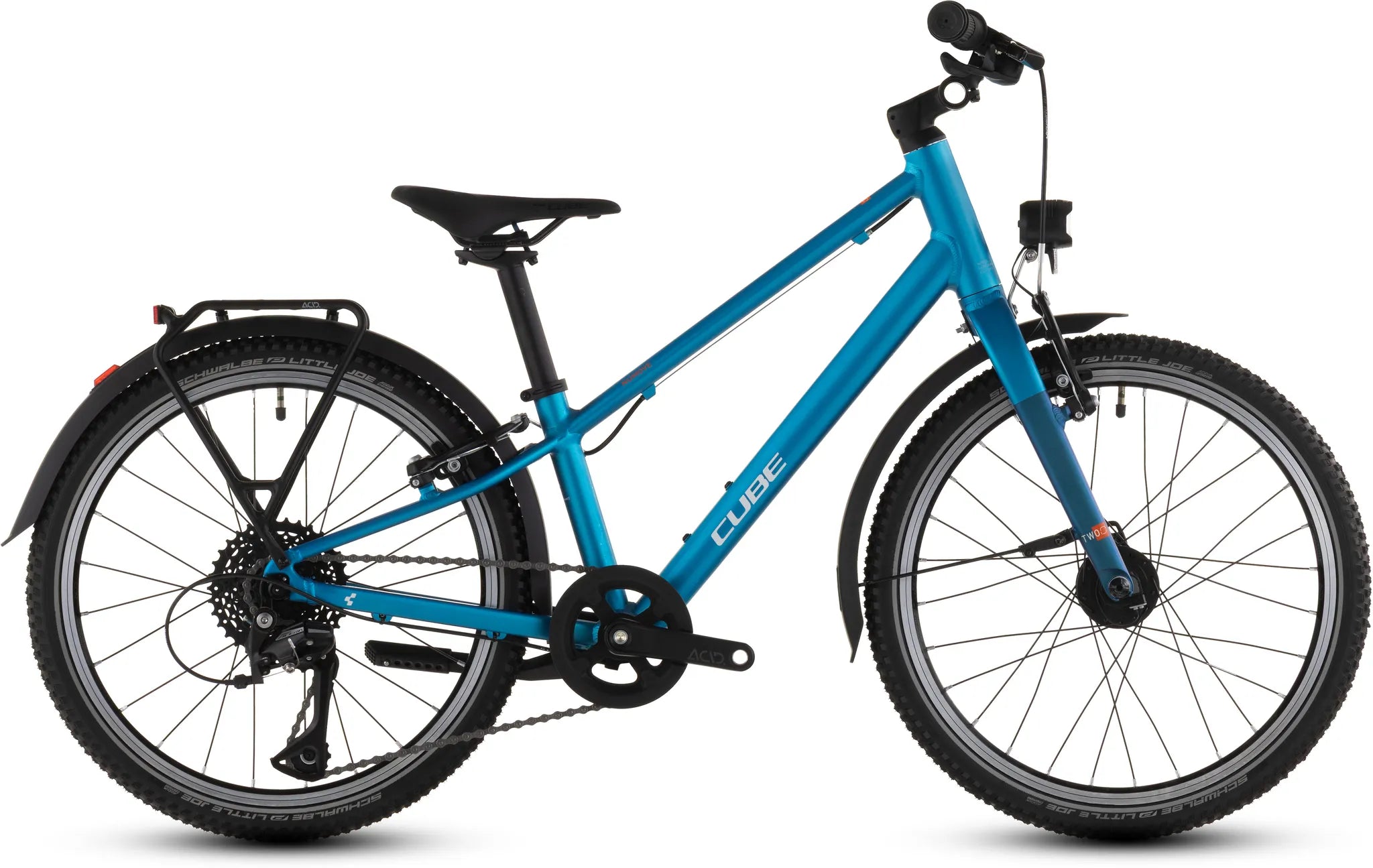








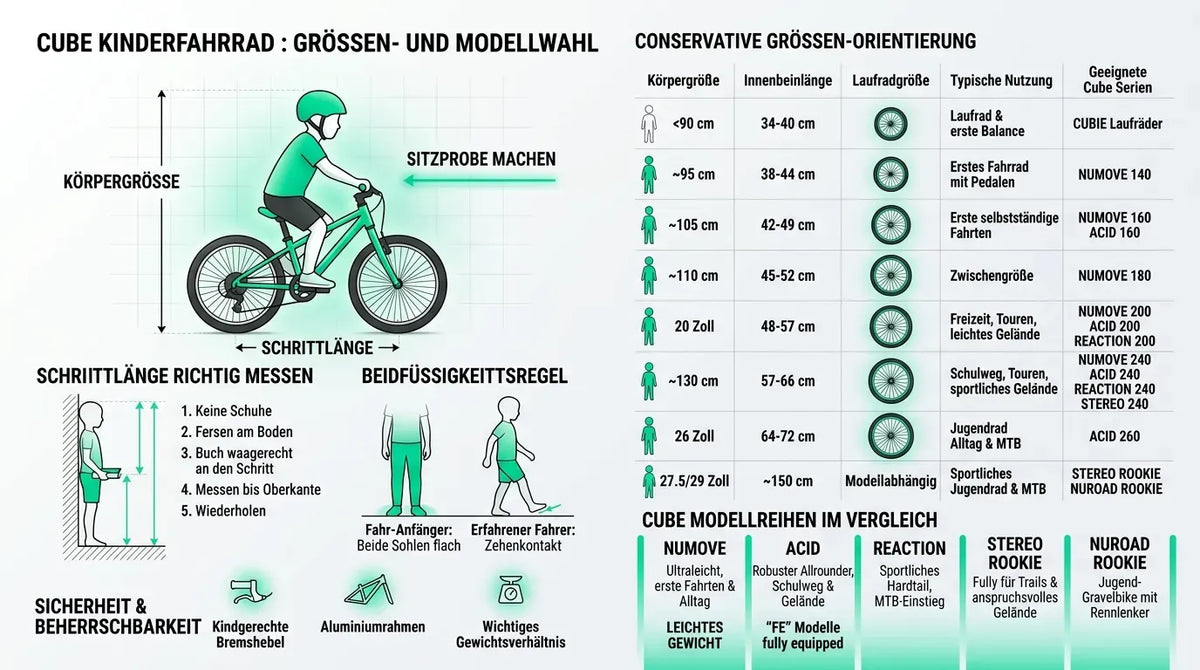
Cube Children's Bike: Size and Model Selection
A Cube children's bike should suit the child's height, leg length and riding experience. Only then do questions about the intended use and equipment come into play. For first rides, a low weight is important, while gears, suspension forks and disc brakes can become more important for the school run or sporty rides.
Cube covers a wide range with wheel sizes from 12 to 29 inches. In addition to classic children's bikes, the range includes lightweight Numove models, practical Acid Bikes, sporty Reaction mountain bikes, as well as special Rookie models for gravel and demanding trails. However, the wheel size alone is not enough to make a choice. Two children of the same height can have different leg lengths and feel differently confident on the bike.
Which Cube children's bike is right for which size?
Height provides an initial guide. You can narrow down the selection by also measuring the child's inseam and letting them test the bike. Age, on the other hand, is only a rough guide. A tall five-year-old child may already need the same bike size as a smaller primary school-aged child.
Smaller Cube children's bikes are usually categorized by wheel diameter. The 16, 20, or 24-inch designation indicates the approximate wheel diameter, not the frame height. Larger Rookie Bikes also come in classic frame sizes such as XXS, XS, or S. The selection process here is already similar to the sizing guide for adult bikes.
The following table provides conservative guidance for initial selection. The right size may vary depending on geometry, saddle height, and the child's experience. Therefore, the size specifications of the specific Cube model and a practical fit test are always the deciding factors.
| Body height | Inside leg length | Wheel size | Typical use | Suitable Cube series |
|---|---|---|---|---|
| from approx. 90 cm | approx. 34 to 40 cm | 12 inches | Balance bike and first experiences with balance and steering | Cubie balance bikes |
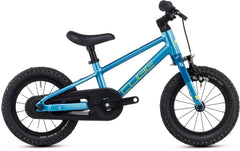
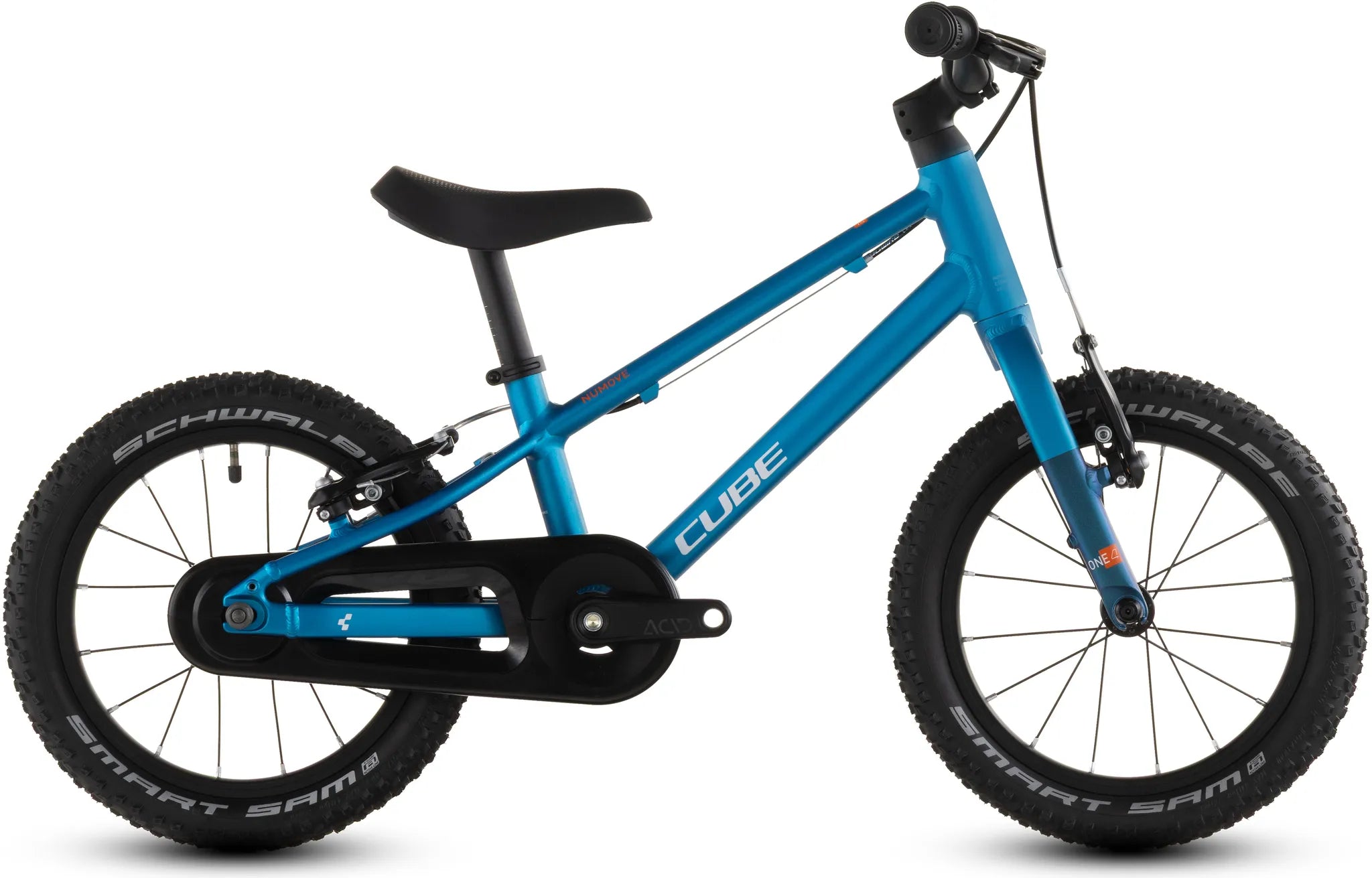
| from approx. 95 cm | approx. 38 to 44 cm | 14 inches | First lightweight bike with pedals | Numove 140 |
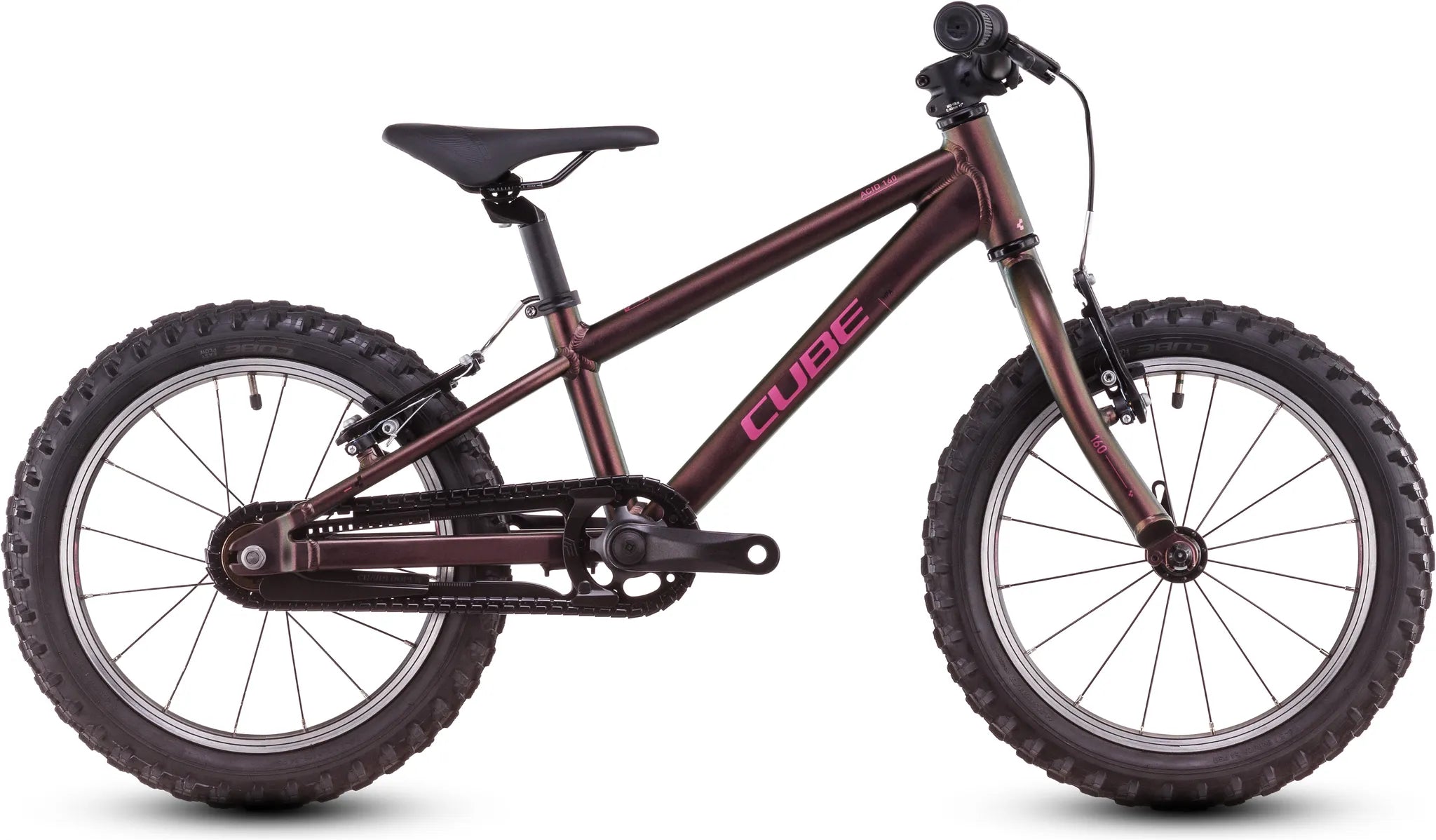
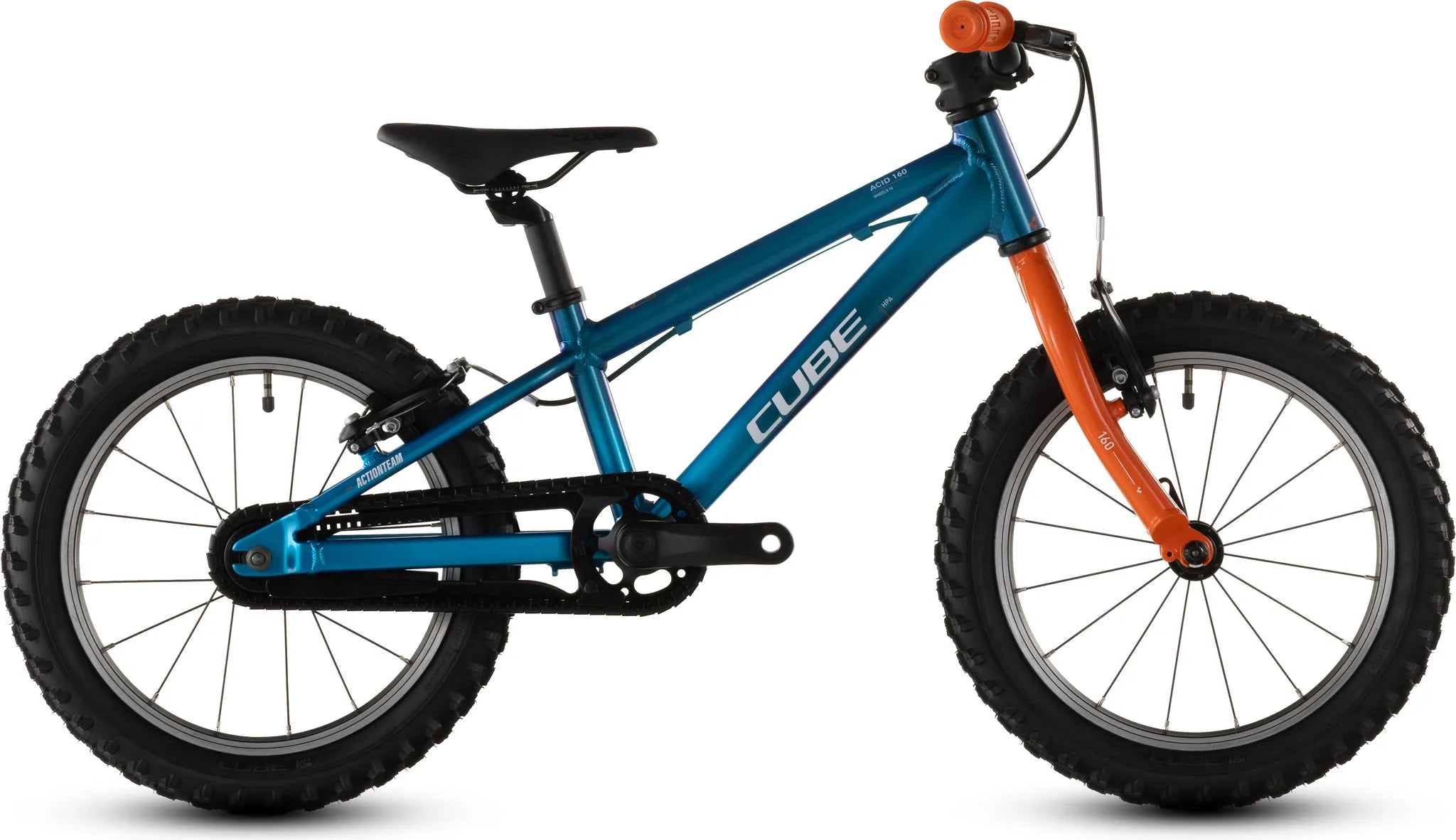
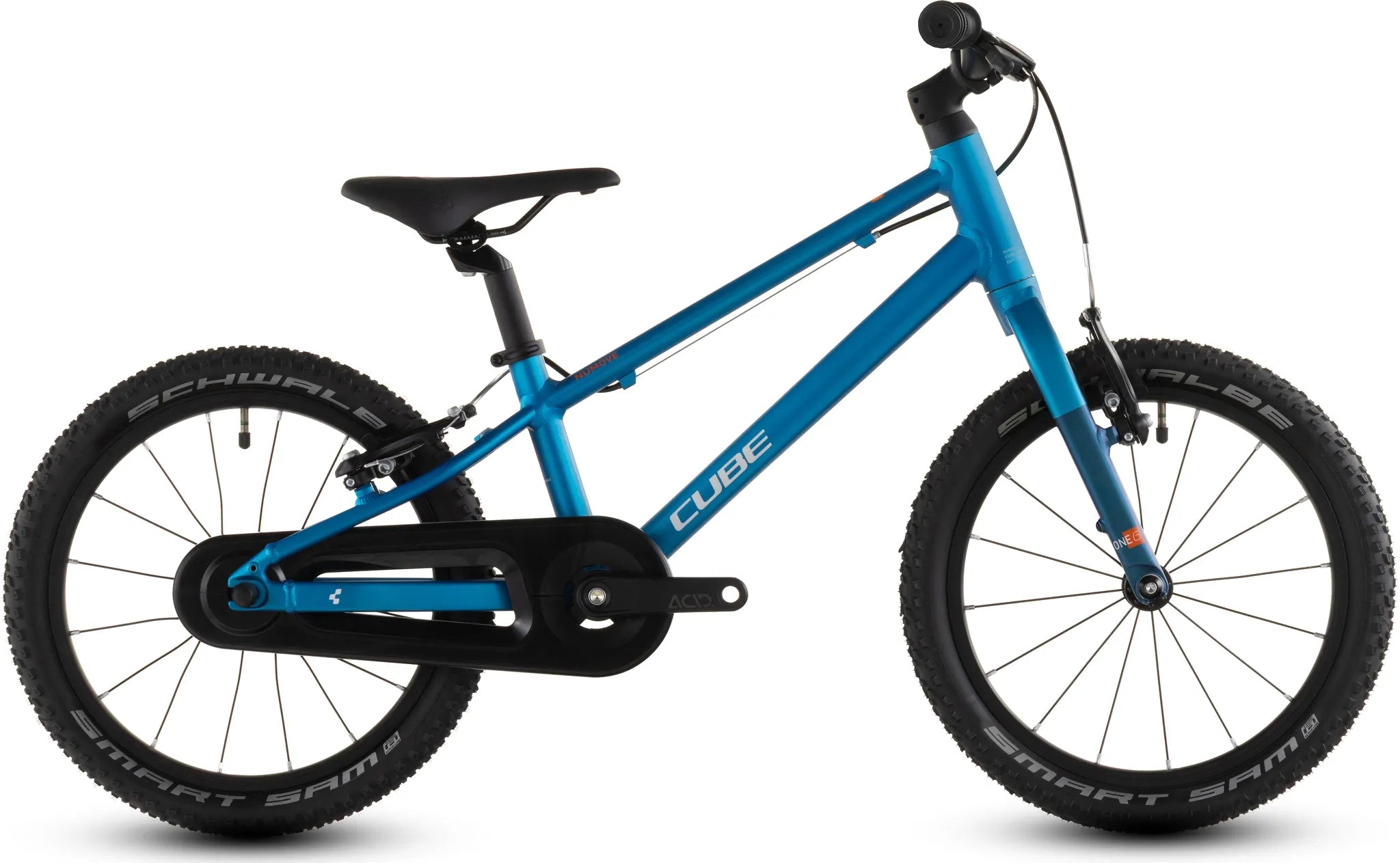
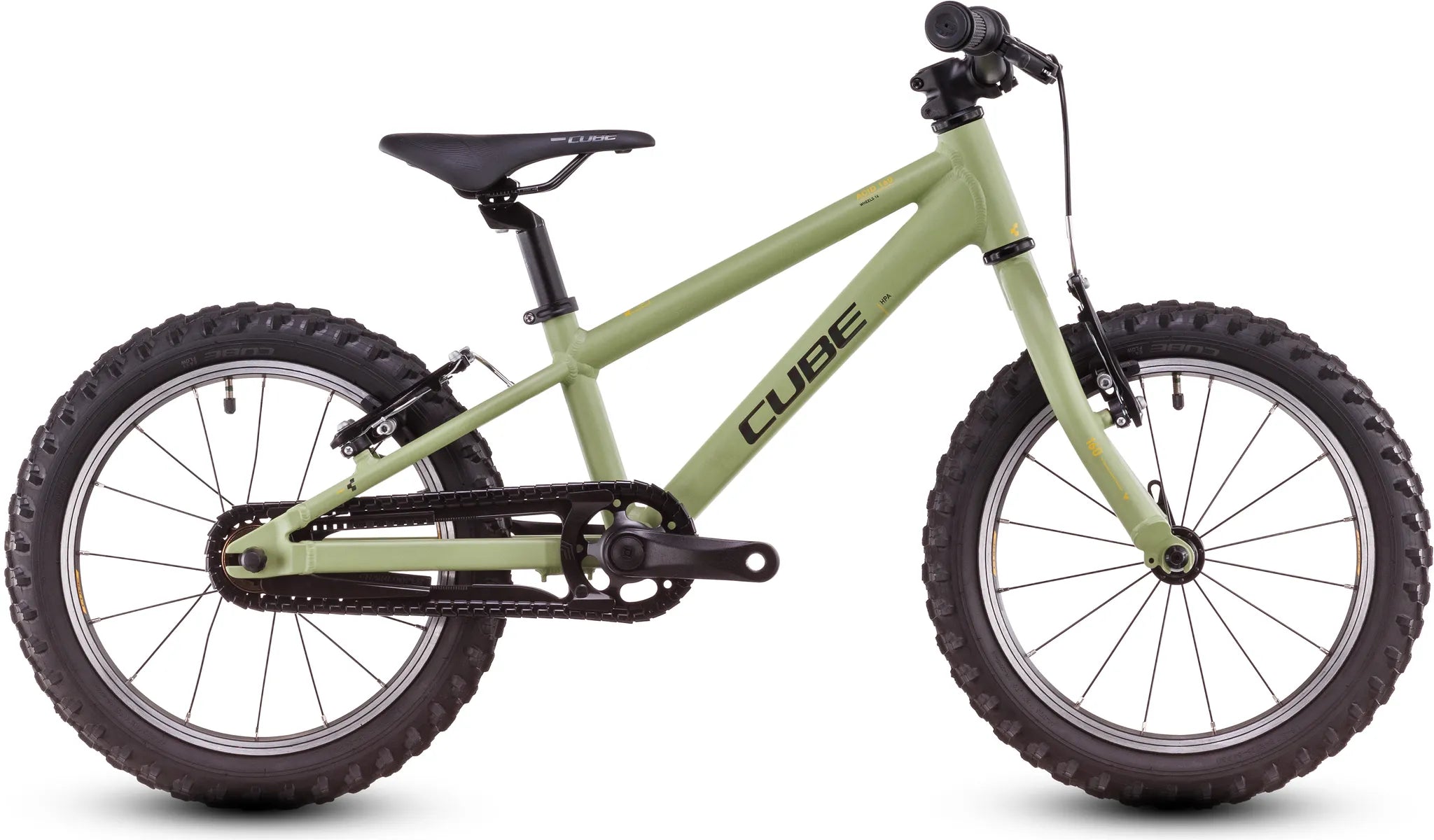
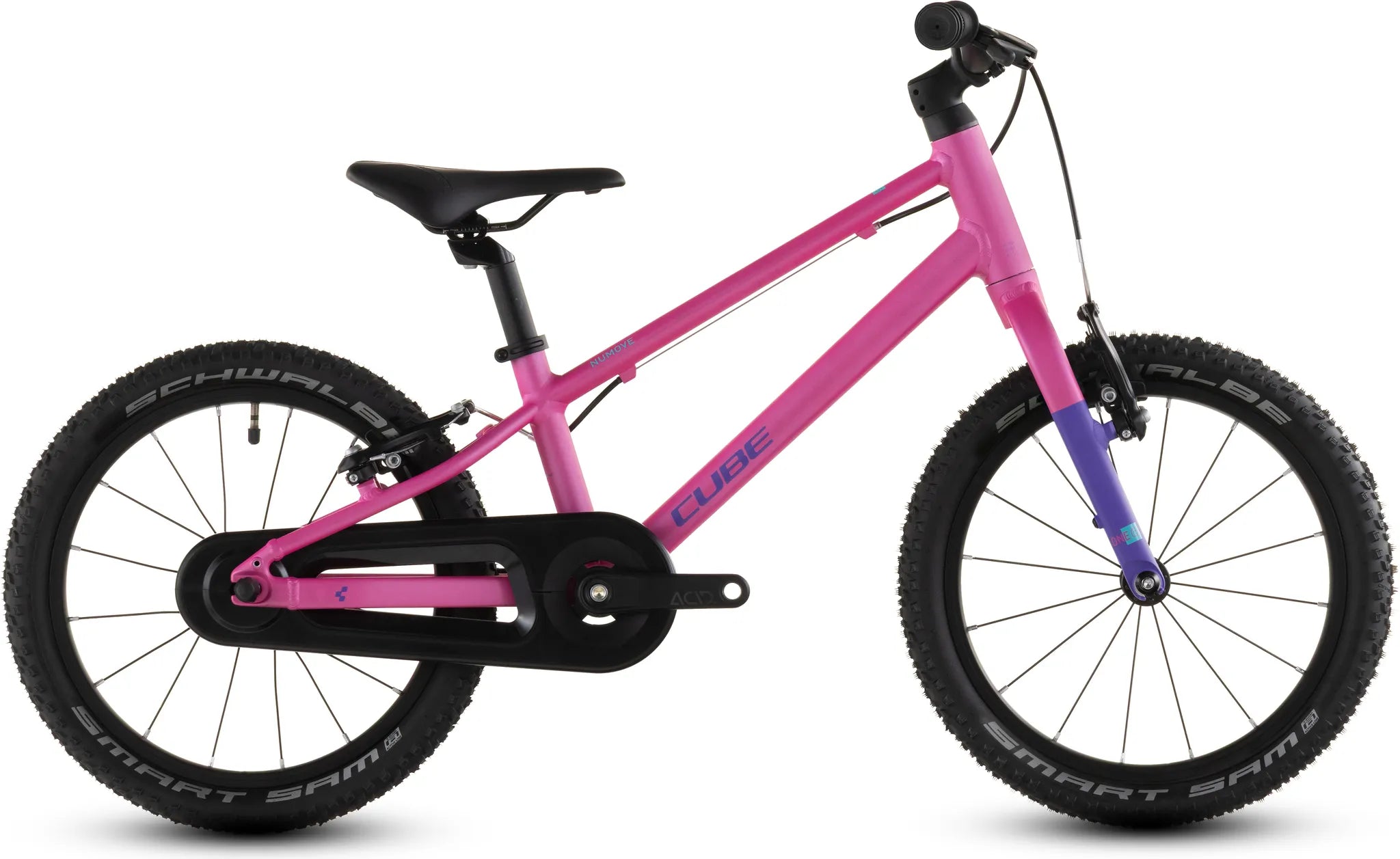
| from approx. 105 cm | approx. 42 to 49 cm | 16 inches | First independent rides on level paths | Numove 160 and Acid 160 |
| from approx. 110 cm | approx. 45 to 52 cm | 18 inches | Intermediate size for children for whom 16 inches is too small and 20 inches is still too large | Numove 180 |
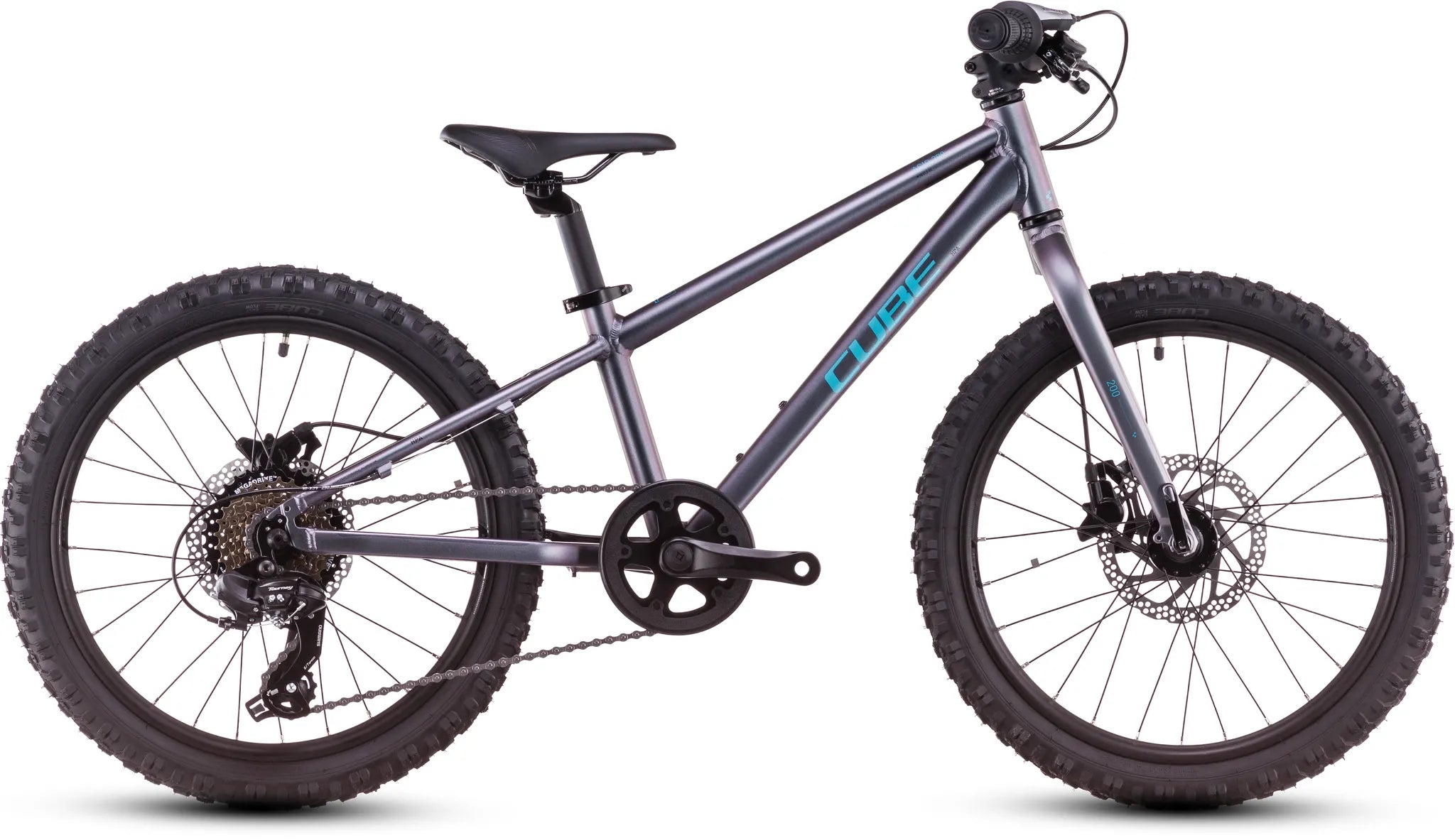
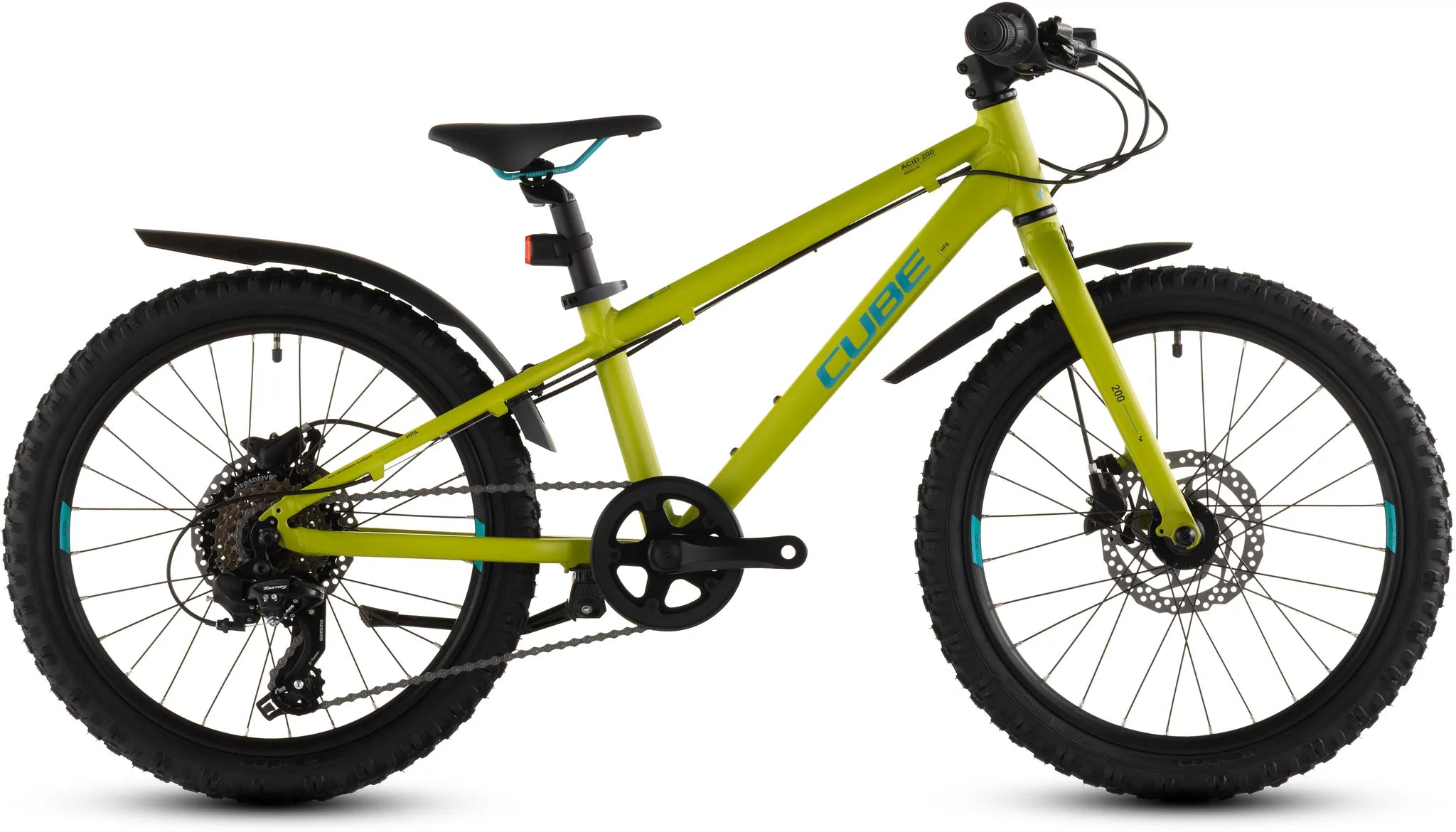
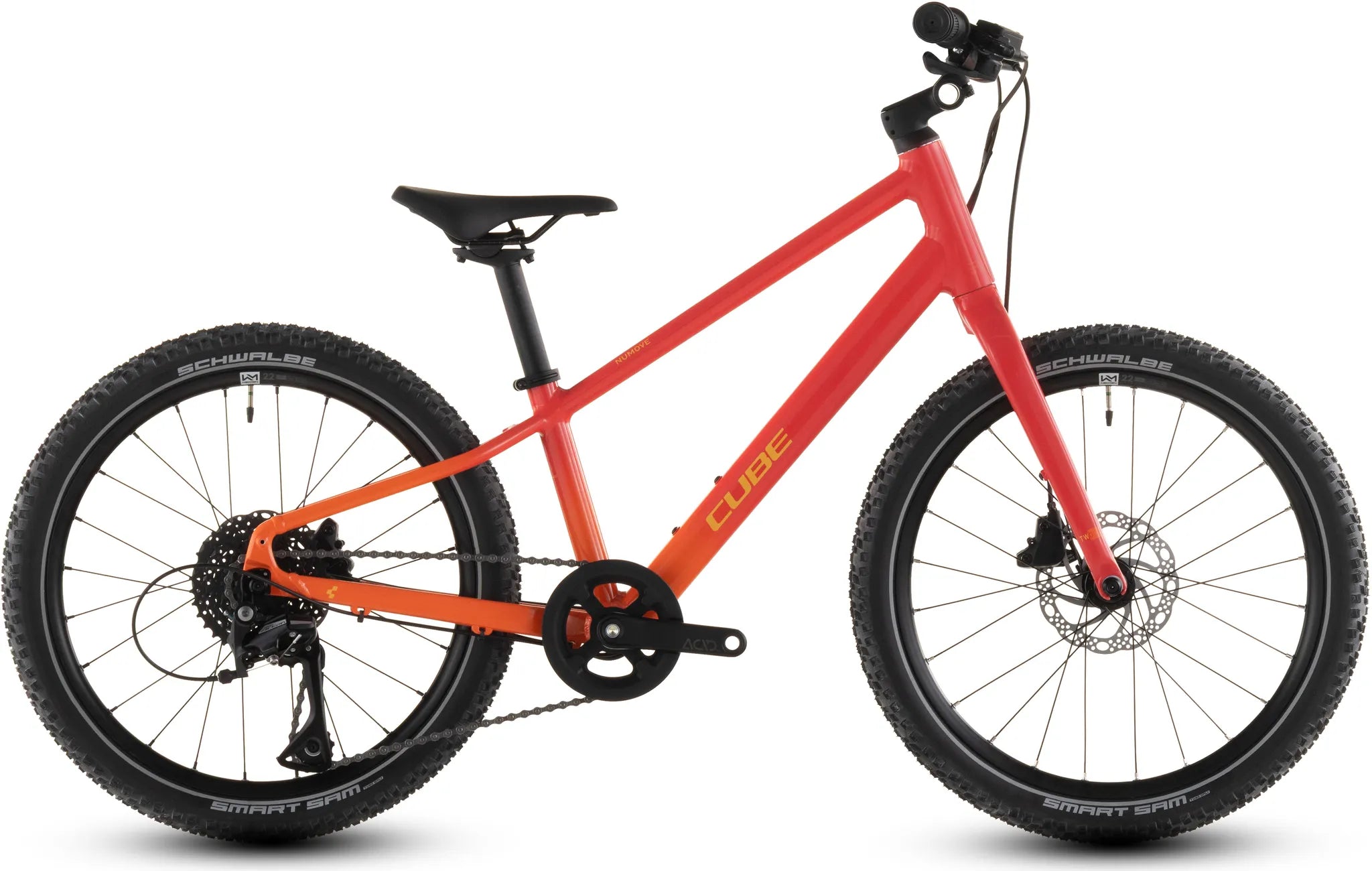
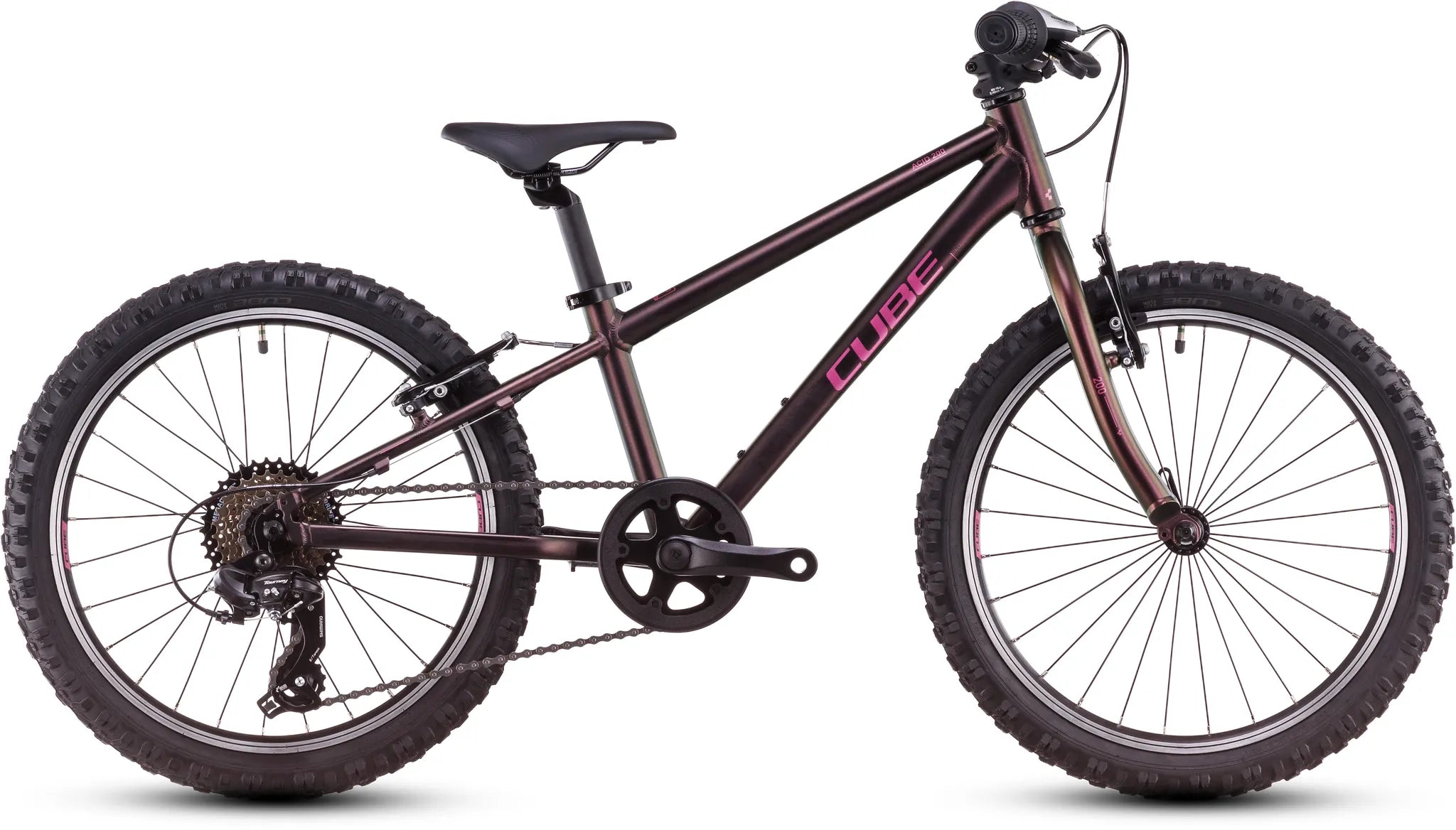
| from approx. 115 cm | approx. 48 to 57 cm | 20 inches | leisure, first longer rides and light off-road terrain | Numove 200, Acid 200 and Reaction 200 |
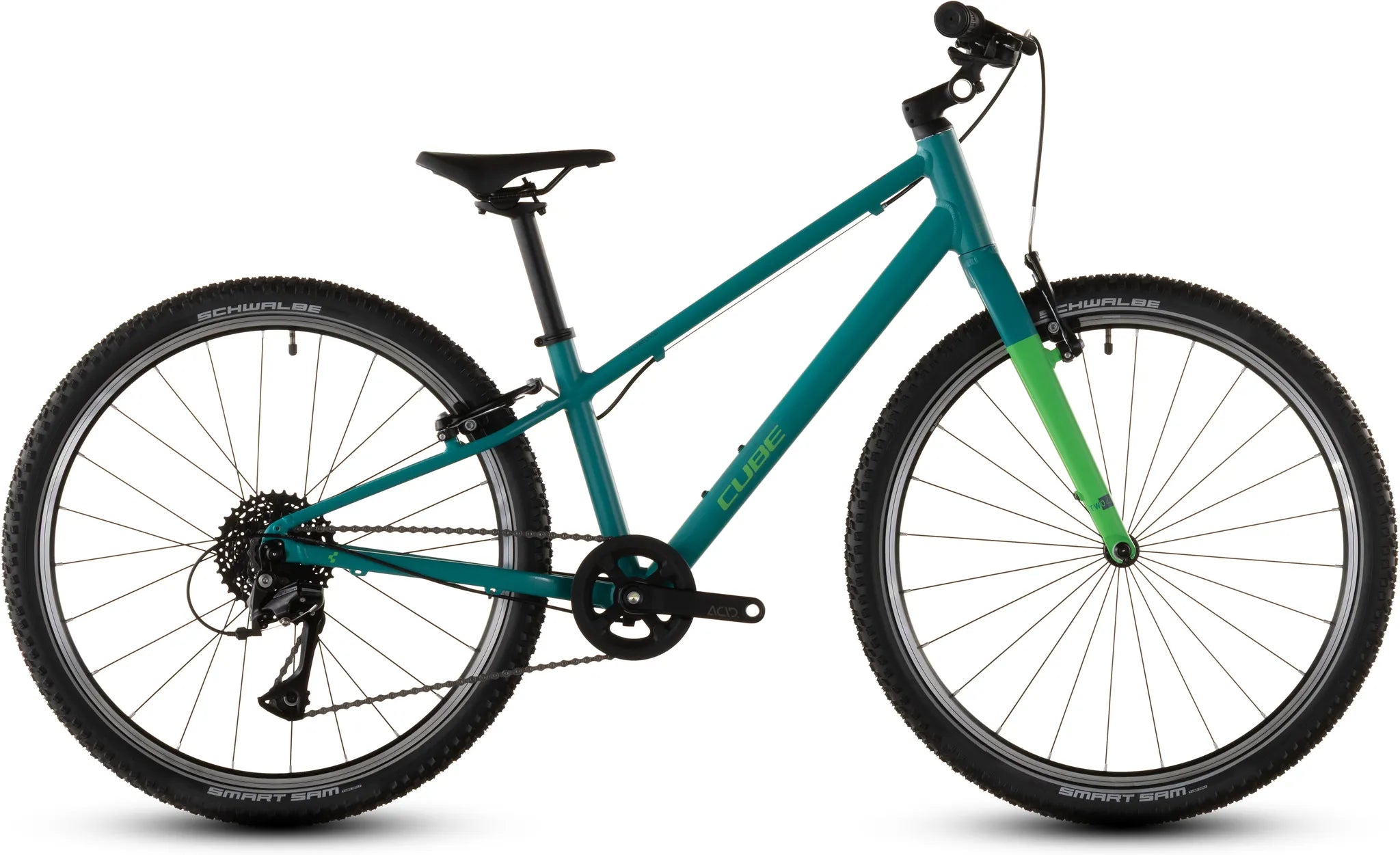
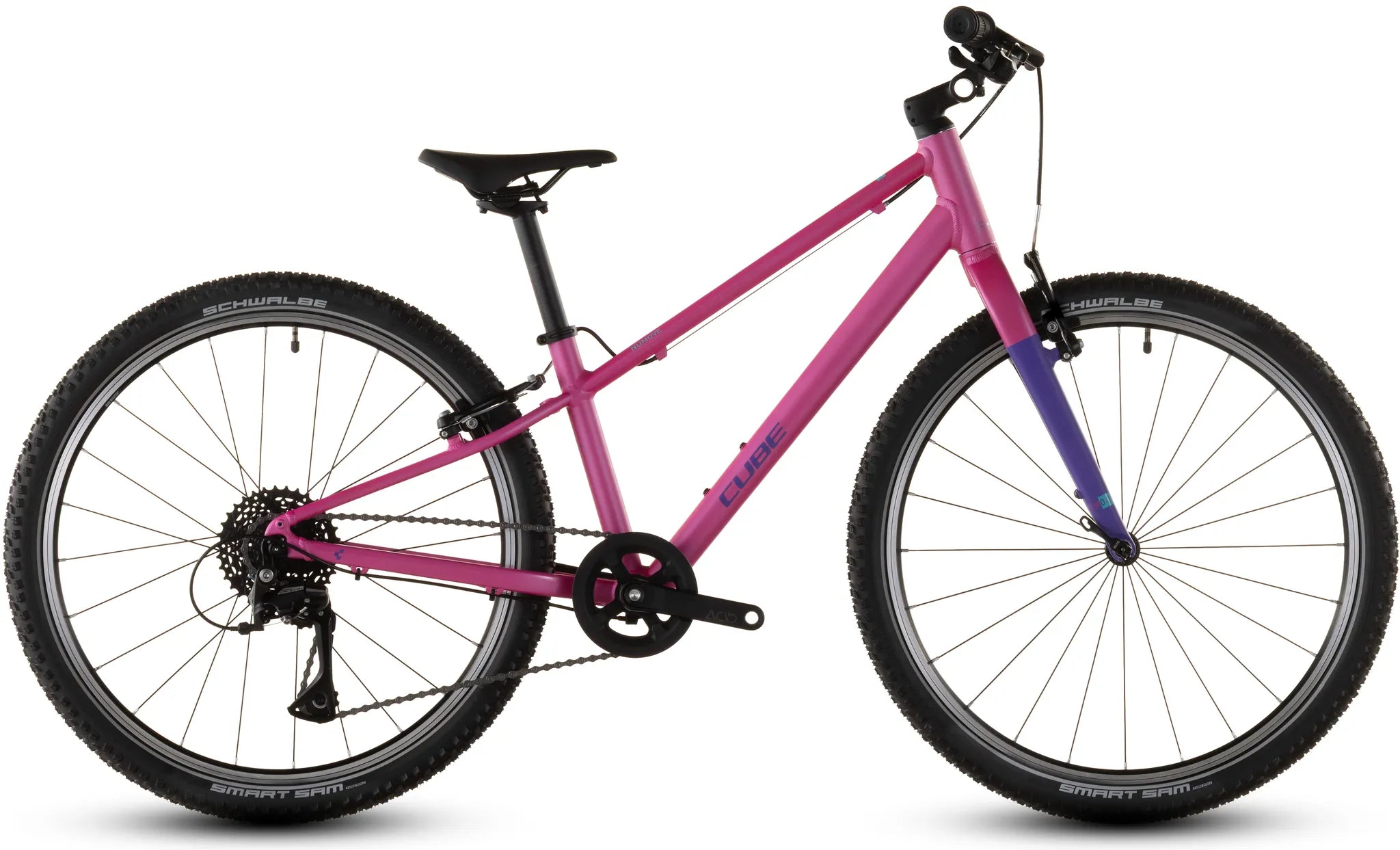
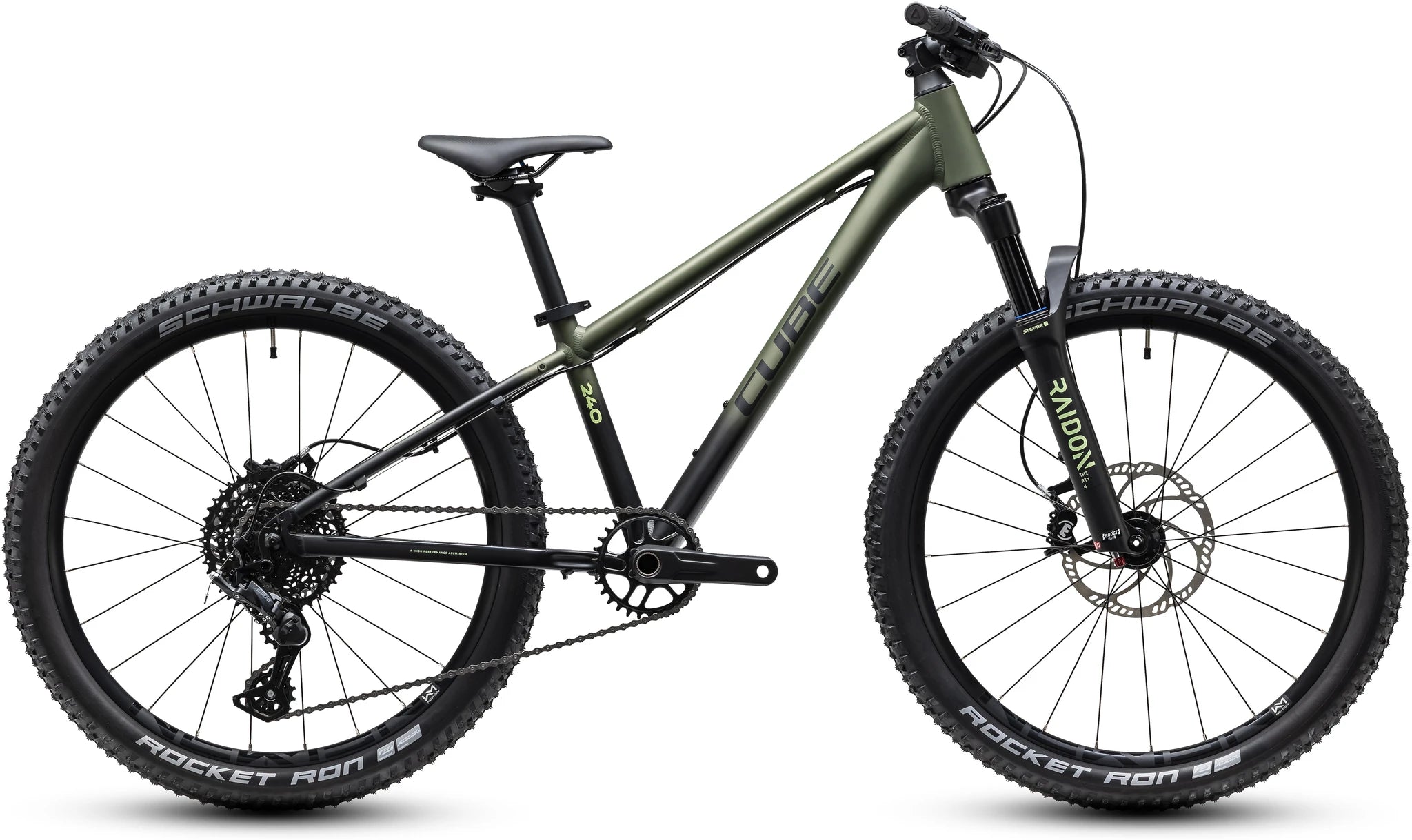
| from approx. 130 cm | approx. 57 to 66 cm | 24 inches | school commutes, tours and sporty off-road riding | Numove 240, Acid 240, Reaction 240 and Stereo 240 |
| from approx. 140 cm | approx. 64 to 72 cm | 26 inches | youth bike for everyday use, touring and mountain biking | Acid 260 and other youth models |
| from approx. 150 cm | model-dependent | 27.5 or 29 inches | Sporty youth bikes with geometry close to adult bikes | Stereo Rookie, Nuroad Rookie and other Rookie models |
The values deliberately overlap. For some Cube Bikes, the manufacturer’s recommendations start at a lower value than the guidelines provided here. A child with good riding skills can therefore switch to the next size earlier. Beginners, on the other hand, often benefit from riding the smaller, easier-to-handle bike for longer.
How do you measure stride length correctly?
The child stands with their back against a wall without shoes. Their feet should be approximately one hand’s width apart. Slide a firm book vertically between their legs until it rests lightly against the crotch. Then measure from the floor to the top edge of the book. This measurement corresponds to the inseam length.
- The child should not wear shoes during the measurement.
- Both heels must remain on the floor.
- The book should be held horizontally and rest lightly against the crotch.
- Measure straight up from the floor to the top edge of the book.
- The measurement should be repeated once to avoid discrepancies.
The lowest saddle position must match the measured inseam length. If the saddle itself is too high even at its lowest setting, it will be difficult to stop safely. A saddle set too low is also disadvantageous, as the knees will remain sharply bent while pedaling and tire more quickly.
What does the two-foot rule mean?
For beginners, both soles of the feet should be able to reach the ground flat while seated. This allows the child to stop themselves and gain confidence when starting off and braking. This rule is particularly helpful when they are just switching from a balance bike to a pedal bike.
An experienced child does not need to be able to place both full soles on the ground at all times. With an efficient saddle height, secure contact with the toes or the front of the feet is often sufficient. The key is that the child can stop, dismount, and ride off again in a controlled manner.
How can you tell if a bicycle is too large or too small?
A bike that is too large is often noticeable as soon as the child gets on. The child tilts the bike sharply to one side, can only reach the brake levers with outstretched fingers, or has to jump off the seat when stopping. Unsteady steering and difficulty getting started are also signs that the bike is still too large.
On a bike that is too small, the knees come up high while pedaling. The child often rides standing up or sits with their legs sharply bent. The handlebars may also be too close to the upper body. If these problems can no longer be resolved by adjusting the seat and handlebars, it is time to switch to the next size.
Comparing the Cube Model Series Numove, Acid, Reaction and Rookie
After choosing the size, the intended use determines the right series. A lightweight bike for initial riding attempts requires different equipment than a mountain bike for forest trails. Suspension forks or wide tires are useful on the trail but add weight. For short everyday rides on asphalt, simpler equipment may be the better choice.
| Model range | Intended use | Character | Brakes | Suitable for |
|---|---|---|---|---|
| Numove | First rides, everyday use and easy tours | Lightweight design with child-friendly ergonomics | Depending on the size, rim brakes or disc brakes | Children who need an easy-to-handle bike |
| Acid | Everyday riding, school runs, leisure and light off-road use | Robust all-rounder with various equipment levels | V-brakes or hydraulic disc brakes | For kids who combine road and unpaved paths |
| Reaction | Mountain bike tours and trails | Sporty hardtail with rigid fork or suspension fork | Usually hydraulic disc brakes | Junior riders with regular off-road experience |
| Stereo 240 | Technical paths and trails | Full-suspension kids' mountain bike | Hydraulic disc brakes | Active kids who need a compact full-suspension bike |
| Stereo Rookie | Demanding trails and longer off-road rides | Youth full-suspension bike with suspension and geometry close to adult models | Hydraulic disc brakes | Ambitious junior mountain bikers |
| Nuroad Rookie One | Gravel, asphalt and longer rides | Youth gravel bike with drop handlebars and wide tires | Hydraulic disc brakes, depending on the model year | Teenagers with experience riding sporty bicycles |
Numove for a low bicycle weight
The Numove series is designed for children who need a bike that is as light as possible and easy to control. Cube sizes the frame, cranks, pedals, handlebars and grips to suit smaller body proportions. A narrow pedal spacing supports a natural leg position. Short cranks prevent the knees from being lifted unnecessarily high when pedalling.
For the smaller Numove sizes, an easy start is the main focus. Depending on the model year and equipment, the Numove 160 weighs approximately six kilograms. A child can more easily accelerate such a bike from a standstill, pick it up after a fall or push it over a curb. Larger Numove variants are available with gears and, in some cases, disc brakes.
A Numove is right if your child still has little strength, is often meant to get on by themselves or only reluctantly moves a heavier bike. For the daily school run, it can be checked whether mudguards, lights and a stand are present or can be retrofitted.
Acid as a versatile children's bike
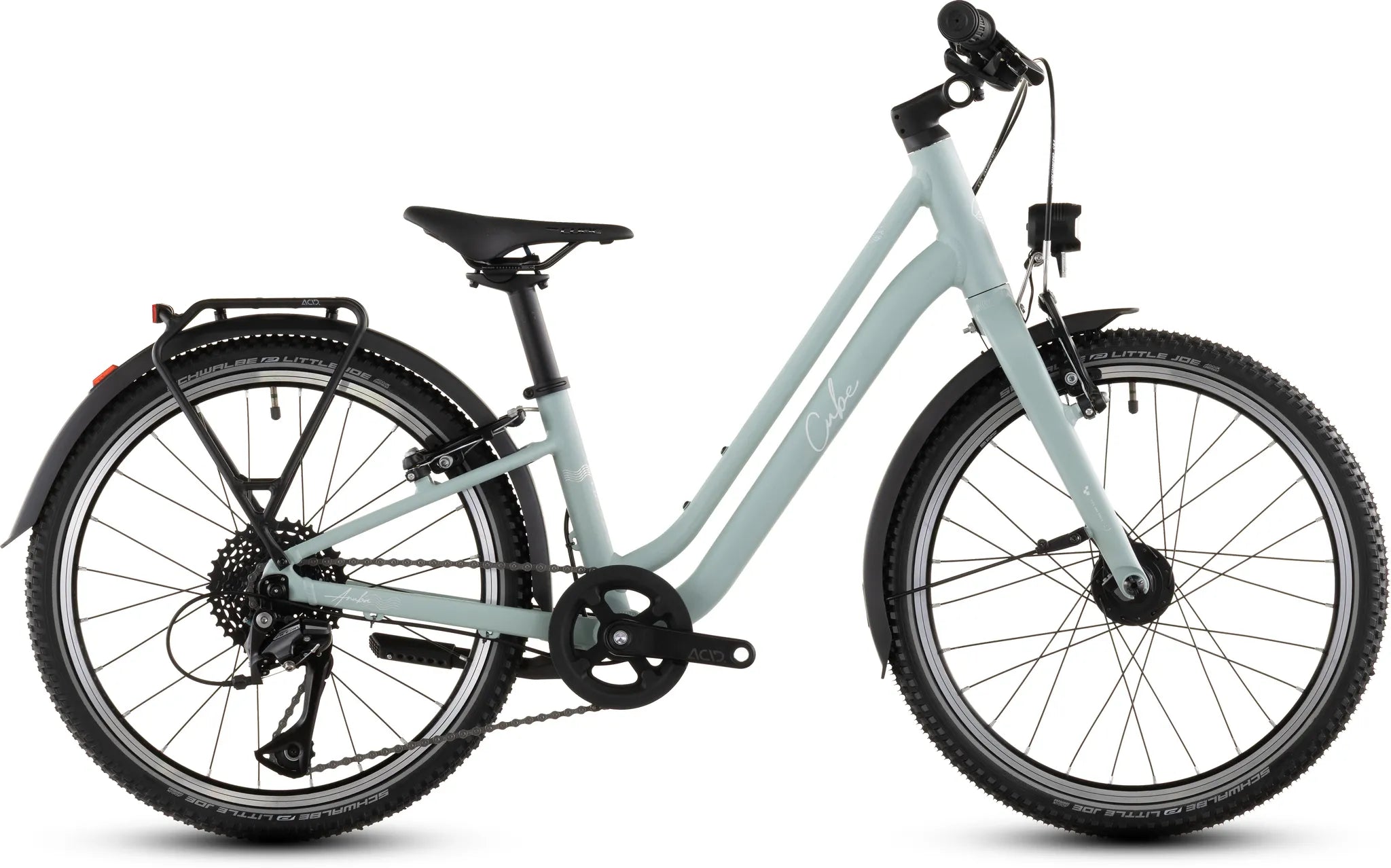
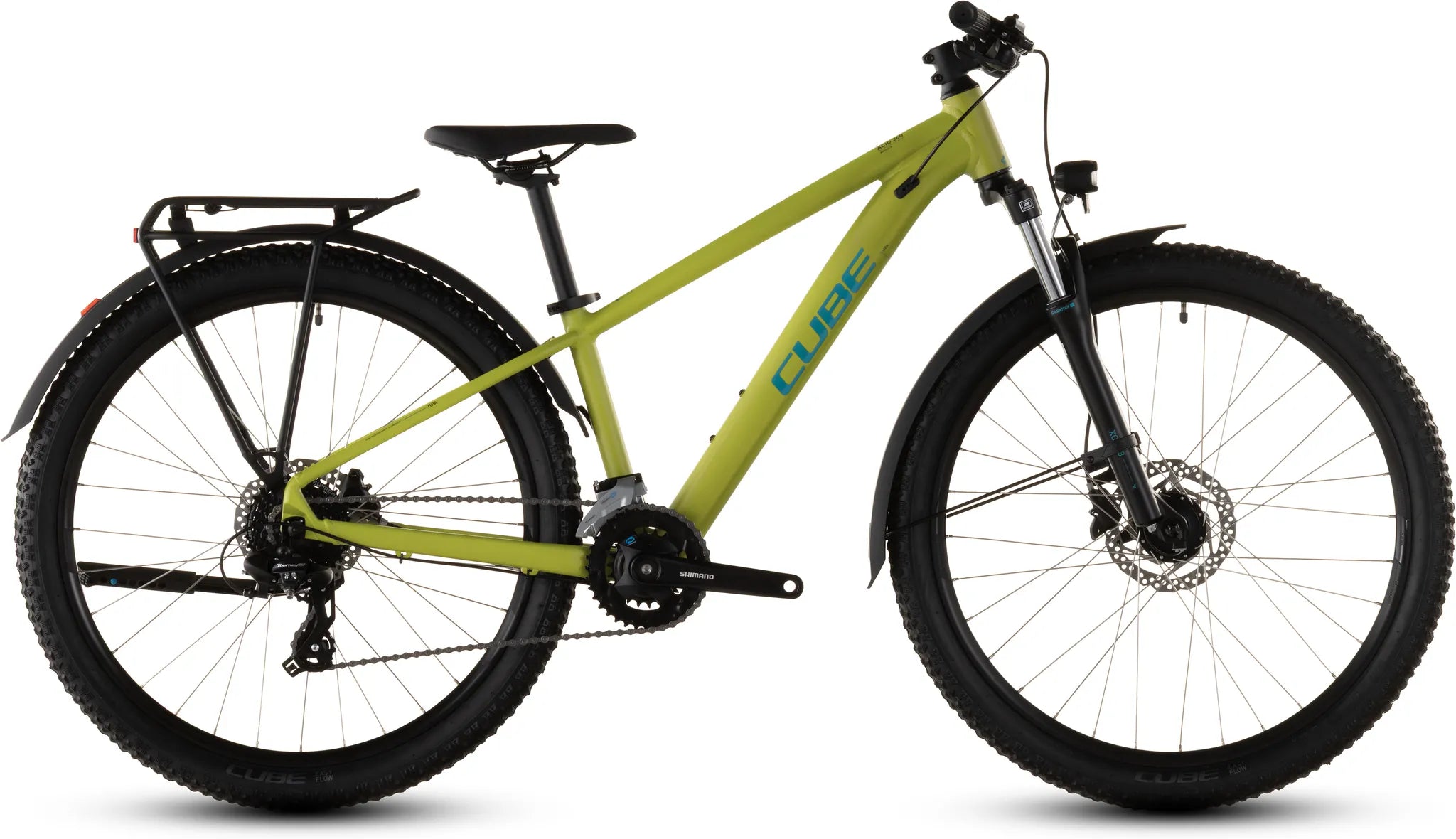
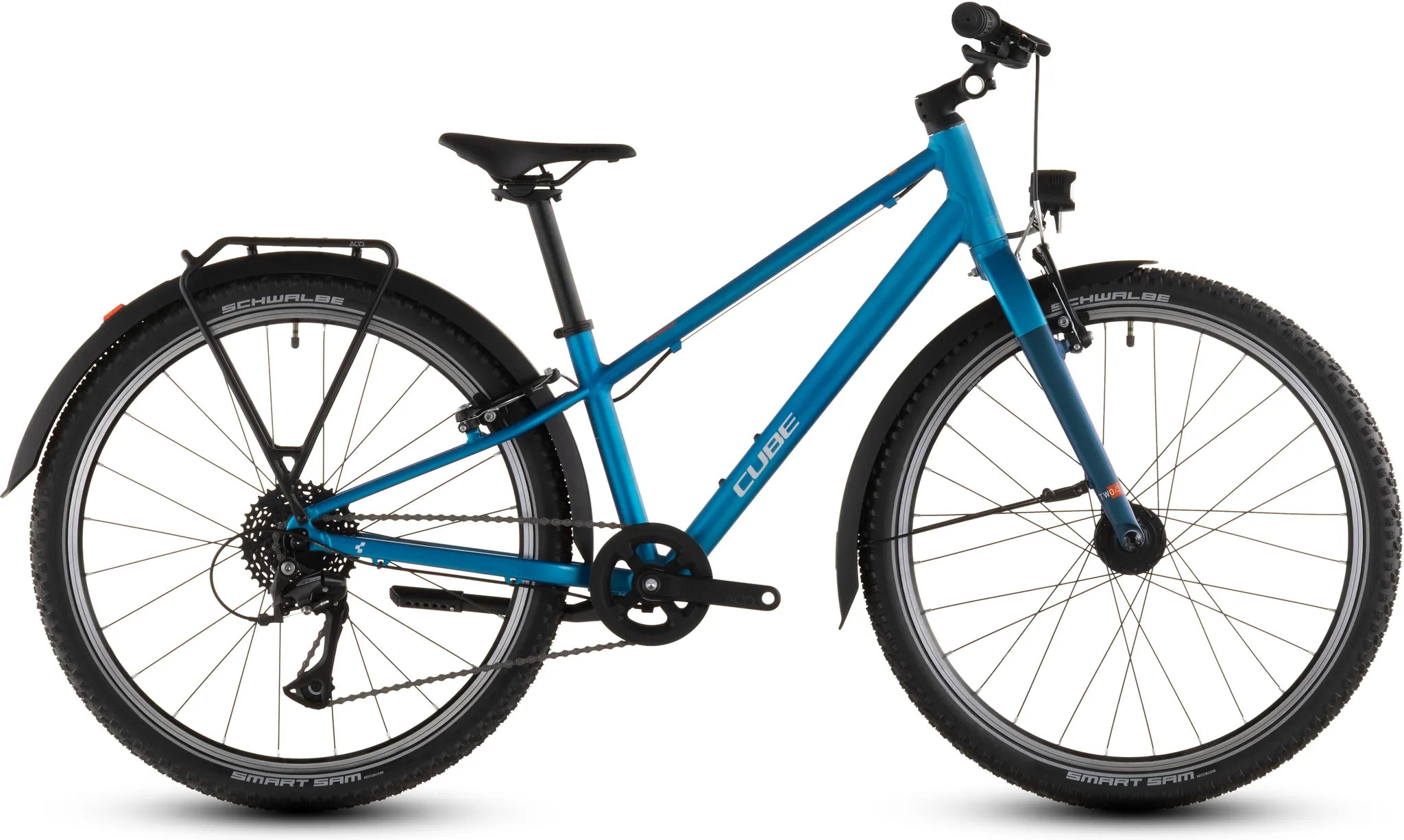
The Acid series is suitable for children who use their bikes for everyday riding and leisure. The smaller models focus on ease of use. From 20 and 24 inches, gears, wider tires, and different braking systems are added. Standard models can be equipped with V-brakes, while Disc variants use hydraulic disc brakes.
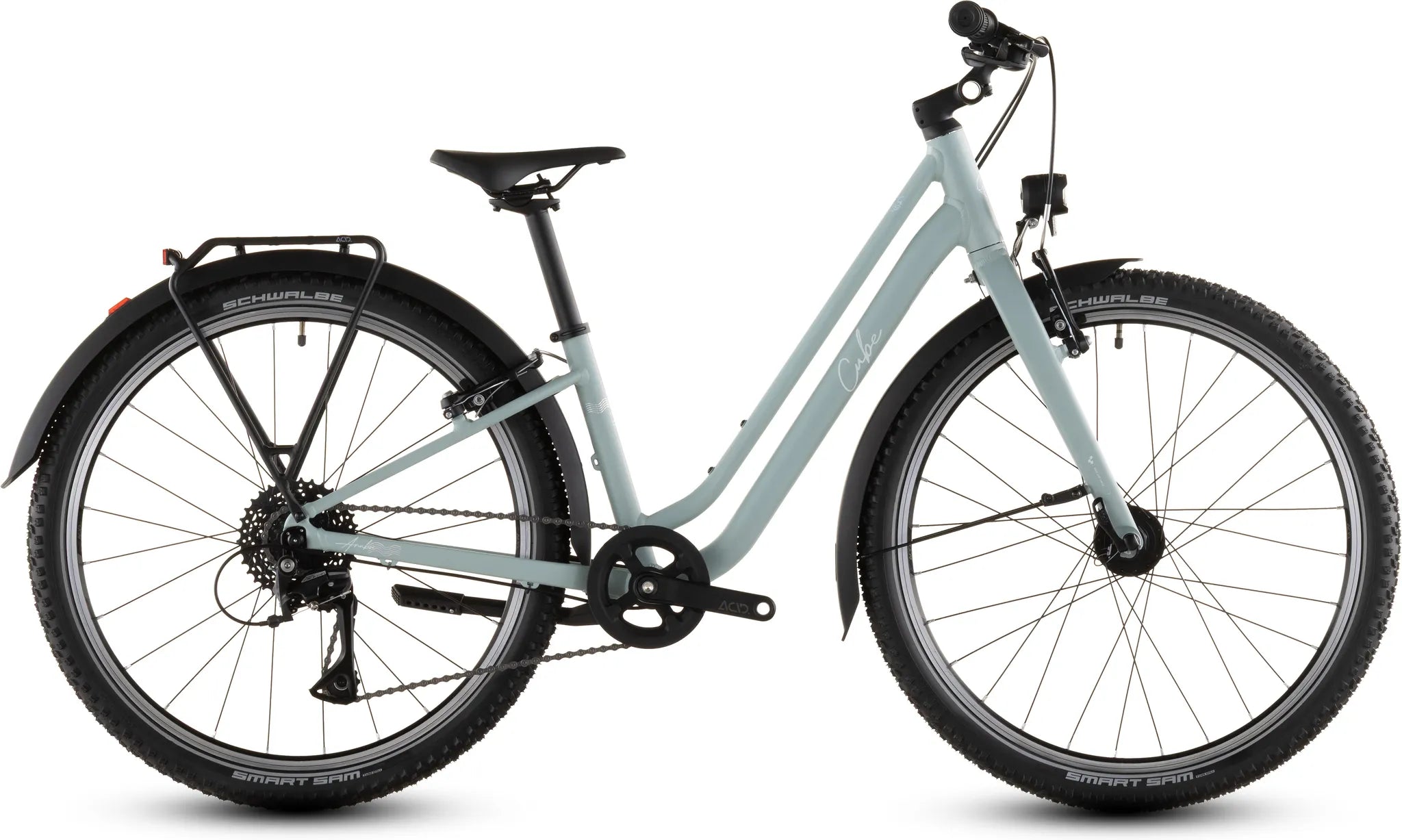
For the school run, the FE models are interesting. The abbreviation stands for Fully Equipped. Such bicycles come with practical everyday equipment from the factory, such as lights, mudguards, and a kickstand. Depending on the model, a luggage rack may also be mounted. This saves having to assemble individual accessories later.
The additional equipment increases the weight. An Acid 240 with a suspension fork, disc brakes, and everyday components can be significantly heavier than a Numove of the same wheel size. In return, it offers different reserves in wet conditions, on unpaved paths, and in daily traffic. If the bike is mainly used on short, flat routes, a simpler and lighter version is often sufficient.
Reaction for getting started with mountain biking
Reaction kids' bikes are designed for more athletic riding. The range includes hardtails, which feature suspension only at the front or use a lightweight rigid fork. A rigid fork saves weight and requires little maintenance. A suspension fork improves control on roots, rocks, and rough trails, provided it is tuned to the child's low weight.
The Reaction Pro is aimed at young riders looking for a lightweight, responsive mountain bike. Trail-Motion models offer greater suspension travel, grippy tires, and durable disc brakes. They are suitable for children who ride off-road regularly and have good braking and cornering technique. For simply riding to school, this setup would usually be more than necessary.
Stereo Rookie for ambitious trail riders
The Stereo Rookie is a full-suspension mountain bike for older children and teenagers. The suspension fork and rear shock keep both wheels better in contact with the ground on rough terrain. This can provide more control on technical trails. At the same time, weight, maintenance requirements, and price are higher compared to a hardtail.
A Stereo Rookie makes sense if the child regularly rides on suitable trails and actually uses the additional suspension. For occasional forest paths, a Reaction or Acid is usually sufficient. The full-suspension bike's suspension must be set to the rider's weight. Too high air pressure prevents the suspension from working. If the pressure is too low, the bike sags deep into the suspension travel and loses stability.
Current Stereo Rookie models are based on sporty adult bikes in terms of gearing, suspension, and hydraulic disc brakes. The contact points and frame proportions are tailored to younger riders. Before purchasing, it should be checked whether the frame size, standover height, and reach are suitable for the child.
Nuroad Rookie One for gravel and longer rides
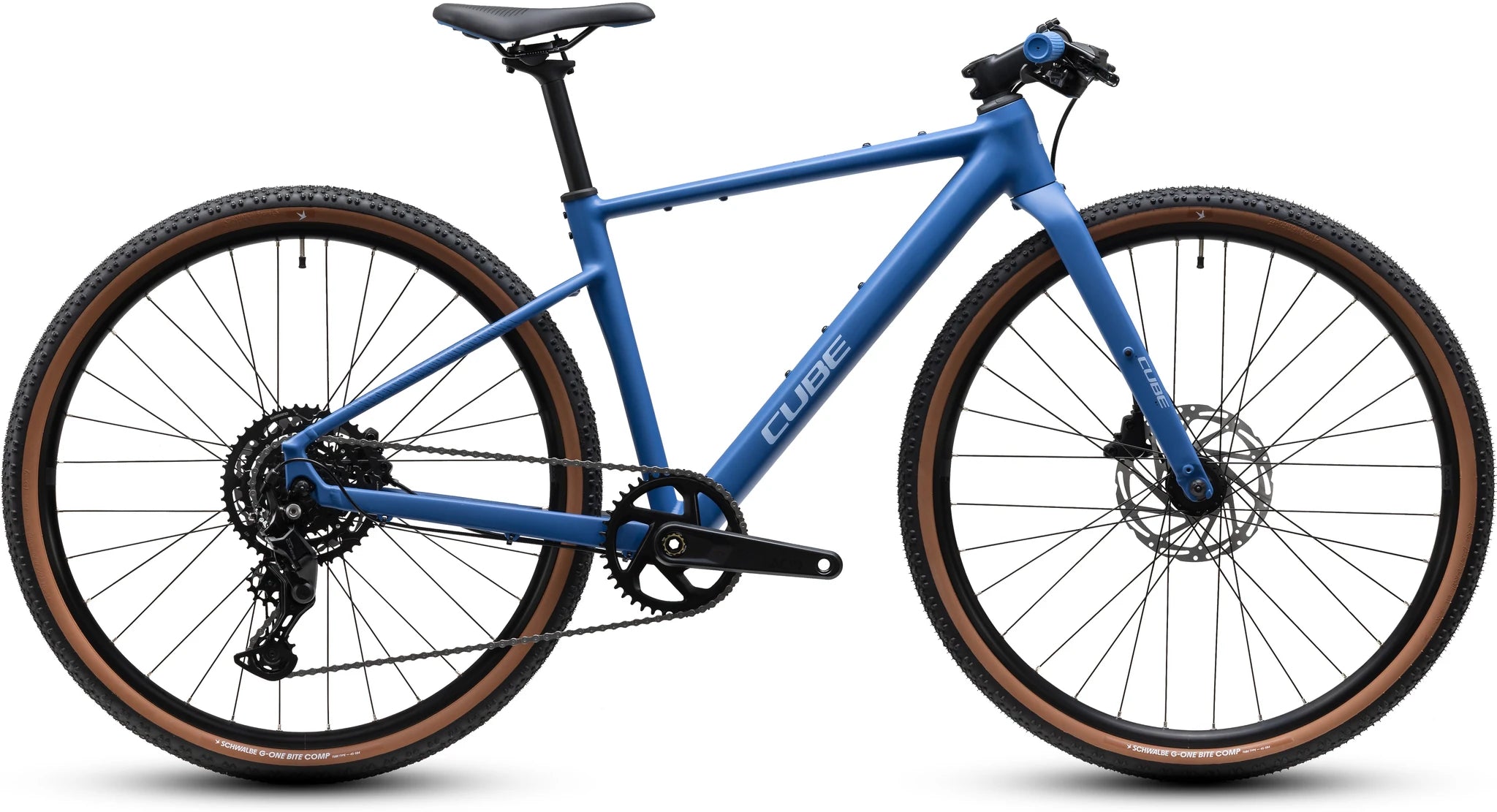
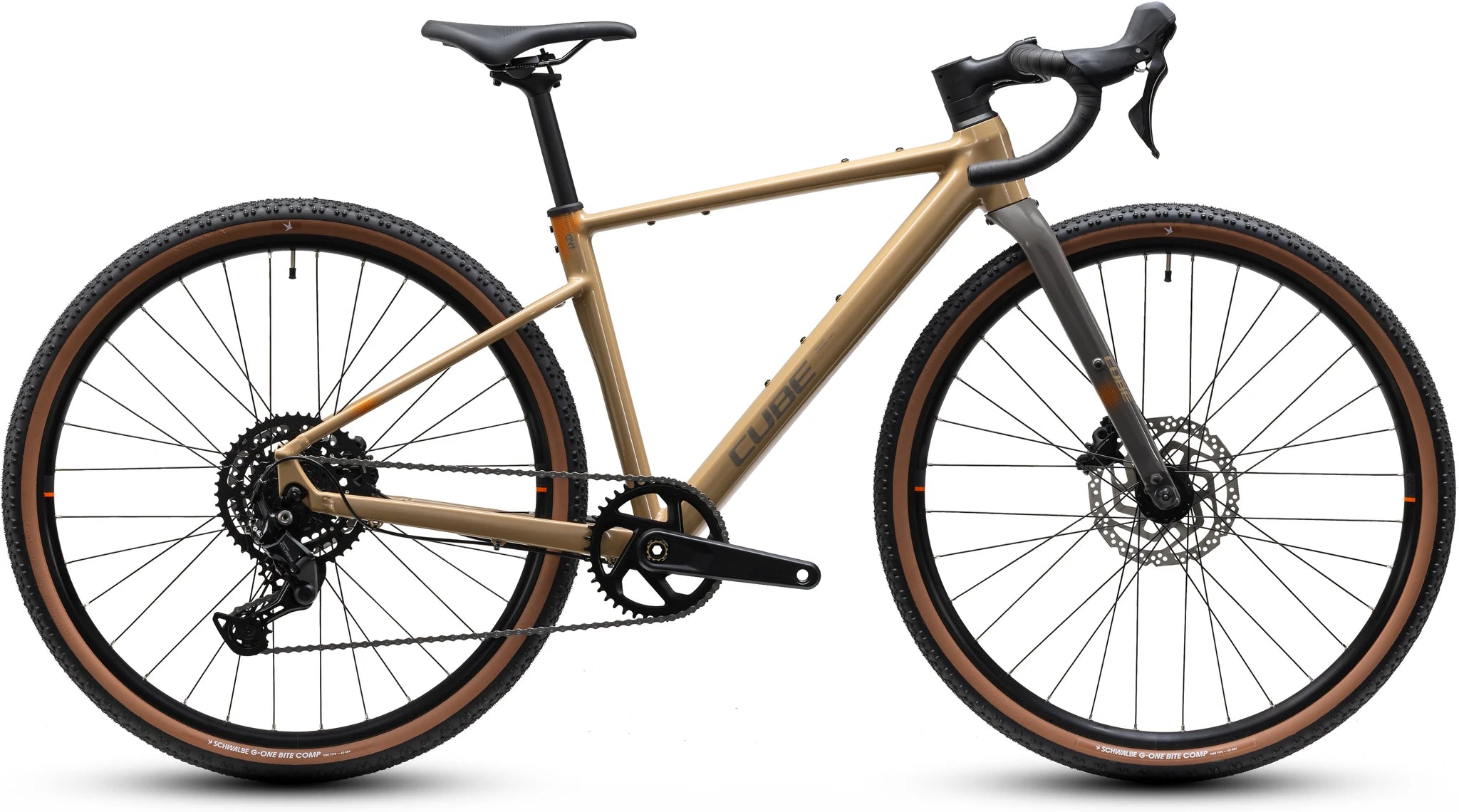
The Nuroad Rookie One is not a classic kids' mountain bike. It combines drop handlebars with wider gravel tires and a riding position designed for longer distances. The bike is suitable for asphalt, firm field paths, and gravel. Mounting options for mudguards or luggage solutions can also make it interesting for touring.
Drop handlebars require more experience than a straight handlebar. The child must be able to safely reach the brake levers from different hand positions and control the bike even at higher speeds. Current models use hydraulic disc brakes. Since components can change between model years, the equipment of the offered Nuroad Rookie One should be checked individually.
If your child mainly rides on trails, a Reaction or Stereo is a better fit. For longer tours, fast rides on asphalt and gravel, and first experiences with a dropbar, the Nuroad Rookie One is the more suitable choice.
Safety and Weight in Cube Children's Bikes
A children's bike must be manageable. This means it should be the right size, have easily accessible brakes and weigh an amount that suits the child's strength. High-quality components are of little help if the brake lever is too far from the handlebars or if the child cannot lift the bike after a fall.
- Child-friendly brake levers have a short or adjustable reach.
- Narrow handlebars and grips can be securely grasped by small hands.
- Short crank arms and suitable pedals support a natural pedaling motion.
- Aluminum frames combine a sturdy construction with limited weight.
- On small wheels, a chain guard protects clothing and fingers from the drive system.
- Reflectors increase visibility but do not replace required lighting in road traffic.
- Wide tires provide grip on loose ground but can increase weight and rolling resistance depending on the design.
- Hydraulic disc brakes require little hand force and brake reliably even in wet conditions.
Why is the weight ratio important?
The weight of the bicycle should always be considered in relation to the child's body weight. A twelve-kilogram bicycle does not feel heavy to an adult. However, if the child weighs only 24 kilograms, the bike is equivalent to half their body weight. A comparable ratio for a 75-kilogram person would mean a 37.5-kilogram bicycle.
A lightweight bike is easier to get moving, steer, and ride uphill. Pushing, parking, and carrying up stairs also becomes easier. That is why Cube omits components on small Numove models whose benefits do not justify the additional weight. A suspension fork, for example, is only worthwhile if it responds to the low rider weight and is needed on the routes ridden.
Nevertheless, the lightest bicycle is not automatically the right choice. For a longer school commute, lights, mudguards, and a luggage rack may be more important than saving the last kilogram. Off-road, grippy tires and disc brakes provide additional control. The equipment should therefore be as comprehensive as necessary and as lightweight as possible.
Which brakes are suitable for children?
V-brakes are lightweight, simple in design and well suited for dry everyday riding. Wear and adjustment can be easily checked. In wet conditions, braking performance at the rim decreases. Hydraulic disc brakes brake more reliably regardless of the weather and require little hand force. They are suitable for sporty mountain bikes, fast youth bikes and everyday bikes that are often ridden in changing weather.
The ease of use is initially more important than the type of brake. The child must be able to reach both levers without taking their hand off the handlebar grip. During a test ride, they should be able to apply the front and rear brakes gradually and come to a controlled stop from an appropriate speed.
Frequently Asked Questions About Cube Children's Bikes
Which is better: Cube or Woom?
Woom focuses heavily on lightweight children's bikes that are easy to handle. In addition to lightweight Numove models, Cube offers a wider selection of mountain bikes, full-suspension bikes, gravel bikes, and practical everyday models. Both brands are good options for a lightweight first bike. If your child later wants to ride on trails, gravel paths, or sporty tours, Cube offers more specialized model ranges. Fit, weight, and intended use remain the most important factors.
How much does a Cube children's bike weigh?
The weight depends on size, series, and equipment. A small Numove 160 weighs approximately six kilograms, depending on the model year. A 24-inch bike with gears, suspension fork, disc brakes, and everyday equipment can weigh around eleven to twelve kilograms or more. A fully suspended Stereo Rookie is even heavier due to its suspension and larger wheels. For a fair comparison, only bikes of the same size and equipment class should be compared.
From what age is a 16-inch Cube bike suitable?
A 16-inch bike is often suitable from around age four and a height of approximately 105 centimeters. Leg length and riding experience are more accurate indicators than age. Beginners should be able to place both soles of their feet firmly on the ground while seated. If the child is smaller or unsure, a 14-inch model may be a better fit.
How tall does a child need to be to ride a 24-inch Cube bike?
A conservative guideline is a height of around 130 centimeters. Some 24-inch models may fit smaller children depending on their geometry. The child must be able to stand securely over the top tube, reach the brakes, and dismount in a controlled manner when stopping. Therefore, the size recommendation for the specific model and a test ride are what matter for the final choice.
Can mudguards and kickstands be retrofitted to Cube children's bikes?
Many Cube children's bikes can be retrofitted with mudguards, kickstands, lights or luggage racks. Whether and which accessories fit depends on the frame, wheel size and available mounting points. FE models are already equipped for everyday use. Before purchasing accessories, the model designation, model year and required mounting should be checked.
Du kannst deine Einstellungen jederzeit anpassen, um den vollen Funktionsumfang unserer Website zu nutzen.
Cookie-Einstellungen bearbeitenWir helfen Dir gerne weiter!

Live-Chat
Telefon
Telefon
Telefonzeiten:
Mo. - Fr. 10:00 - 13:30 & 14:30 - 18:00 Uhr
Sa. 10:00 - 14:00 Uhr
Telefon:
+49 2961 914 886 9
Kontaktformular
Kontaktformular
Außerhalb der Chat- und Telefonzeiten kannst Du uns Dein Anliegen über das Kontaktformular mitteilen.
E-Mail
Schreib uns einfach eine E-Mail an verkauf@liquid-life.de und wir werden Dir so schnell wie möglich antworten. Bitte hab Verständnis, dass es aufgrund der chronologischen Bearbeitung zu kleinen Verzögerungen kommen kann.
Bikeberater
Bonusprogramm