

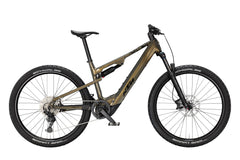
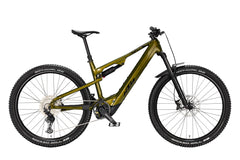
KTM Macina Kapoho 2027: Conquer every climb. Enjoy every descent.
Steep climbs, rugged trails, and that indescribable feeling when the path leads downhill. The KTM Macina Kapoho 2027 is built for anyone who refuses to compromise off-road. With powerful Bosch assistance, 160 mm of travel, and a long-lasting 800 Wh battery, every mountain becomes an invitation and every descent an experience. Whether challenging singletrack trails, alpine adventures, or endless tours through the mountains – the Kapoho gives you the confidence to continually discover your limits.
Filtry


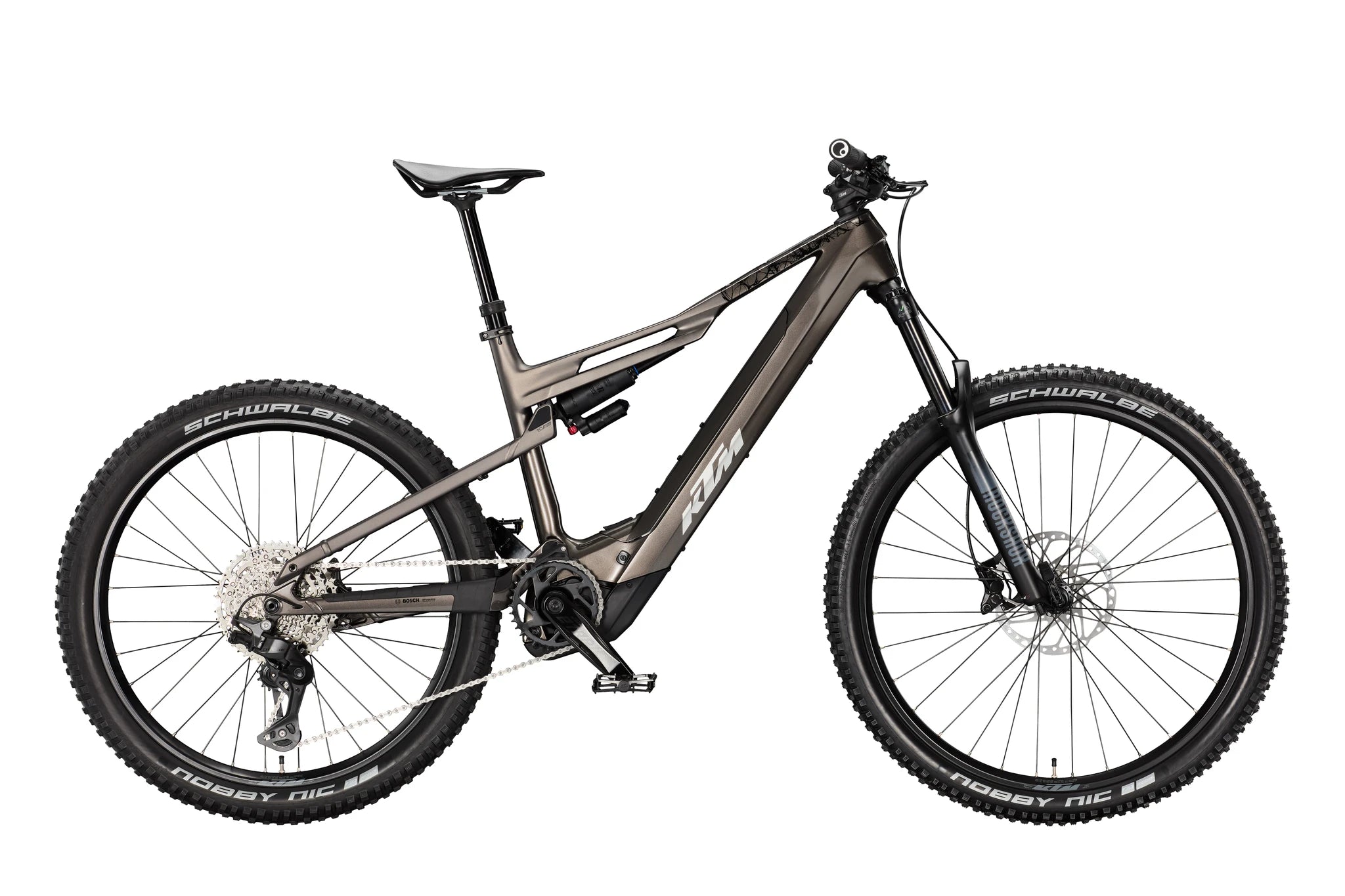

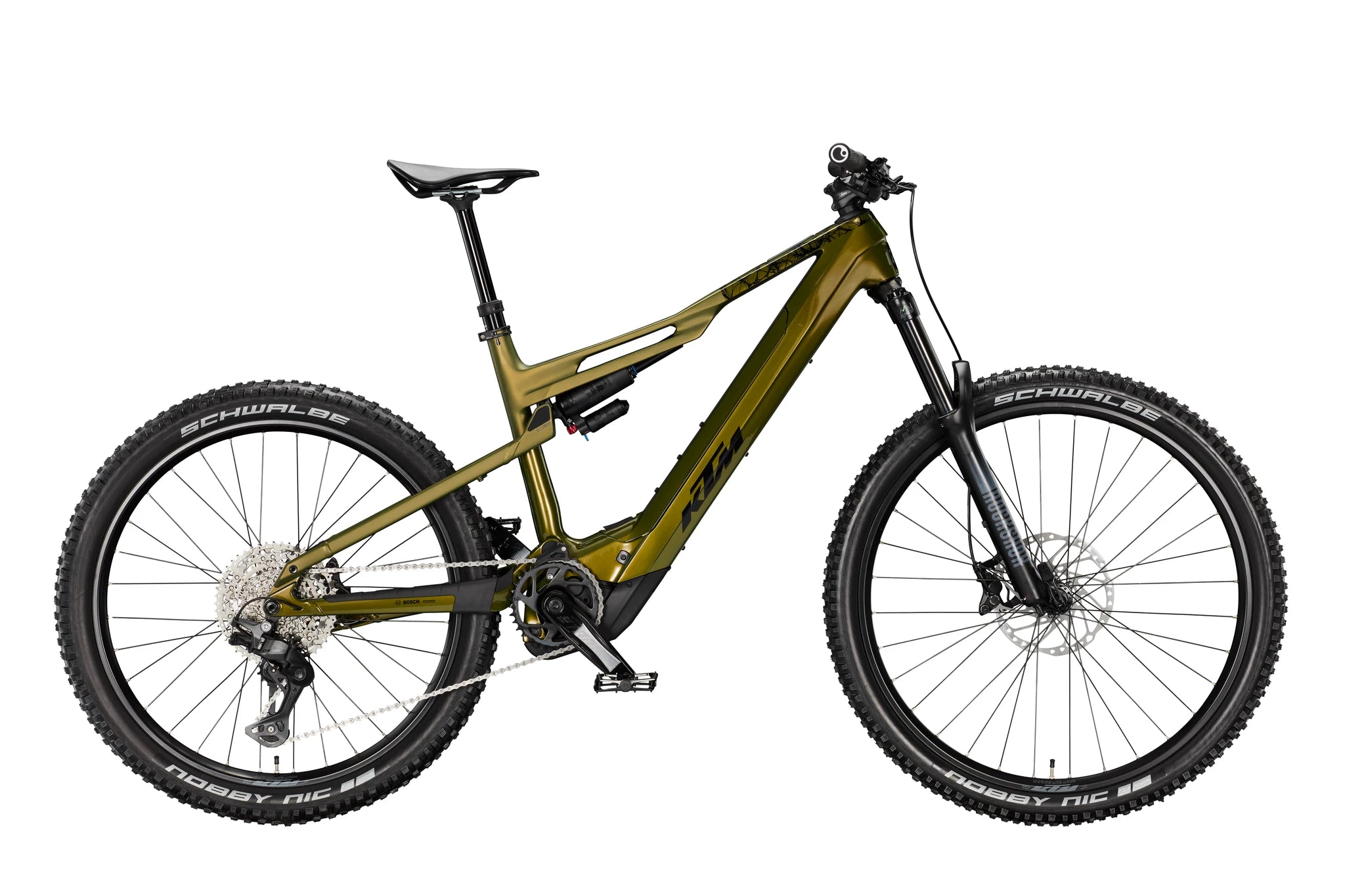
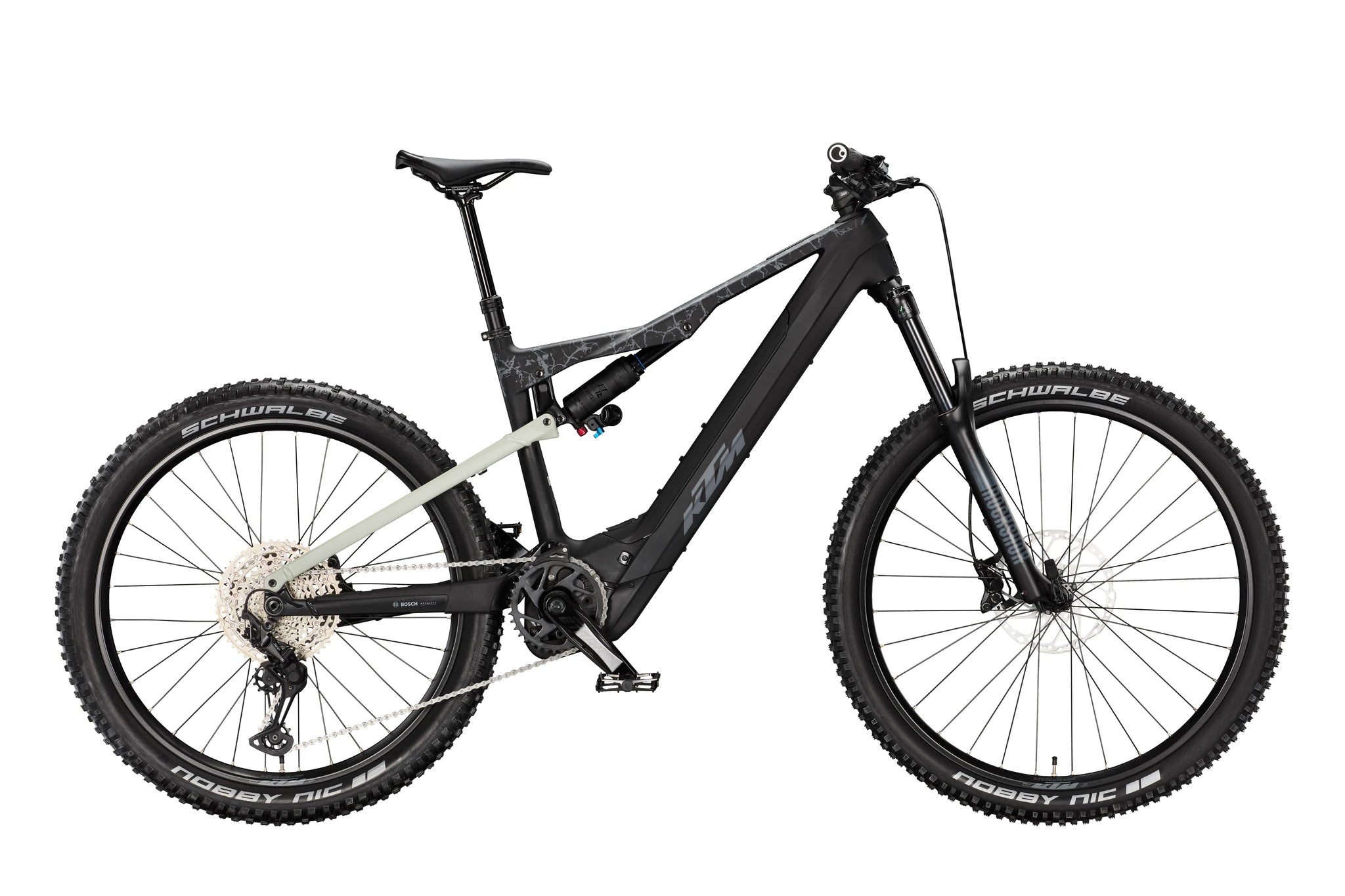


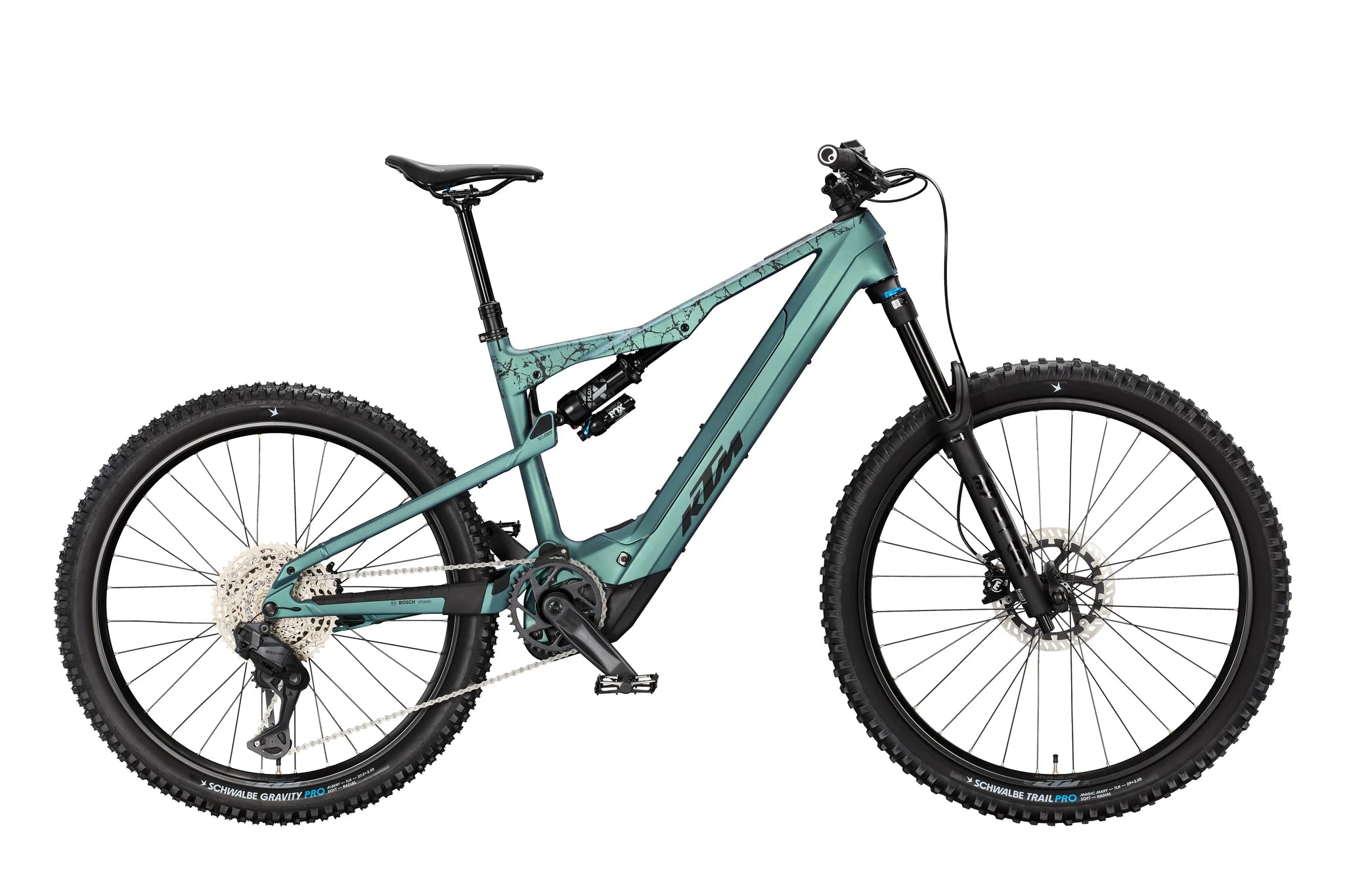


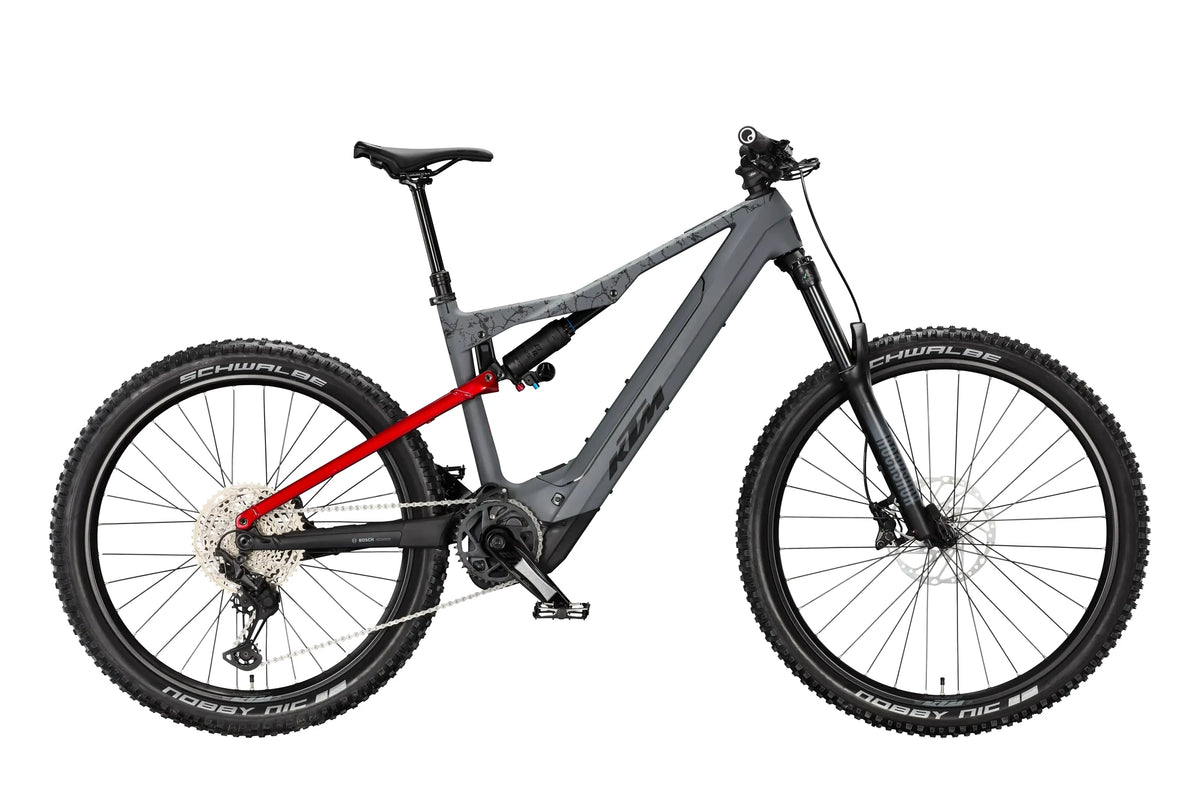
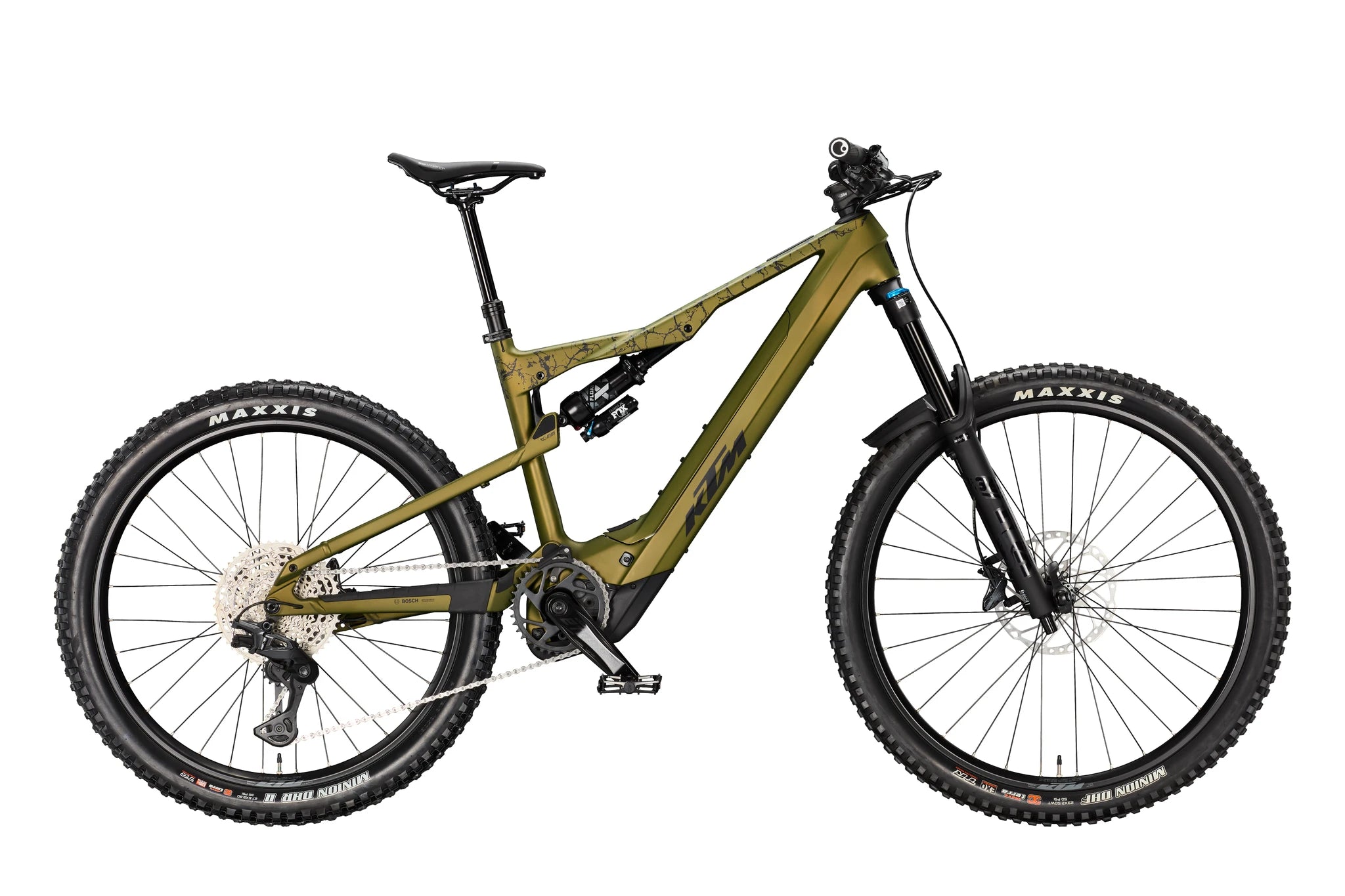
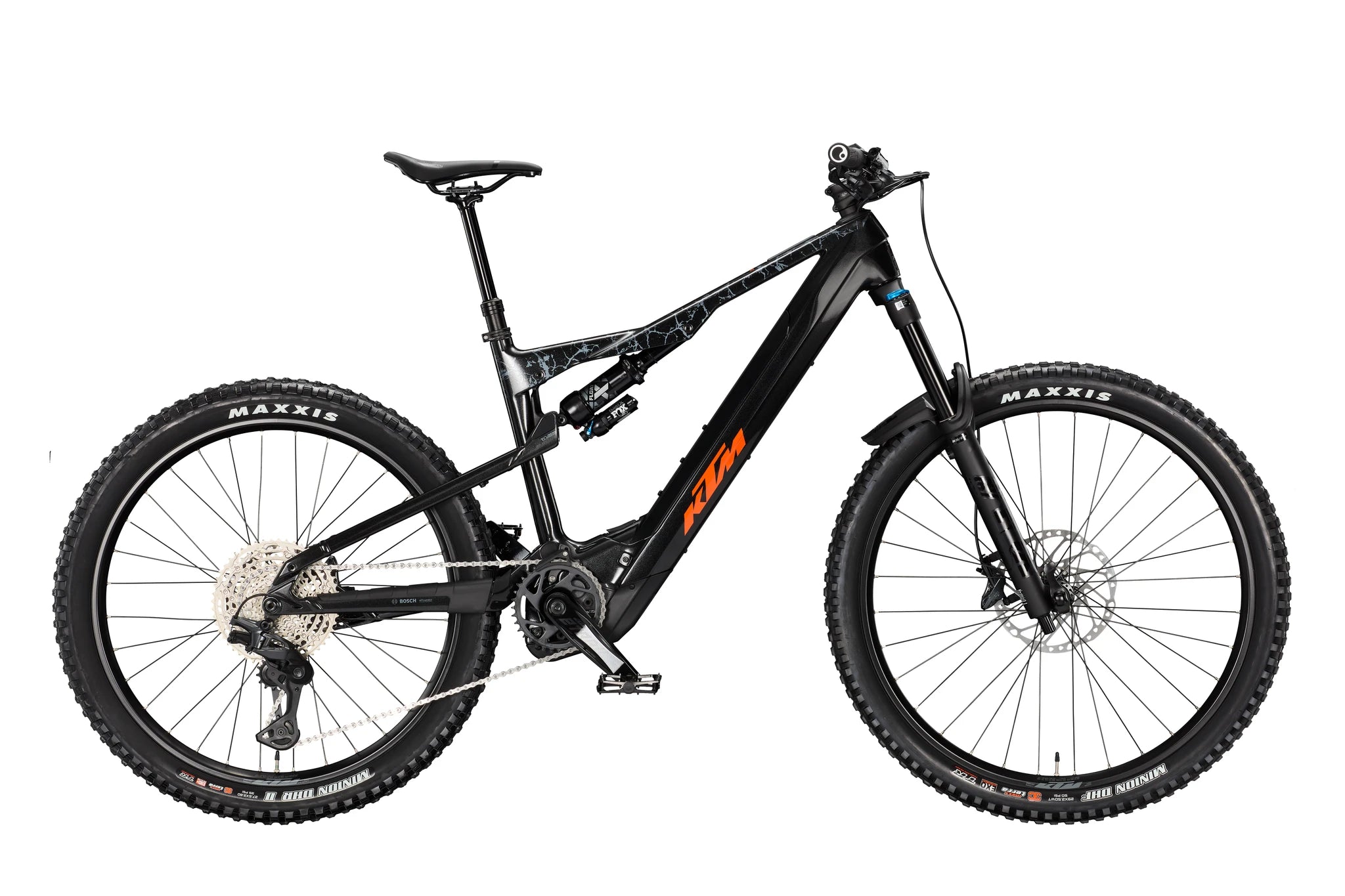
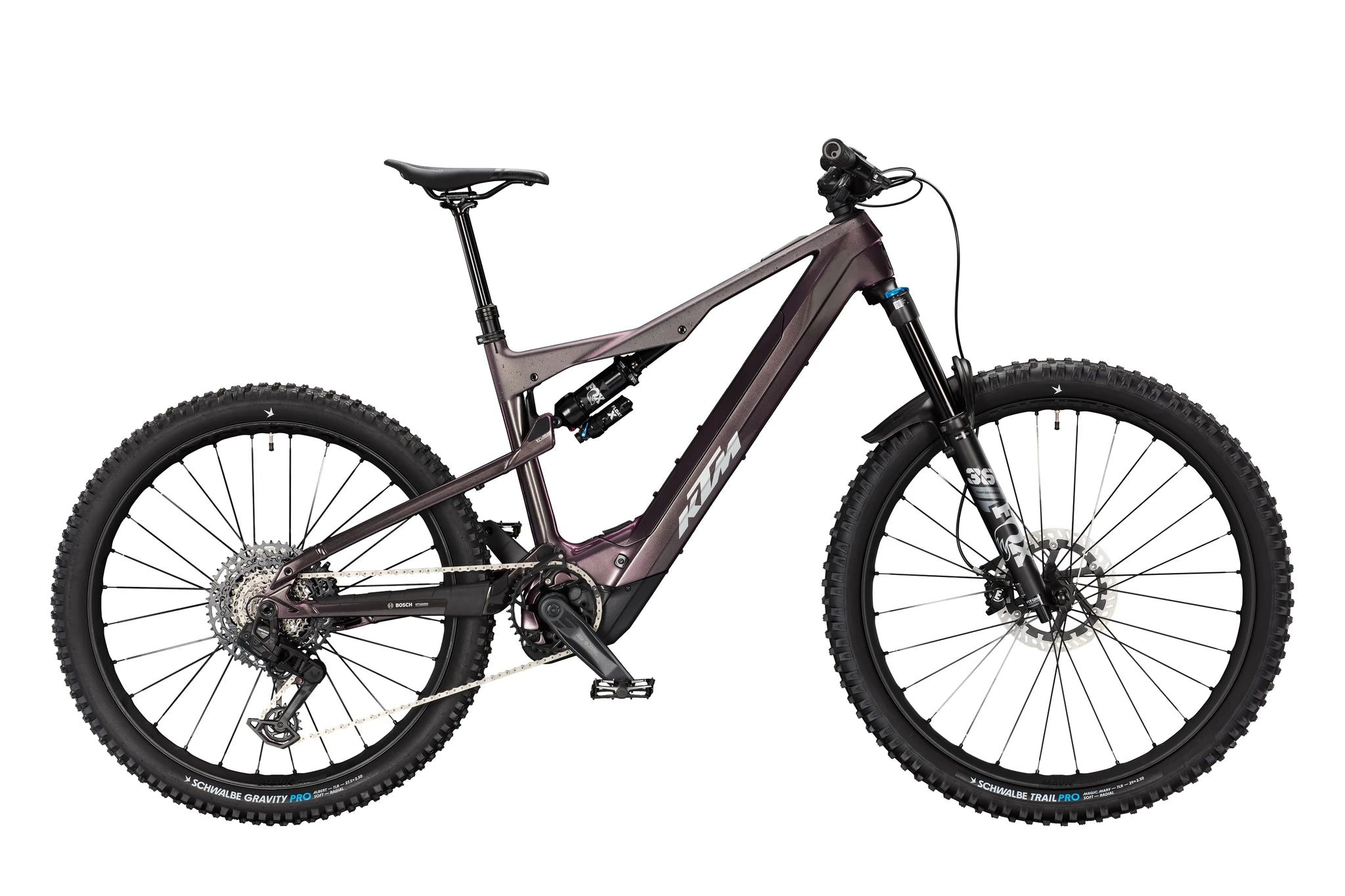
KTM Macina Kapoho: Full-Suspension E-MTB for Demanding Trails
The KTM Macina Kapoho is a full-suspension e-mountain bike designed for long-distance tours, alpine singletrack trails, and technically demanding descents. With 160 mm of travel, a Bosch Performance Line CX or CX-R motor, and an 800 Wh battery, the model range combines long range with ample power reserves off-road. The DiMMiX wheel concept pairs a 29-inch front wheel with a 27.5-inch rear wheel. This keeps the bike smooth over fast and rough terrain, while the smaller rear wheel enhances traction and maneuverability.
Within the model range, the selection extends from the Macina Kapoho 8973 with an aluminum frame to the Exonic CX-R with a carbon frame, electronic SRAM Transmission, carbon wheels, and electronically controlled suspension. This makes this KTM full-suspension mountain bike ideal for sporty touring riders, trail riders, and e-mountain bikers who want to tackle steep climbs using their own power and motor assistance, rather than using a shuttle for every descent.
For what type of terrain is the KTM Macina Kapoho suitable?
The KTM Macina Kapoho belongs in the all-mountain category. It is suitable for extended tours, steep forest climbs, rocky natural trails, and demanding descents with roots, steps, and loose terrain. The model range offers more suspension travel and a more descent-oriented setup than a touring full-suspension bike, but remains more versatile than a pure e-enduro or downhill bike.
If you frequently ride long climbs with technical sections, the Bosch mid-drive motor, grippy tires, and short 160 mm cranks will be of great help. The short cranks increase the clearance between the pedal and the ground. This reduces the risk of striking the pedal on washed-out climbs or high roots.
On fast Alpine trails, the Kapoho makes the most of its long suspension travel and stable front end. The large front wheel holds its line better and rolls more easily over rocks and root fields. The geometry provides plenty of stability in open corners and on fast straights. This is helpful when the terrain gets steep or the line isn't hit perfectly.
On tight flow trails and in slow switchbacks, the Kapoho, by contrast, demands an active riding style. The weight of at least approx. 24.1 kg and the design focused on smooth running make quick changes of direction more strenuous than on a lightweight trail bike without a motor. Those who predominantly ride playful trails, small rollers, and very tight corners will find a more manageable bike in a lighter E-MTB class.
The 2027 model year models are rated ASTM Level E4. This means they are intended for rough terrain and demanding trails. Flowlines and bike park routes are within the intended use, provided that jumps, landings, and track profiles comply with the manufacturer's specifications. For hard downhill racing, big drops, and repeated extreme landings, the Kapoho series is not the first choice. For this purpose, a long-travel E-Enduro like the Macina Prowler is more suitable.
What does DiMMiX mean at KTM, and what advantages does the mullet setup offer?
At KTM, DiMMiX stands for a mix of different wheel sizes. The Macina Kapoho features a 29-inch wheel at the front, while a 27.5-inch wheel is used at the rear. This combination is also known as a mullet setup. It is intended to combine the stability of a 29er with the traction and handling advantages of a smaller rear wheel.
The 29-inch front wheel meets obstacles at a shallower angle. It therefore rolls more easily over rocks, steps, and crosswise roots. At the same time, it stabilizes the front in fast sections. This is particularly helpful on unknown trails, where the ideal line is not always hit exactly.
The 27.5-inch rear wheel leaves more room between the tire and the rider. This allows the rider to move the bike more easily under their body in steep descents. The smaller size also allows for a compact design of the rear end with a shorter chainstay length, while the small rear wheel at the same time ensures a lower center of gravity. This supports steering in and makes it easier to position the rear wheel in tight corners.
The concept also offers advantages in terms of power transfer. The Kapoho models are equipped with wide, high-traction tires on the rear wheel. On loose or wet climbs, this creates a large contact patch, which also leads to significantly improved braking grip on steep descents. The powerful Bosch drive can deliver its power to the ground more controllably before the tire spins out.
- If you frequently ride over rock fields and roots, the 29-inch front wheel improves roll-over performance.
- If you tackle steep climbs on loose ground, the wide 27.5-inch rear wheel provides plenty of traction.
- If you lean far back over the seat on steep descents, the smaller rear wheel creates additional freedom of movement.
- If you are looking for a particularly direct and light cornering feel, the high system weight of the e-MTB remains noticeable despite the mullet setup.
The DiMMiX principle thus fits well with the intended use of the Macina Kapoho. However, it is no substitute for proper riding technique. Tire pressure, shock setting, and weight transfer influence grip just as much as wheel sizes.
What is the suspension travel of the KTM Macina Kapoho?
The KTM Macina Kapoho offers 160 mm of travel and is therefore clearly designed for demanding all-mountain use. The rear suspension is equipped with the proven Straight-Line-Link (SLL) system, which ensures particularly sensitive response and improved suspension performance through the direct linkage of the shock. The model variants differ mainly in their front fork and shock. While the 8973 is equipped with a RockShox 35 Silver and a Suntour TRI-AIR shock, the higher-positioned models use suspension components from Fox.
The Exonic even features an electronically controlled Fox Live Valve NEO damper. The long travel filters out small impacts and provides bottoming resistance during hard compressions. On root mats, a properly tuned suspension keeps the tires in contact with the ground for longer. With larger impacts, the resistance increases towards the end of the travel. This progression reduces the risk of harsh bottoming out.
| Model | Suspension fork | Shock absorber | Alignment |
|---|---|---|---|
| Macina Kapoho 8973 | RockShox 35 Silver TK, 160 mm | Suntour TRI-AIR 3CR | Touring and Trail Riding |
| Macina Kapoho Elite CX-R | RockShox 35 Silver TK, 160 mm | Suntour TRI-AIR | Value-oriented trail use |
| Macina Kapoho Master CX-R | Fox 36E Float Rhythm, 160 mm | Fox Float X Performance | Sporty All-Mountain Rides |
| Macina Kapoho Master CX-R Di2 | Fox 36E Float Rhythm, 160 mm | Fox Float X Performance | All-Mountain with electronic shifting |
| Macina Kapoho Prime CX-R | Fox 36 Float Performance E, 160 mm | Fox Float X Performance | High-quality trail setup |
| Macina Kapoho Exonic CX-R | Fox 36E Float Factory, 160 mm | Fox Float X2 Live Valve NEO Factory | Electronically controlled high-end suspension |
Negative travel is crucial for the basic setup. As a starting point for an all-mountain e-MTB, around 25 to 30 percent on the rear triangle makes sense. On the fork, a practical starting value is often around 15 to 20 percent. Air pressure, low-speed compression damping, and high-speed compression damping must then be adjusted to the rider's weight, riding style, and terrain. Those who frequently ride demanding descents should tune the suspension firmer than a touring rider who is primarily looking for comfort.
Which motor is installed in the KTM Macina Kapoho?
The Macina Kapoho 8973 is powered by the Bosch Performance Line CX. The other models in the 2027 model year are equipped with the Bosch Performance Line CX-R. Both drives are part of the Bosch Smart System and are designed for steep climbs and technically demanding e-MTB tours. Since the 2026 update, the maximum torque is up to 120 Nm.
The motor is positioned centrally and low in the frame. This position distributes the weight evenly between the front and rear wheels. This keeps more pressure on the front wheel during steep uphill climbs without unnecessarily reducing traction at the rear. Nevertheless, on very steep ramps, the rider must actively slide forward and pedal evenly.
The eMTB mode is ideal for varied terrain. It adapts the assistance to the pedaling pressure. Under light load, the power delivery remains controllable. When the rider pedals harder, the motor provides more assistance. This reduces shifting and makes technical climbs easier, where no hand is free for frequent changes in the assistance level.
Turbo mode provides high assistance for steep ramps but drains the battery accordingly quickly. On long forest roads or flat sections, Eco and Tour are usually sufficient. A steady cadence improves efficiency and reduces strain on the gears and drive system.
The variants differ in terms of display. Elite and Master use the compact Purion 200, while Prime and Exonic are equipped with the trail-oriented Purion 400. The KTM Macina Kapoho 8973 comes standard with a Bosch Purion 200 display. The short 160 mm cranks are standard on all Kapoho variants and reduce pedal strike in technical sections.
What is the range of the KTM Macina Kapoho?
All Kapoho models from the 2027 model year feature a horizontally mounted 800 Wh Bosch PowerTube battery. The actual range depends more on the terrain and assistance level than on a single mileage figure. Rider weight, tire pressure, temperature, gradient, surface and riding style significantly affect energy consumption.
The following figures provide a planning guide for a healthy battery under normal conditions. Maximum mileage and maximum elevation gain cannot be achieved at the same time. A steep, technical route consumes considerably more energy per kilometer than a flat forest road.
| Usage | Support | Route guidance | Elevation guidance |
|---|---|---|---|
| Flowing forest roads and moderate routes | Mostly eco-friendly | Approximately 70 to 110 km | Approximately 1,500 to 2,500 meters of elevation gain |
| Mixed All-Mountain Tour | Tour and eMTB | Approx. 45 to 80 km | Approx. 1,000 to 1,800 meters of elevation gain |
| Steep and technical trail loop | Mostly eMTB and Turbo | Approx. 30 to 50 km | Approx. 700 to 1,200 meters of elevation gain |
A light rider on firm ground can reach the upper areas. A heavy rider with low tire pressure, soft ground and many steep climbs should plan more conservatively. At low temperatures, the usable range also decreases. The Macina Kapoho 8973 is supplied with a Bosch Compact Charger with 2 A.
According to the model specifications, the Elite, Master, Master Di2, Prime and Exonic models come with the Bosch Standard Charger with 4 A. With the 4A charger, a full charge of the 800-Wh battery takes approximately six to seven hours. However, a partial charge during a longer break can still provide enough energy for the final climb.
Model variants and equipment compared
The Kapoho range includes an aluminum model and several carbon variants. The 8973 is the entry-level model in terms of price. The Elite, Master, Prime and Exonic feature a carbon frame and the more powerful CX-R drivetrain. The main differences lie in the suspension, gears, brakes and wheels.
| Model | Frame | Drivetrain | Brakes | Net weight |
|---|---|---|---|---|
| Macina Kapoho 8973 | Aluminum | Shimano Deore LinkGlide, 11-speed | Shimano MT420, 4-piston | approx. 27.1 kg |
| Macina Kapoho Elite CX-R | Carbon | Shimano Deore XT, 12-speed | Shimano MT420, 4-piston | approx. 25.2 kg |
| Macina Kapoho Master CX-R | Carbon | Shimano Deore XT, 12-speed | Shimano Deore, 4-piston | approx. 25.6 kg |
| Macina Kapoho Master CX-R Di2 | Carbon | Shimano Deore Di2, 12-speed | Magura MT5, 4-piston | approx. 25.9 kg |
| Macina Kapoho Prime CX-R | Carbon | SRAM S1000 Transmission, 12-speed | Magura MT5, 4-piston | approx. 25.2 kg |
| Macina Kapoho Exonic CX-R | Carbon | SRAM XX Transmission, 12-speed | Shimano XTR with ABS Pro | approx. 24.1 kg |
The Kapoho 8973 is for cross-country riders looking for a robust 160 mm full-suspension bike with a large battery who can do without a carbon frame. The Elite CX-R significantly reduces the weight and already features a carbon frame, Shimano XT derailleur and Bosch CX-R motor.
The Master CX-R is interesting for sporty trail riders who prefer Fox suspension and a balanced mechanical setup. The Di2 version adds electronic Shimano shifting and Magura MT5 brakes. The Prime relies on the wireless SRAM S1000 Transmission, Mavic E-Deemax wheels and high-quality Fox suspension.
The Exonic is aimed at riders who prioritize electronic systems and low weight. In addition to SRAM XX Transmission and carbon wheels, the equipment includes Bosch ABS Pro and a Fox Live Valve NEO shock. The technical complexity is high and explains the significant price difference compared to the other variants.
Frequently Asked Questions about the KTM Macina Kapoho
How much does the KTM Macina Kapoho weigh?
The net weights of the 2027 models range from approx. 24.1 to approx. 27.1 kg. The lightest model is the Macina Kapoho Exonic CX-R at approx. 24.1 kg. The Kapoho 8973 with an aluminum frame weighs approx. 27.1 kg. Depending on the equipment, the Master, Elite, and Prime weigh between approx. 25.2 and approx. 25.9 kg. Accessories, frame size, pedals, and tubeless conversions can affect the actual weight.
Is the KTM Macina Kapoho approved for bike parks?
The KTM Macina Kapoho is rated ASTM Level E4 for rough terrain, demanding trails, and jumps within the manufacturer's specified limits. This makes it suitable for flow trails, technical bike park descents, and moderate jump lines. It is not designed as a specialized bike for extreme downhill race tracks, very large drops, and repeated hard landings. Before riding in a bike park, check the specific trail clearance, the condition of the suspension, and the manufacturer's guidelines.
How heavy can the rider be on a KTM e-bike?
For the Kapoho models, the maximum permissible total weight is approximately 127 to approximately 146 kg, depending on the variant. This figure includes the bicycle, the rider and all equipment. The maximum permissible total weight of the KTM Macina Kapoho 8973 is approximately 146 kg, leaving a significantly higher payload capacity (approx. 118 to 119 kg) for the rider and luggage. For the Master CX-R, this leaves approximately 118.4 kg, and for the Prime, approximately 117.8 kg. Therefore, the maximum permissible total weight of the specific model should always be used when making a purchasing decision.
You can change your settings at any time to use all features of our website.
Edit cookie settingsWir helfen Dir gerne weiter!

Live-Chat
Telefon
Telefon
Telefonzeiten:
Mon - Fri 10:00 - 13:30 & 14:30 - 18:00
Sat 10:00 - 14:00
Telefon:
+49 2961 914 886 9
Kontaktformular
Kontaktformular
Outside our chat and phone hours, you can send us your request via the contact form.
E-Mail
Simply send us an email at verkauf@liquid-life.de and we will reply as quickly as possible. As we handle requests in the order received, there may be slight delays.
Bikeberater
Bonusprogramm