


Cube editor
Cube Editor 2026: Fast, light and low-maintenance through the city
With the Cube Editor, you get around the city in a sporty, uncomplicated way. The lightweight aluminum frame, direct handling and high-quality components make this urban bike the ideal companion for quick commutes to work, rides through the city or everyday errands. Depending on the model, a lightweight carbon fork and the low-maintenance Gates belt drive provide additional comfort and particularly little upkeep.
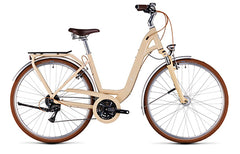
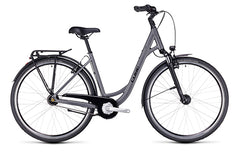
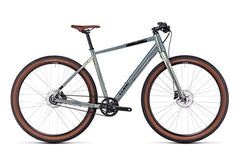
Filtry


Cube Editor: Urban bike for commuters
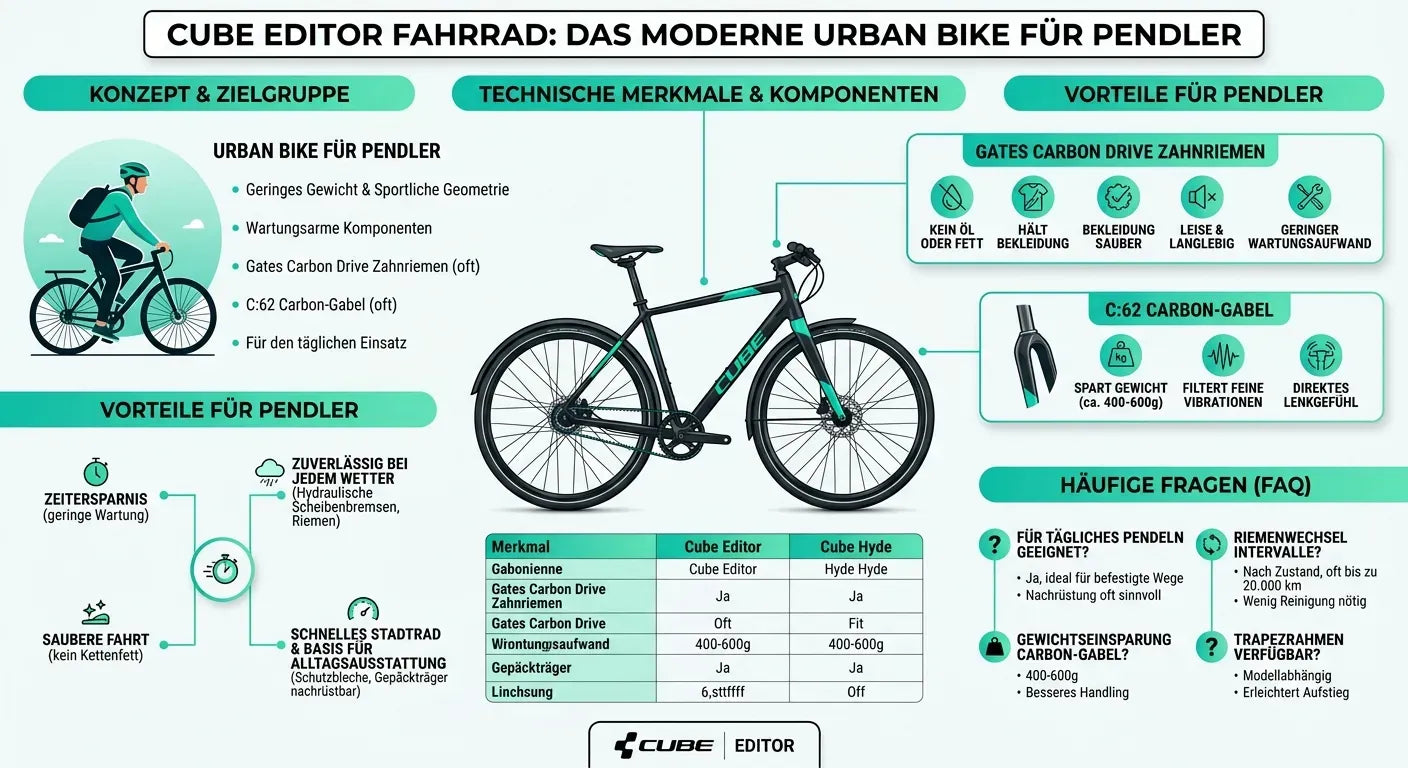
The Cube Editor is a lightweight urban bike designed for quick trips around the city. Its concept combines a sturdy aluminum frame with a sporty riding position, direct handling, and low-maintenance components. Many model variants feature a C:62 carbon fork and a Gates Carbon Drive belt. This makes the Editor primarily suited for commuters who ride regularly and want to spend as little time as possible on bike maintenance.
The equipment is deliberately minimalist. Mudguards, racks, and lighting are not always included as standard, depending on the variant, but can often be retrofitted using existing mounting points. As a result, the Editor serves as both a fast city bike and a foundation for a practical everyday commuter. Before purchasing, it is worth checking the specific equipment for the model year, as the fork, drivetrain, weight, and accessories can vary between models.
What kind of bike is the Cube Editor?
The Cube Editor belongs to the urban bike category. These bicycles are designed for paved roads, cycle paths, and typical city routes. Unlike a classic city bike, the Editor usually features a sportier frame geometry and a more forward-leaning riding position. The steering is responsive, the bike accelerates quickly, and it can be maneuvered with control even through dense city traffic
The design is partly inspired by modern mountain bike hardtails. The aluminum frame is engineered for stability and offers sufficient reserves for potholes, curbs, and rougher asphalt. Cube has opted against a suspension fork in favor of lower weight and a more direct ride feel. Wide tires take on some of the shock absorption and offer more control than narrow road bike tires.
The Cube Editor shows its strengths on short and medium commutes. Frequent starting at traffic lights takes less effort with a lightweight bike. The compact design facilitates quick changes of direction, while hydraulic disc brakes provide easily modulated braking power, even in wet conditions. Anyone who has to carry their bike into a basement, apartment, or onto public transport will also benefit from the comparatively low total weight.
The various equipment lines differ primarily in terms of drivetrain, gear range, and individual components. The Cube Editor ONE is a single-speed bike without gears. Only from the Editor Pro (or SLX) model onwards are internal gear hubs (such as Shimano Nexus or Alfine) installed, which offer a selectable gear range. Anyone tackling longer inclines should look for a wider gear range.
The reduced series concept has practical consequences. A lightly equipped Editor rides with agility, but is not automatically fully equipped for everyday road use. For the daily commute, the following additions may be useful:
- permanently mounted mudguards for riding in the rain and on wet roads
- a reliable lighting system in accordance with applicable regulations
- a luggage rack or another solution for bags and work gear
- a sturdy kickstand for frequent stops in city traffic
- a durable bicycle lock that suits the storage location
Those looking for a fully equipped trekking bike with an upright seating position may find more suitable alternatives. The Cube Editor is aimed more at riders who prefer a fast, simple bike and want to mount only the accessories they actually need. It also works well on longer tours, as long as the surface remains predominantly paved and the seating position suits your personal comfort requirements.
Frame construction and advantages of the carbon fork
The foundation of the Cube Editor is an Aluminium Superlite frame. Cube shapes the tubes so that areas subject to high stress remain sufficiently stiff, while less stressed zones require less material. This reduces weight without making the frame unnecessarily soft. High rigidity is particularly noticeable on an urban bike during acceleration, braking, and steering.
Another special feature of many Editor models is the rigid C:62 carbon fork. C:62 refers to a carbon construction from Cube with a high fiber content. Compared to a suspension fork, it has no moving parts and therefore requires no regular maintenance on seals, stanchions, or damping elements. This fits the low-maintenance concept of the bike.
Carbon can filter small, high-frequency vibrations better than a very rigid metal construction. On rough asphalt, the fork therefore reduces some of the fine shocks that would otherwise reach the hands and arms via the handlebars and grips. However, a rigid carbon fork does not replace suspension. Deep potholes and hard curbs remain clearly noticeable. Tire pressure, tire width, and riding technique therefore influence comfort just as strongly.
Compared to a comparable aluminum fork, a carbon fork can save approximately 400 to 600 grams. The exact difference depends on the steerer, design, material thickness, and permissible load. The savings are located far at the front of the bike and therefore have a direct impact on the steering feel. The front wheel is easier to lift, quick changes of direction require less effort, and the bike feels more agile when maneuvering.
The total weight of the Cube Editor depends on the model, frame size, and equipment. Individual variants are roughly in the 12-kilogram range. However, this value cannot be applied to every Editor. Hub gears, braking systems, tires, pedals, and retrofitted accessories can change the weight. Fenders, locks, luggage racks, and lighting can quickly increase the actual commuter weight by several kilograms. For a meaningful comparison, bicycles with similar everyday equipment should therefore be weighed against one another.
The combination of an aluminum frame and carbon fork distributes the materials according to their respective tasks. Aluminum keeps the frame construction stable and allows for a moderate weight relative to the equipment. Carbon reduces mass at the front and dampens subtle vibrations. The result is a direct ride feel that feels more precise on asphalt than the softer handling of a heavy city bike with a simple suspension fork.
When choosing between the Editor variants, the lowest weight is not the only factor that counts. If you have to carry the bike up stairs every day, every gram saved is helpful. On the other hand, if you ride longer distances with inclines, a gear system with a larger gear ratio range may be more important than a small weight difference. Therefore, check the fork, gear system, and total weight together.
Carbon does not require special care, but it should be checked regularly for visible damage. Cracks and pressure marks can occur after an accident or hard impact. A damaged carbon fork must not be ridden again until a specialist workshop has inspected it. Refrain from using additional clamps or accessories that are not approved for the fork. Excessive clamping pressure can damage the material.
Gates Carbon Drive on the Cube Editor
The Gates Carbon Drive replaces the traditional bicycle chain with a toothed belt. Carbon fiber tensile cords transmit pedaling force to a front and rear pulley. The teeth keep the belt in its intended position and prevent it from slipping under normal load. Since the frame must be opened to install the continuous belt, the drive system is already taken into account during the bicycle's design.
A belt drive is not lubricated. As a result, neither chain oil nor black residue sticks to trousers, hands, or luggage. This is a tangible advantage for commuters who ride in everyday or office clothing. The typical maintenance required for a chain is also eliminated. The belt does not need to be regularly degreased, oiled, or re-lubricated after every wet ride.
The key advantages of the Gates Carbon Drive are:
- The belt does not require oil and remains largely clean during normal use.
- Carbon fibers do not rust, which is why rain and road salt take less of a toll on the belt than on an unprotected steel chain.
- The drive runs quietly when tension and alignment are correctly adjusted.
- The belt hardly stretches during use and does not need to be measured regularly like a worn chain.
- The potential mileage can be significantly higher than that of a bicycle chain.
- Maintenance is usually limited to simple cleaning.
Under suitable conditions, a Gates toothed belt can reach a mileage of up to approximately 20,000 kilometers. This is not a fixed replacement interval. Actual durability and wear depend on dirt, mileage, belt tension, pulley alignment, and load. Frequent riding through sand or coarse dirt can shorten its service life. Permanently incorrect tension also puts strain on the belt and bearings.
Water is generally sufficient for cleaning. Coarse dirt can be removed with a soft brush. A high-pressure jet is unsuitable because it can force water and dirt into bearings and seals. Lubricants, chain oil, and aggressive cleaners do not belong on the toothed belt. They do not improve performance and can bind new dirt.
Cleaning is not required after a fixed number of kilometers. Visible sand, mud, or caked-on dirt should be removed promptly. No maintenance is necessary after a normal ride on dry roads. Anyone using the Cube Editor daily in all weather conditions can briefly rinse the drivetrain during regular bike checks and inspect it for damage.
The following signs indicate a need for inspection at a specialist workshop:
- broken or significantly damaged teeth
- cracks or frayed areas on the edge of the belt
- unusual noises despite a clean drivetrain
- lateral movement of the belt on the pulley
- noticeably low or high belt tension
Tension should not be adjusted by feel. A belt that is too loose can skip under high load. A belt that is too tight increases the stress on the bottom bracket, hub, and frame. The eccentric bottom bracket of the Cube Editor allows for adjustment, but should be checked using a suitable measuring method.
The toothed belt cannot be combined with a classic derailleur system because it cannot shift laterally between multiple sprockets. Therefore, on the Cube Editor, it works with an internal gear hub. The shifting mechanism is protected inside the rear hub. This combination reduces exposed wearing parts and supports the bike’s tidy appearance.
An internal gear hub can also be shifted while stationary in many cases. This helps at traffic lights if a lower gear was not selected before stopping. The rider should briefly reduce pressure on the pedals under high pedaling load. This allows the hub to shift gears more cleanly and puts less strain on the mechanics.
Compared to a chain, the belt also has limitations. Spare parts are not immediately available in every bicycle shop. Correct adjustment requires suitable tools and experience. Furthermore, a dirty or misaligned system can cause noise. Those planning long trips far from larger towns will often find it easier to find replacements for a chain drive. For regular commutes in the city, however, the cleanliness and low maintenance requirements usually outweigh these factors.
Comparison of Cube Editor and Cube Hyde
Cube Editor and Cube Hyde belong to the Urban category and share a similar core concept: a sporty aluminum frame, a rigid fork, and minimalist equipment for the city and everyday use. The differences lie primarily in their positioning and available components. The Editor is generally lighter and features higher-quality equipment. The Hyde series covers a broader price range and offers both chain and belt drives, depending on the model.
| Feature | Cube Editor | Cube Hyde |
|---|---|---|
| Positioning | Lightweight urban bike focusing on low weight and low-maintenance components | Entry-level to mid-range urban bike with a wider selection of drive concepts |
| Drivetrain | Often Gates Carbon Drive with hub gear | Depending on the model, chain or Gates belt drive |
| Fork | C:62 carbon fork on many models | Often aluminum fork, depending on model and model year |
| Weight | Mostly lower, individual variants are around 12 kilograms | Often slightly higher depending on equipment |
| Driving impression | Direct, agile and designed for quick changes of direction | Stable and suitable for everyday use, slightly more comfort-oriented depending on the tires |
| Maintenance effort | Very low with belt drive | Also low for belts; regular cleaning and lubrication required for chain drive |
| Price-performance focus | Higher price for carbon fork, lower weight, and low-maintenance components | Interesting if the purchase price is prioritized |
If you have to carry your bike daily, are looking for the most direct handling possible, and want to keep maintenance to a minimum, the Cube Editor is usually the better fit. The carbon fork and the belt drive justify the higher price, especially with frequent use. Over several thousand kilometers per year, the clean power transmission and simple maintenance save regular amounts of time.
The Cube Hyde is an alternative if budget is your main priority or if you deliberately prefer a classic chain drive. A chain offers a wide range of gear ratios and is easier to repair on the go. In return, it must be cleaned, lubricated, and checked for wear regularly. Within the Hyde series, however, there are also models with belts, which is why the specific components are more important than the series name.
Both series are suitable for flat city routes. For steep inclines, the gear range should be checked. A simple hub gear can be comfortable for city traffic, but does not automatically offer enough low gears for long climbs. Rider weight, luggage, and route profile influence the choice more than any single equipment feature.
Planned retrofitting should also be part of the comparison. A cheaper bike can become significantly more expensive and heavier due to mudguards, luggage racks, lights, and new tires. Therefore, do not just compare the retail price, but the costs for a ready-to-ride commuter setup. If two models end up costing a similar amount, the carbon fork and the lower base weight of the Editor can be the deciding factor.
Frequently Asked Questions about the Cube Editor
Is the Cube Editor suitable for daily commuting in the city?
Yes, the Cube Editor is well-suited for daily commutes on paved paths. Its low weight makes frequent stopping and starting easier, as well as carrying it up and down stairs. The sporty geometry supports direct handling, while hydraulic disc brakes provide reliable stopping power even on wet roads.
The Gates belt drive keeps your clothes clean and requires no regular lubrication. This is practical if you need the bike to be ready to go in the morning without prior maintenance. For riding in the dark or rain, lights and mudguards may need to be added depending on the standard equipment. If you are carrying luggage, you should also check the available mounting points and compatibility for a suitable rack.
How often does a bicycle belt drive need to be cleaned or replaced?
A toothed belt does not require a fixed cleaning schedule. Water and a soft brush are sufficient as soon as sand, mud, or other dirt has accumulated. Lubricant is not necessary. During normal rides on dry city streets, the drive can be used for a long time without cleaning.
Replacement is based on condition rather than mileage alone. Under good conditions, mileages of up to approximately 20,000 kilometers are possible. Damaged teeth, cracks, frayed edges, or uneven running require earlier inspection. Pulleys also wear out and should be checked when the belt is changed.
How much weight does a carbon fork save on an urban bike?
A carbon fork can save about 400 to 600 grams compared to a comparable aluminum fork. The exact difference depends on the design and the load rating. Because the weight savings are at the front of the bike, they are noticeably felt when steering and lifting the front wheel.
In addition, carbon filters out some of the fine vibrations from rough asphalt. However, comfort also depends on tire width and air pressure. Excessive tire pressure can partially negate the damping advantage of the fork. The permissible pressure range of the tire and the risk of pinch flats must be taken into account during adjustment.
Is the Cube Editor also available with a trapezoid frame?
Depending on the model year and the variant offered, the Cube Editor may be available with a classic diamond frame or a step-through frame design. A trapezoidal frame makes mounting easier because the top tube runs lower. This is helpful in city traffic, where frequent stops and starts are necessary.
The basic technical orientation remains comparable, but the available sizes and equipment may differ. Before purchasing, you should check which frame shape is offered for the specific model. A suitable frame size is crucial. When standing, there should be sufficient clearance from the top tube, while the riding position should be neither too stretched nor too compact.
You can change your settings at any time to use all features of our website.
Edit cookie settingsWir helfen Dir gerne weiter!

Live-Chat
Telefon
Telefon
Telefonzeiten:
Mon - Fri 10:00 - 13:30 & 14:30 - 18:00
Sat 10:00 - 14:00
Telefon:
+49 2961 914 886 9
Kontaktformular
Kontaktformular
Outside our chat and phone hours, you can send us your request via the contact form.
E-Mail
Simply send us an email at verkauf@liquid-life.de and we will reply as quickly as possible. As we handle requests in the order received, there may be slight delays.
Bikeberater
Bonusprogramm